| Weight | 1 lbs |
|---|---|
| Dimensions | 9 × 5 × 2 in |
| host | rabbit |
| isotype | IgG |
| clonality | polyclonal |
| concentration | 1 mg/mL |
| applications | ICC/IF, WB |
| reactivity | FLASH |
| available sizes | 100 µg |


rabbit anti-FLASH (CT) polyclonal antibody 1390
$445.00
Antibody summary
- Rabbit polyclonal to FLASH (CT)
- Suitable for: ELISA,WB,ICC,IF
- Isotype: IgG
- 100 µg
rabbit anti-FLASH (CT) polyclonal antibody 1390
| antibody |
|---|
| Tested applications WB,ICC/IF,ELISA |
| Recommended dilutions Immunoblotting: use at 0.5ug/mL. Immunocytochemistry: use at 10ug/mL. Positive control: HeLa cell lysate. These are recommended concentrations. Enduser should determine optimal concentrations for their applications. |
| Immunogen Peptide corresponding to aa 1253-1268 of human FLASH (accession no. AF165161). This sequence differs by one amino acid from that of mouse. |
| Size and concentration 100µg and lot specific |
| Form liquid |
| Storage Instructions This antibody is stable for at least one (1) year at -20°C. Avoid multiple freeze-thaw cycles. |
| Storage buffer PBS, pH 7.4. |
| Purity peptide affinity purification |
| Clonality polyclonal |
| Isotype IgG |
| Compatible secondaries goat anti-rabbit IgG, H&L chain specific, peroxidase conjugated, conjugated polyclonal antibody 9512 goat anti-rabbit IgG, H&L chain specific, biotin conjugated polyclonal antibody 2079 goat anti-rabbit IgG, H&L chain specific, FITC conjugated polyclonal antibody 7863 goat anti-rabbit IgG, H&L chain specific, Cross Absorbed polyclonal antibody 2371 goat anti-rabbit IgG, H&L chain specific, biotin conjugated polyclonal antibody, crossabsorbed 1715 goat anti-rabbit IgG, H&L chain specific, FITC conjugated polyclonal antibody, crossabsorbed 1720 |
| Isotype control Rabbit polyclonal - Isotype Control |
| target relevance |
|---|
| Homo sapiens CASP8AP2 CASP8-associated protein 2 |
| Protein names CASP8-associated protein 2 |
| Alternative names FLICE-associated huge protein |
| Gene names CASP8AP2 |
| Function Participates in TNF-induced blockade of glucocorticoid receptor (GR) transactivation at the nuclear receptor coactivator level, upstream and independently of NF-kappa-B (PubMed:12477726, PubMed:15698540). Suppresses both NCOA2- and NCOA3-induced enhancement of GR transactivation (PubMed:12477726, PubMed:15698540). Involved in TNF-induced activation of NF-kappa-B via a TRAF2-dependent pathway (By similarity). Acts as a downstream mediator for CASP8-induced activation of NF-kappa-B (PubMed:17245429). Required for the activation of CASP8 in FAS-mediated apoptosis (PubMed:17245429). Involved for histone gene transcription and progression through S phase: required for the generation of mature histone mRNAs following the 3' end cleavage of histone pre-mRNAs (PubMed:17003125, PubMed:19854135, PubMed:32367068) |
| Subcellular location Cytoplasm, Nucleus, Nucleus, PML body, Mitochondrion |
| Structure Self-associates. Component of the death-inducing signaling complex (DISC) with CASP8, FADD and FAS (PubMed:17245429). Interacts with NCOA2 and NCOA3 (PubMed:12477726, PubMed:15698540). Interacts with SRRT (PubMed:19546234). Interacts with TRAF2 (By similarity). Interacts with NPAT (PubMed:17003125). Interacts (via SIM domains) with SUMO1 and SUMO2 (PubMed:23086935). Interacts with SP100; may negatively regulate CASP8AP2 export from the nucleus to the cytoplasm (PubMed:17245429). Interacts with CDK11 (CDK11A or CDK11B) (PubMed:32367068) |
| Keywords 3D-structure, Acetylation, Activator, Apoptosis, Cell cycle, Cytoplasm, Mitochondrion, Nucleus, Phosphoprotein, Proteomics identification, Reference proteome, Repressor, Transcription, Transcription regulation |
| Sequence MAADDDNGDGTSLFDVFSASPLKNNDEGSLDIYAGLDSAVSDSASKSCVPSRNCLDLYEE ILTEEGTAKEATYNDLQVEYGKCQLQMKELMKKFKEIQTQNFSLINENQSLKKNISALIK TARVEINRKDEEISNLHQRLSEFPHFRNNHKTARTFDTVKTKDLKSRSPHLDDCSKTDHR AKSDVSKDVHHSTSLPNLEKEGKPHSDKRSTSHLPTSVEKHCTNGVWSRSHYQVGEGSSN EDSRRGRKDIRHSQFNRGTERVRKDLSTGCGDGEPRILEASQRLQGHPEKYGKGEPKTES KSSKFKSNSDSDYKGERINSSWEKETPGERSHSRVDSQSDKKLERQSERSQNINRKEVKS QDKEERKVDQKPKSVVKDQDHWRRSERASLPHSKNEITFSHNSSKYHLEERRGWEDCKRD KSVNSHSFQDGRCPSSLSNSRTHKNIDSKEVDAMHQWENTPLKAERHRTEDKRKREQESK EENRHIRNEKRVPTEHLQKTNKETKKTTTDLKKQNEPKTDKGEVLDNGVSEGADNKELAM KAESGPNETKNKDLKLSFMKKLNLTLSPAKKQPVSQDNQHKITDIPKSSGVCDSESSMQV KTVAYVPSISEHILGEAAVSEHTMGETKSTLLEPKVALLAVTEPRIGISETNKEDENSLL VRSVDNTMHCEEPICGTETSFPSPMEIQQTESLFPSTGMKQTINNGRAAAPVVMDVLQTD VSQNFGLELDTKRNDNSDYCGISEGMEMKVALSTTVSETTESILQPSIEEADILPIMLSE DNNPKFEPSVIVTPLVESKSCHLEPCLPKETLDSSLQQTELMDHRMATGETNSVYHDDDN SVLSIDLNHLRPIPEAISPLNSPVRPVAKVLRNESPPQVPVYNNSHKDVFLPNSAHSTSK SQSDLNKENQKPIYKSDKCTEADTCKNSPLDELEEGEIRSDSETSKPQESFEKNSKRRVS ADVRKSKTIPRRGKSTVCLDKDSRKTHVRIHQTNNKWNKRPDKSSRSSKTEKKDKVMSTS SLEKIVPIIAVPSSEQEIMHMLRMIRKHVRKNYMKFKAKFSLIQFHRIIESAILSFTSLI KHLNLHKISKSVTTLQKNLCDIIESKLKQVKKNGIVDRLFEQQLPDMKKKLWKFVDDQLD YLFAKLKKILVCDSKSFGRDSDEGKLEKTSKQNAQYSNSQKRSVDNSNRELLKEKLSKSE DPVHYKSLVGCKKSEENYQDQNNSSINTVKHDIKKNFNICFDNIKNSQSEERSLEVHCPS TPKSEKNEGSSIEDAQTSQHATLKPERSFEILTEQQASSLTFNLVSDAQMGEIFKSLLQG SDLLDSSVNCTEKSEWELKTPEKQLLETLKCESIPACTTEELVSGVASPCPKMISDDNWS LLSSEKGPSLSSGLSLPVHPDVLDESCMFEVSTNLPLSKDNVCSVEKSKPCVSSILLEDL AVSLTVPSPLKSDGHLSFLKPDMSSSSTPEEVISAHFSEDALLEEEDASEQDIHLALESD NSSSKSSCSSSWTSRSVAPGFQYHPNLPMHAVIMEKSNDHFIVKIRRATPSTSSGLKQSM MPDELLTSLPRHGKEADEGPEKEYISCQNTVFKSVEELENSNKNVDGSKSTHEEQSSMIQ TQVPDIYEFLKDASDKMGHSDEVADECFKLHQVWETKVPESIEELPSMEEISHSVGEHLP NTYVDLTKDPVTETKNLGEFIEVTVLHIDQLGCSGGNLNQSAQILDNSLQADTVGAFIDL TQDASSEAKSEGNHPALAVEDLGCGVIQVDEDNCKEEKAQVANRPLKCIVEETYIDLTTE SPSSCEVKKDELKSEPGSNCDNSELPGTLHNSHKKRRNISDLNHPHKKQRKETDLTNKEK TKKPTQDSCENTEAHQKKASKKKAPPVTKDPSSLKATPGIKDSSAALATSTSLSAKNVIK KKGEIIILWTRNDDREILLECQKRGPSFKTFAYLAAKLDKNPNQVSERFQQLMKLFEKSK CR |
| UniProt accession: Q9UKL3 |
Data
 |
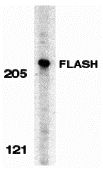
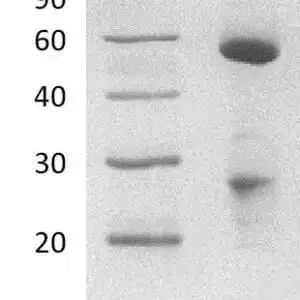
| Western blot analysis of FLASH in HeLa whole cell lysate with FLASH antibody at 0.5 µg/mL. |
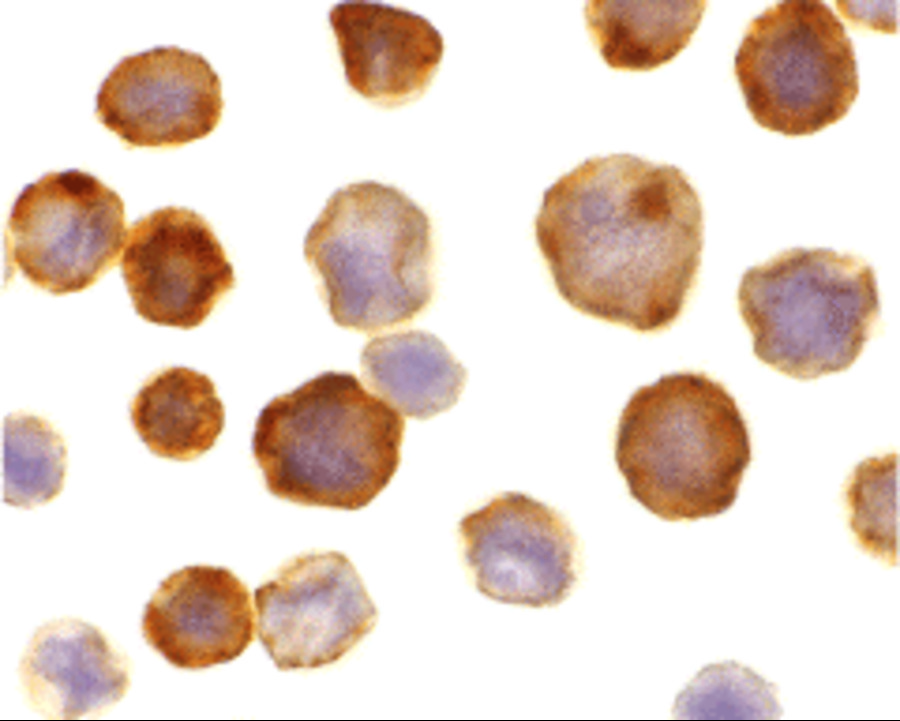 |
| Immunocytochemistry of FLASH in HeLa cells with FLASH antibody at 10 µg/mL. |
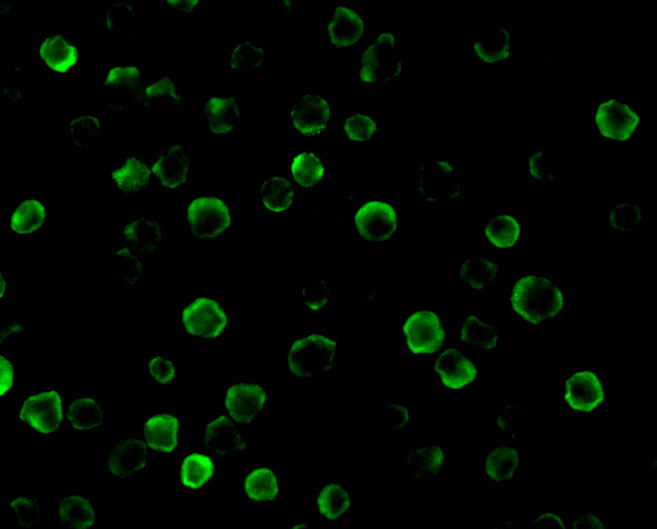 |
| Immunofluorescence of FLASH in HeLa cells with FLASH antibody at 10 µg/mL. |
FAQ & Publications
Frequently Asked Questions
What applications is the rabbit anti-FLASH (CT) polyclonal antibody 1390 validated for?
This antibody is validated for use in ELISA, Western blot (WB), immunocytochemistry (ICC), and immunofluorescence (IF) applications.
How should the rabbit anti-FLASH (CT) polyclonal antibody 1390 be stored to maintain its stability?
The antibody should be stored at -20°C and is stable for at least one year under these conditions. It is recommended to avoid multiple freeze-thaw cycles to preserve antibody integrity.
Publications
| pmid | title | authors | citation |
|---|---|---|---|
| We haven't added any publications to our database yet. | |||
Published literature highly relevant to the biological target of this product and referencing this antibody or clone are retrieved from the PubMed database provided by the United States National Library of Medicine at the National Institutes of Health.
Protocols
| relevant to this product |
|---|
| Western blot IHC ICC |
Documents
| Batch Number | QC File | SDS |
|---|---|---|
| To view batch-specific Safety Datasheets and Quality Certificates associated with your account, please Log In. | ||
Only logged in customers who have purchased this product may leave a review.


Reviews
There are no reviews yet.