| Weight | 1 lbs |
|---|---|
| Dimensions | 9 × 5 × 2 in |
| host | rabbit |
| isotype | IgG |
| clonality | polyclonal |
| concentration | 1 mg/mL |
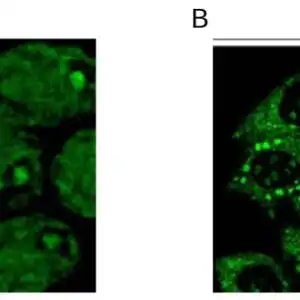
| applications | ICC/IF, WB |
| reactivity | Chemoattractant Receptor Homologus molecule (CRTH2) |
| available sizes | 100 µg |

rabbit anti-CRTH2 polyclonal antibody 6812
$376.00
Antibody summary
- Rabbit polyclonal to CRTH2
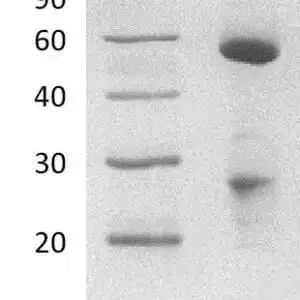
- Suitable for: WB
- Isotype: Whole IgG
- 100 µg
rabbit anti-CRTH2 polyclonal antibody 6812
| target relevance |
|---|
| Homo sapiens PTGDR2 Prostaglandin D2 receptor 2 |
| Protein names Prostaglandin D2 receptor 2 |
| Alternative names Chemoattractant receptor-homologous molecule expressed on Th2 cells, G-protein coupled receptor 44 |
| Gene names PTGDR2 |
| Protein family Belongs to the G-protein coupled receptor 1 family |
| Function Receptor for prostaglandin D2 (PGD2). Coupled to the G(i)-protein. Receptor activation may result in pertussis toxin-sensitive decreases in cAMP levels and Ca(2+) mobilization. PI3K signaling is also implicated in mediating PTGDR2 effects. PGD2 induced receptor internalization. CRTH2 internalization can be regulated by diverse kinases such as, PKC, PKA, GRK2, GPRK5/GRK5 and GRK6. Receptor activation is responsible, at least in part, in immune regulation and allergic/inflammation responses |
| Subcellular location Cell membrane |
| Post-translational modification Phosphorylated |
| Keywords 3D-structure, Cell membrane, Disulfide bond, G-protein coupled receptor, Glycoprotein, Membrane, Phosphoprotein, Proteomics identification, Receptor, Reference proteome, Transducer, Transmembrane, Transmembrane helix |
| Sequence MSANATLKPLCPILEQMSRLQSHSNTSIRYIDHAAVLLHGLASLLGLVENGVILFVVGCR MRQTVVTTWVLHLALSDLLASASLPFFTYFLAVGHSWELGTTFCKLHSSIFFLNMFASGF LLSAISLDRCLQVVRPVWAQNHRTVAAAHKVCLVLWALAVLNTVPYFVFRDTISRLDGRI MCYYNVLLLNPGPDRDATCNSRQVALAVSKFLLAFLVPLAIIASSHAAVSLRLQHRGRRR PGRFVRLVAAVVAAFALCWGPYHVFSLLEARAHANPGLRPLVWRGLPFVTSLAFFNSVAN PVLYVLTCPDMLRKLRRSLRTVLESVLVDDSELGGAGSSRRRRTSSTARSASPLALCSRP EEPRGPARLLGWLLGSCAASPQTGPLNRALSSTSS |
| UniProt accession: Q9Y5Y4 |
Data
| No results found |
FAQ & Publications
Frequently Asked Questions
What applications has the rabbit anti-CRTH2 polyclonal antibody 6812 been validated for?
This antibody has been tested and recommended for use in Western blotting (WB) and immunocytochemistry/immunofluorescence (ICC/IF) applications.
How should the rabbit anti-CRTH2 antibody 6812 be stored to maintain its stability?
The antibody is stable for at least one year when stored at -20°C. It is recommended to avoid multiple freeze-thaw cycles to preserve its activity.
What is the recommended dilution range for using this antibody in Western blotting?
For immunoblotting, the rabbit anti-CRTH2 polyclonal antibody should be used at a dilution between 1:500 and 1:1,000.
Publications
| pmid | title | authors | citation |
|---|---|---|---|
| We haven't added any publications to our database yet. | |||
Published literature highly relevant to the biological target of this product and referencing this antibody or clone are retrieved from the PubMed database provided by the United States National Library of Medicine at the National Institutes of Health.
Protocols
| relevant to this product |
|---|
| Western blot IHC ICC |
Documents
| Batch Number | QC File | SDS |
|---|---|---|
| To view batch-specific Safety Datasheets and Quality Certificates associated with your account, please Log In. | ||
Only logged in customers who have purchased this product may leave a review.


Reviews
There are no reviews yet.