| Weight | 1 lbs |
|---|---|
| Dimensions | 9 × 5 × 2 in |
| host | rabbit |
| isotype | IgG |
| clonality | polyclonal |
| concentration | 1 mg/mL |
| applications | ICC/IF, WB |
| reactivity | BACE2 (CT) |
| available sizes | 100 µg |

rabbit anti-BACE2 (CT) polyclonal antibody 4312
$445.00
Antibody summary
- Rabbit polyclonal to BACE2 (CT)
- Suitable for: ELISA,WB,IHC-P
- Isotype: IgG
- 100 µg
rabbit anti-BACE2 (CT) polyclonal antibody 4312
| antibody |
|---|
| Tested applications WB,IHC,IHC,ELISA |
| Recommended dilutions Immunoblotting: use at 1:500-1:1,000 dilution. Positive control: Human heart tissue lysate. |
| Immunogen Peptide corresponding to aa 496- 511 of human BACE2. |
| Size and concentration 100µg and lot specific |
| Form liquid |
| Storage Instructions This antibody is stable for at least one (1) year at -20°C. Avoid multiple freeze-thaw cycles. |
| Storage buffer PBS, pH 7.4. |
| Purity peptide affinity purification |
| Clonality polyclonal |
| Isotype IgG |
| Compatible secondaries goat anti-rabbit IgG, H&L chain specific, peroxidase conjugated, conjugated polyclonal antibody 9512 goat anti-rabbit IgG, H&L chain specific, biotin conjugated polyclonal antibody 2079 goat anti-rabbit IgG, H&L chain specific, FITC conjugated polyclonal antibody 7863 goat anti-rabbit IgG, H&L chain specific, Cross Absorbed polyclonal antibody 2371 goat anti-rabbit IgG, H&L chain specific, biotin conjugated polyclonal antibody, crossabsorbed 1715 goat anti-rabbit IgG, H&L chain specific, FITC conjugated polyclonal antibody, crossabsorbed 1720 |
| Isotype control Rabbit polyclonal - Isotype Control |
| target relevance |
|---|
| Homo sapiens BACE2 Beta-secretase 2 |
| Protein names Beta-secretase 2 |
| Alternative names Aspartic-like protease 56 kDa, Aspartyl protease 1, Beta-site amyloid precursor protein cleaving enzyme 2, Down region aspartic protease, Memapsin-1, Membrane-associated aspartic protease 1, Theta-secretase |
| Gene names BACE2 |
| Protein family Belongs to the peptidase A1 family |
| Function Responsible for the proteolytic processing of the amyloid precursor protein (APP). Cleaves APP, between residues 690 and 691, leading to the generation and extracellular release of beta-cleaved soluble APP, and a corresponding cell-associated C-terminal fragment which is later released by gamma-secretase. It has also been shown that it can cleave APP between residues 671 and 672 (PubMed:10591213, PubMed:11083922, PubMed:11423558, PubMed:15857888, PubMed:16816112). Involved in the proteolytic shedding of PMEL at early stages of melanosome biogenesis. Cleaves PMEL within the M-beta fragment to release the amyloidogenic PMEL luminal fragment containing M-alpha and a small portion of M-beta N-terminus. This is a prerequisite step for subsequent processing and assembly of PMEL fibrils into amyloid sheets (PubMed:23754390). Responsible also for the proteolytic processing of CLTRN in pancreatic beta cells (PubMed:21907142) |
| Catalytic activity Broad endopeptidase specificity. Cleaves Glu-Val-Asn-Leu-|-Asp-Ala-Glu-Phe in the Swedish variant of Alzheimer's amyloid precursor protein. |
| Subcellular location Cell membrane, Golgi apparatus, Endoplasmic reticulum, Endosome, Melanosome |
| Structure Monomer. Interacts with RTN3 and RTN4 |
| Post-translational modification Undergoes autoproteolytic cleavage Glycosylated |
| Keywords 3D-structure, Alternative splicing, Aspartyl protease, Autocatalytic cleavage, Cell membrane, Direct protein sequencing, Disulfide bond, Endoplasmic reticulum, Endosome, Glycoprotein, Golgi apparatus, Hydrolase, Membrane, Protease, Proteomics identification, Reference proteome, Signal, Transmembrane, Transmembrane helix, Zymogen |
| Sequence MGALARALLLPLLAQWLLRAAPELAPAPFTLPLRVAAATNRVVAPTPGPGTPAERHADGL ALALEPALASPAGAANFLAMVDNLQGDSGRGYYLEMLIGTPPQKLQILVDTGSSNFAVAG TPHSYIDTYFDTERSSTYRSKGFDVTVKYTQGSWTGFVGEDLVTIPKGFNTSFLVNIATI FESENFFLPGIKWNGILGLAYATLAKPSSSLETFFDSLVTQANIPNVFSMQMCGAGLPVA GSGTNGGSLVLGGIEPSLYKGDIWYTPIKEEWYYQIEILKLEIGGQSLNLDCREYNADKA IVDSGTTLLRLPQKVFDAVVEAVARASLIPEFSDGFWTGSQLACWTNSETPWSYFPKISI YLRDENSSRSFRITILPQLYIQPMMGAGLNYECYRFGISPSTNALVIGATVMEGFYVIFD RAQKRVGFAASPCAEIAGAAVSEISGPFSTEDVASNCVPAQSLSEPILWIVSYALMSVCG AILLVLIVLLLLPFRCQRRPRDPEVVNDESSLVRHRWK |
| UniProt accession: Q9Y5Z0 |
Data
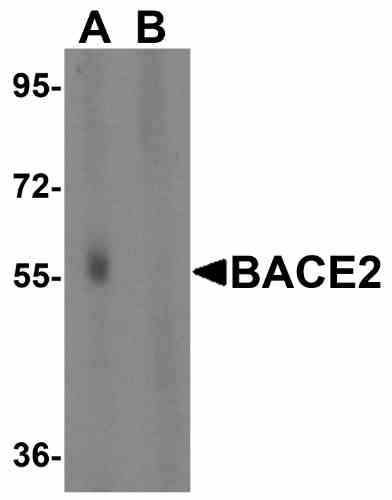 |
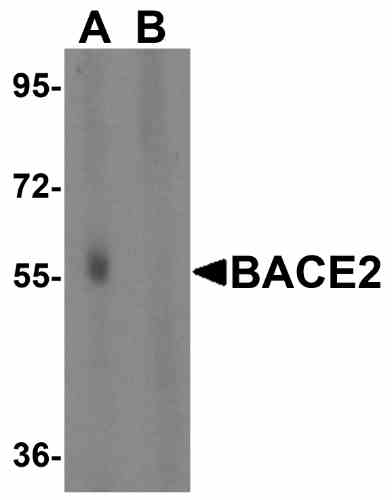
| Western blot analysis of BACE2 in human heart tissue lysate in the absence (A) or presence (B) of blocking peptide with BACE2 antibody at 1 µg/mL. |
 |
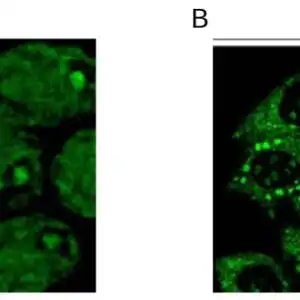
| Immunohistochemistry of BACE2 in rat heart tissue with BACE2 antibody at 2 µg/mL. |
FAQ & Publications
Frequently Asked Questions
What species does the rabbit anti-BACE2 (CT) polyclonal antibody 4312 specifically recognize?
This antibody specifically recognizes the C-terminal region of the human BACE2 protein.
Which experimental applications is the rabbit anti-BACE2 (CT) polyclonal antibody validated for?
The antibody is validated for use in ELISA, Western blotting (WB), and immunohistochemistry on paraffin-embedded tissue (IHC-P). It is also suitable for ICC/IF applications.
How should the rabbit anti-BACE2 (CT) polyclonal antibody 4312 be stored to maintain stability?
The antibody should be stored at -20°C and is stable for at least one year under these conditions. It is important to avoid multiple freeze-thaw cycles to preserve antibody integrity.
What is the recommended dilution range for immunoblotting using this antibody?
For immunoblotting, it is recommended to use the antibody at a dilution between 1:500 and 1:1,000.
What is the immunogen used to generate the rabbit anti-BACE2 (CT) polyclonal antibody 4312?
The immunogen is a peptide corresponding to amino acids 496 to 511 of the human BACE2 protein.
Publications
| pmid | title | authors | citation |
|---|---|---|---|
| We haven't added any publications to our database yet. | |||
Published literature highly relevant to the biological target of this product and referencing this antibody or clone are retrieved from the PubMed database provided by the United States National Library of Medicine at the National Institutes of Health.
Protocols
| relevant to this product |
|---|
| Western blot IHC ICC |
Documents
| Batch Number | QC File | SDS |
|---|---|---|
| To view batch-specific Safety Datasheets and Quality Certificates associated with your account, please Log In. | ||
Only logged in customers who have purchased this product may leave a review.


Reviews
There are no reviews yet.