| Weight | 1 lbs |
|---|---|
| Dimensions | 9 × 5 × 2 in |
| host | rabbit |
| isotype | IgG |
| clonality | polyclonal |
| concentration | 1 mg/mL |
| applications | ICC/IF, WB |
| reactivity | Acinus (NP) |
| available sizes | 100 µg |
rabbit anti-Acinus (NP) polyclonal antibody 7688
$445.00
Antibody summary
- Rabbit polyclonal to Acinus (NP)
- Suitable for: ELISA,WB,IF
- Isotype: IgG
- 100 µg
rabbit anti-Acinus (NP) polyclonal antibody 7688
| antibody |
|---|
| Tested applications WB,ICC/IF,ELISA |
| Recommended dilutions Immunoblotting: use at 1-10ug/mL These are recommended concentrations. Enduser should determine optimal concentrations for their applications. Positive control: K562 whole cell lysate. |
| Immunogen Peptide corresponding to aa 994- 1009 of human AcinusL, aa 236-251 of human Acinus S and aa 267-282 of human AcinusS' which are identical to those of mouse Acinus. These sequences are located near the N-terminus of active peptide p17. |
| Size and concentration 100µg and lot specific |
| Form liquid |
| Storage Instructions This antibody is stable for at least one (1) year at -20°C. Avoid multiple freeze-thaw cycles. |
| Storage buffer PBS, pH 7.4. |
| Purity peptide affinity purification |
| Clonality polyclonal |
| Isotype IgG |
| Compatible secondaries goat anti-rabbit IgG, H&L chain specific, peroxidase conjugated, conjugated polyclonal antibody 9512 goat anti-rabbit IgG, H&L chain specific, biotin conjugated polyclonal antibody 2079 goat anti-rabbit IgG, H&L chain specific, FITC conjugated polyclonal antibody 7863 goat anti-rabbit IgG, H&L chain specific, Cross Absorbed polyclonal antibody 2371 goat anti-rabbit IgG, H&L chain specific, biotin conjugated polyclonal antibody, crossabsorbed 1715 goat anti-rabbit IgG, H&L chain specific, FITC conjugated polyclonal antibody, crossabsorbed 1720 |
| Isotype control Rabbit polyclonal - Isotype Control |
| target relevance |
|---|
| Homo sapiens ACIN1 Apoptotic chromatin condensation inducer in the nucleus |
| Protein names Apoptotic chromatin condensation inducer in the nucleus |
| Gene names ACIN1 |
| Function Auxiliary component of the splicing-dependent multiprotein exon junction complex (EJC) deposited at splice junction on mRNAs. The EJC is a dynamic structure consisting of core proteins and several peripheral nuclear and cytoplasmic associated factors that join the complex only transiently either during EJC assembly or during subsequent mRNA metabolism. Component of the ASAP complexes which bind RNA in a sequence-independent manner and are proposed to be recruited to the EJC prior to or during the splicing process and to regulate specific excision of introns in specific transcription subsets; ACIN1 confers RNA-binding to the complex. The ASAP complex can inhibit RNA processing during in vitro splicing reactions. The ASAP complex promotes apoptosis and is disassembled after induction of apoptosis. Involved in the splicing modulation of BCL2L1/Bcl-X (and probably other apoptotic genes); specifically inhibits formation of proapoptotic isoforms such as Bcl-X(S); the activity is different from the established EJC assembly and function. Induces apoptotic chromatin condensation after activation by CASP3. Regulates cyclin A1, but not cyclin A2, expression in leukemia cells |
| Subcellular location Nucleus, Nucleus speckle, Nucleus, nucleoplasm |
| Structure Found in a mRNA splicing-dependent exon junction complex (EJC). Component of the heterotrimeric ASAP (apoptosis- and splicing-associated protein) complexes consisting of RNPS1, SAP18 and different isoforms of ACIN1; the association of SAP18 seems to require a preformed RNPS1:ACIN1 complex. Interacts with API5. Interacts with SRPK2 in a phosphorylation-dependent manner |
| Post-translational modification Phosphorylation on Ser-1180 by SRPK2 up-regulates its stimulatory effect on cyclin A1 Undergoes proteolytic cleavage; the processed form is active, contrary to the uncleaved form |
| Keywords 3D-structure, Acetylation, Alternative splicing, Apoptosis, Direct protein sequencing, Isopeptide bond, Methylation, mRNA processing, mRNA splicing, Nucleus, Phosphoprotein, Proteomics identification, Reference proteome, RNA-binding, Ubl conjugation |
| Sequence MWRRKHPRTSGGTRGVLSGNRGVEYGSGRGHLGTFEGRWRKLPKMPEAVGTDPSTSRKMA ELEEVTLDGKPLQALRVTDLKAALEQRGLAKSGQKSALVKRLKGALMLENLQKHSTPHAA FQPNSQIGEEMSQNSFIKQYLEKQQELLRQRLEREAREAAELEEASAESEDEMIHPEGVA SLLPPDFQSSLERPELELSRHSPRKSSSISEEKGDSDDEKPRKGERRSSRVRQARAAKLS EGSQPAEEEEDQETPSRNLRVRADRNLKTEEEEEEEEEEEEDDEEEEGDDEGQKSREAPI LKEFKEEGEEIPRVKPEEMMDERPKTRSQEQEVLERGGRFTRSQEEARKSHLARQQQEKE MKTTSPLEEEEREIKSSQGLKEKSKSPSPPRLTEDRKKASLVALPEQTASEEETPPPLLT KEASSPPPHPQLHSEEEIEPMEGPAPAVLIQLSPPNTDADTRELLVSQHTVQLVGGLSPL SSPSDTKAESPAEKVPEESVLPLVQKSTLADYSAQKDLEPESDRSAQPLPLKIEELALAK GITEECLKQPSLEQKEGRRASHTLLPSHRLKQSADSSSSRSSSSSSSSSRSRSRSPDSSG SRSHSPLRSKQRDVAQARTHANPRGRPKMGSRSTSESRSRSRSRSRSASSNSRKSLSPGV SRDSSTSYTETKDPSSGQEVATPPVPQLQVCEPKERTSTSSSSVQARRLSQPESAEKHVT QRLQPERGSPKKCEAEEAEPPAATQPQTSETQTSHLPESERIHHTVEEKEEVTMDTSENR PENDVPEPPMPIADQVSNDDRPEGSVEDEEKKESSLPKSFKRKISVVSATKGVPAGNSDT EGGQPGRKRRWGASTATTQKKPSISITTESLKSLIPDIKPLAGQEAVVDLHADDSRISED ETERNGDDGTHDKGLKICRTVTQVVPAEGQENGQREEEEEEKEPEAEPPVPPQVSVEVAL PPPAEHEVKKVTLGDTLTRRSISQQKSGVSITIDDPVRTAQVPSPPRGKISNIVHISNLV RPFTLGQLKELLGRTGTLVEEAFWIDKIKSHCFVTYSTVEEAVATRTALHGVKWPQSNPK FLCADYAEQDELDYHRGLLVDRPSETKTEEQGIPRPLHPPPPPPVQPPQHPRAEQREQER AVREQWAEREREMERRERTRSEREWDRDKVREGPRSRSRSRDRRRKERAKSKEKKSEKKE KAQEEPPAKLLDDLFRKTKAAPCIYWLPLTDSQIVQKEAERAERAKEREKRRKEQEEEEQ KEREKEAERERNRQLEREKRREHSRERDRERERERERDRGDRDRDRERDRERGRERDRRD TKRHSRSRSRSTPVRDRGGRR |
| UniProt accession: Q9UKV3 |
Data
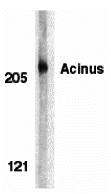 |
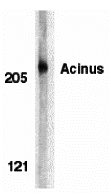
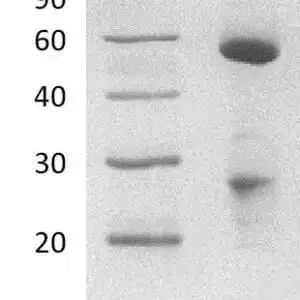
| Western blot analysis of acinus in K562 whole cell lysate with acinus antibody at 1 µg/mL. |
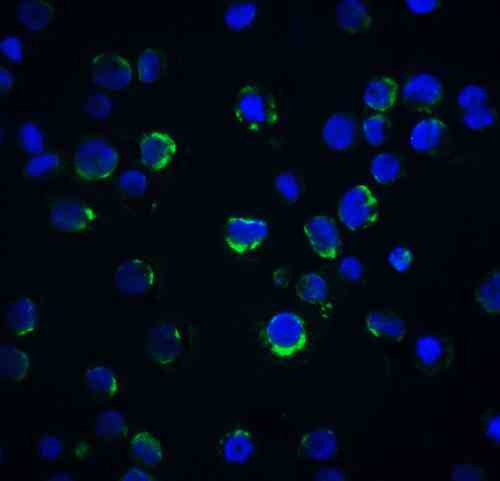 |
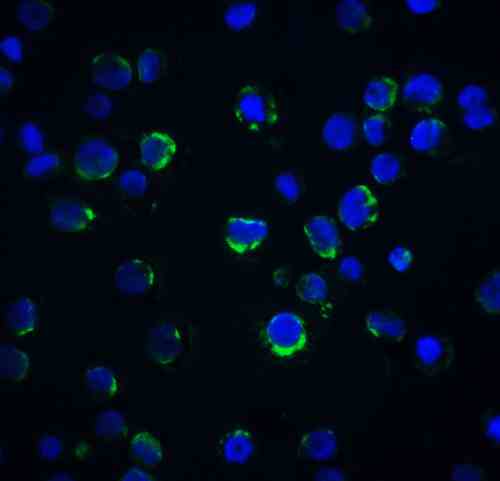
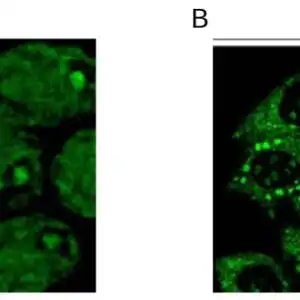
| Immunofluorescence of Acinus in K562 cells with Acinus antibody at 20 µg/mL.
Green: Acinus Antibody (7688) Blue: DAPI staining |
FAQ & Publications
Frequently Asked Questions
What applications has the rabbit anti-Acinus (NP) polyclonal antibody 7688 been validated for?
This antibody has been tested and validated for use in Western blotting (WB), immunocytochemistry/immunofluorescence (ICC/IF), and ELISA assays.
How should the rabbit anti-Acinus (NP) polyclonal antibody be stored to maintain stability?
The antibody should be stored at -20°C and is stable for at least one year under these conditions. It is important to avoid multiple freeze-thaw cycles to preserve antibody integrity.
What is the immunogen used to generate the rabbit anti-Acinus (NP) polyclonal antibody 7688?
The immunogen is a peptide corresponding to amino acids 994-1009 of human AcinusL, amino acids 236-251 of human Acinus S, and amino acids 267-282 of human Acinus S'. These sequences are identical to those in mouse Acinus and are located near the N-terminus of the active p17 peptide.
Publications
| pmid | title | authors | citation |
|---|---|---|---|
| We haven't added any publications to our database yet. | |||
Published literature highly relevant to the biological target of this product and referencing this antibody or clone are retrieved from the PubMed database provided by the United States National Library of Medicine at the National Institutes of Health.
Protocols
| relevant to this product |
|---|
| Western blot IHC ICC |
Documents
| Batch Number | QC File | SDS |
|---|---|---|
| To view batch-specific Safety Datasheets and Quality Certificates associated with your account, please Log In. | ||
Only logged in customers who have purchased this product may leave a review.


Reviews
There are no reviews yet.