| Weight | 1 lbs |
|---|---|
| Dimensions | 9 × 5 × 2 in |
| host | mouse |
| isotype | IgG2a |
| clonality | monoclonal |
| concentration | concentrate, predilute |
| applications | IHC |
| reactivity | human |
| available size | 0.1 mL, 0.5 mL, 1 mL concentrated, 7 mL prediluted |

mouse anti-Ubiquitin monoclonal antibody (ZM191) 6399
Price range: $160.00 through $528.00
Antibody summary
- Mouse monoclonal to Ubiquitin
- Suitable for: Immunohistochemistry (formalin-fixed, paraffin-embedded tissues)
- Reacts with: Human
- Isotype:IgG2a
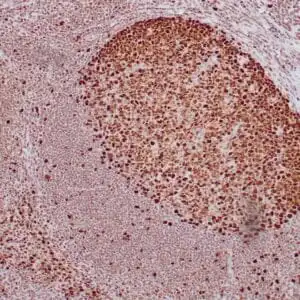
- Control: Brain
- Visualization: Cytoplasmic and membranous
- 0.1, 0.5, 1.0 mL concentrated, 7 mL prediluted
mouse anti-Ubiquitin monoclonal antibody ZM191 6399
| target relevance |
|---|
| Homo sapiens UBB Polyubiquitin-B |
| Protein names Polyubiquitin-B |
| Gene names UBB |
| Protein family Belongs to the ubiquitin family |
| Function Exists either covalently attached to another protein, or free (unanchored). When covalently bound, it is conjugated to target proteins via an isopeptide bond either as a monomer (monoubiquitin), a polymer linked via different Lys residues of the ubiquitin (polyubiquitin chains) or a linear polymer linked via the initiator Met of the ubiquitin (linear polyubiquitin chains). Polyubiquitin chains, when attached to a target protein, have different functions depending on the Lys residue of the ubiquitin that is linked: Lys-6-linked may be involved in DNA repair; Lys-11-linked is involved in ERAD (endoplasmic reticulum-associated degradation) and in cell-cycle regulation; Lys-29-linked is involved in proteotoxic stress response and cell cycle; Lys-33-linked is involved in kinase modification; Lys-48-linked is involved in protein degradation via the proteasome; Lys-63-linked is involved in endocytosis, DNA-damage responses as well as in signaling processes leading to activation of the transcription factor NF-kappa-B. Linear polymer chains formed via attachment by the initiator Met lead to cell signaling. Ubiquitin is usually conjugated to Lys residues of target proteins, however, in rare cases, conjugation to Cys or Ser residues has been observed. When polyubiquitin is free (unanchored-polyubiquitin), it also has distinct roles, such as in activation of protein kinases, and in signaling |
| Subcellular location Cytoplasm, Nucleus, Mitochondrion outer membrane |
| Structure Interacts with SKP1-KMD2A and SKP1-KMD2B complexes. Interacts with REV1 (PubMed:29778604) |
| Post-translational modification Phosphorylated at Ser-65 by PINK1 during mitophagy (PubMed:24660806, PubMed:24751536, PubMed:24784582, PubMed:25527291, PubMed:26161729). Phosphorylated ubiquitin specifically binds and activates parkin (PRKN), triggering mitophagy (PubMed:24660806, PubMed:24751536, PubMed:24784582, PubMed:25527291, PubMed:26161729). Phosphorylation does not affect E1-mediated E2 charging of ubiquitin but affects discharging of E2 enzymes to form polyubiquitin chains. It also affects deubiquitination by deubiquitinase enzymes such as USP30 (PubMed:25527291) Mono-ADP-ribosylated at the C-terminus by PARP9, a component of the PPAR9-DTX3L complex. ADP-ribosylation requires processing by E1 and E2 enzymes and prevents ubiquitin conjugation to substrates such as histones (Microbial infection) Mono-ADP-ribosylated at Thr-66 by the C.violaceum CteC virulence factor. ADP-ribosylation causes the shutdown of polyubiquitin synthesis and disrupts the recognition and reversal of polyubiquitin |
| Keywords 3D-structure, ADP-ribosylation, Cytoplasm, Direct protein sequencing, Isopeptide bond, Membrane, Mitochondrion, Mitochondrion outer membrane, Nucleus, Phosphoprotein, Reference proteome, Repeat, Ubl conjugation |
| Sequence MQIFVKTLTGKTITLEVEPSDTIENVKAKIQDKEGIPPDQQRLIFAGKQLEDGRTLSDYN IQKESTLHLVLRLRGGMQIFVKTLTGKTITLEVEPSDTIENVKAKIQDKEGIPPDQQRLI FAGKQLEDGRTLSDYNIQKESTLHLVLRLRGGMQIFVKTLTGKTITLEVEPSDTIENVKA KIQDKEGIPPDQQRLIFAGKQLEDGRTLSDYNIQKESTLHLVLRLRGGC |
| UniProt accession: P0CG47 |
Data
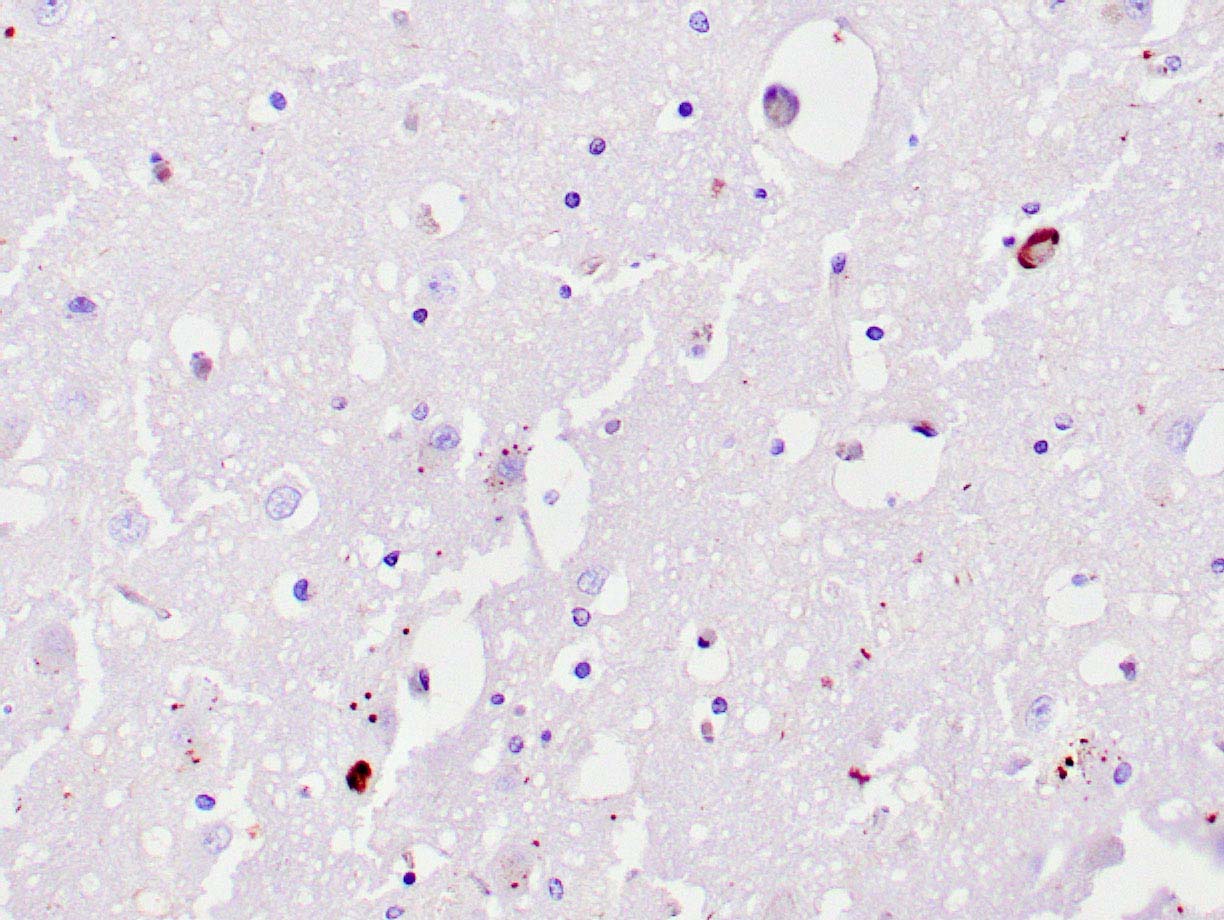 |
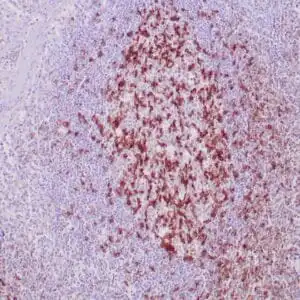
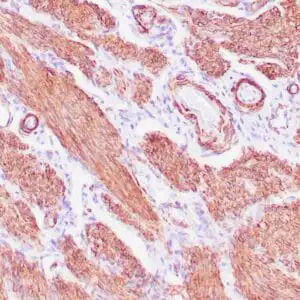
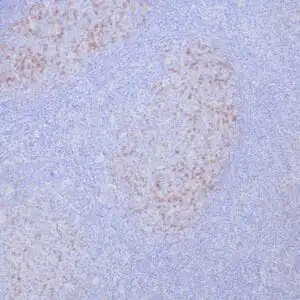
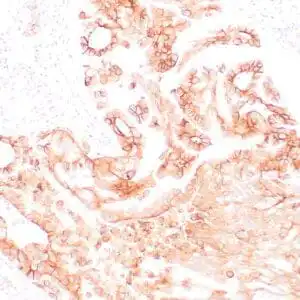
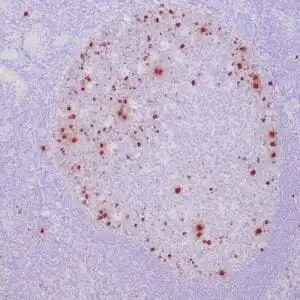
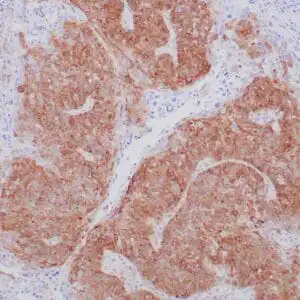
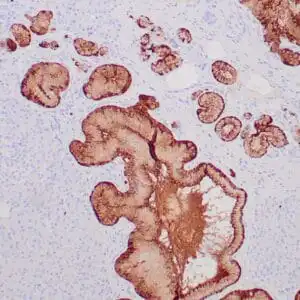
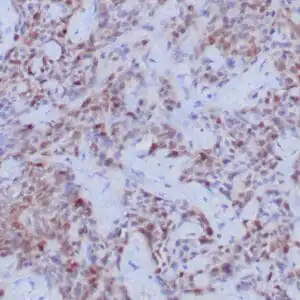
| Human brain hippocampus stained with anti-ubiquitin antibody using peroxidase-conjugate and DAB chromogen. Note the cytoplasmic staining of few neurons.. |
FAQ & Publications
Frequently Asked Questions
What species does the mouse anti-Ubiquitin monoclonal antibody (ZM191) specifically react with?
This antibody specifically reacts with human Ubiquitin protein.
Which application is the mouse anti-Ubiquitin monoclonal antibody (ZM191) validated for?
It is validated for immunohistochemistry (IHC) on formalin-fixed, paraffin-embedded tissues.
How should the mouse anti-Ubiquitin monoclonal antibody (ZM191) be stored to maintain stability?
For short-term storage, keep the antibody at 2-8°C, and for long-term storage, store at -20°C while avoiding repeated freeze-thaw cycles.
What is the recommended dilution range for using the concentrated mouse anti-Ubiquitin monoclonal antibody (ZM191) in IHC?
The recommended dilution for the concentrated antibody in immunohistochemistry is between 1:100 and 1:200.
What is the immunogen used to generate the mouse anti-Ubiquitin monoclonal antibody (ZM191)?
The antibody was raised against a recombinant human Ubiquitin protein fragment encompassing approximately amino acids 1 to 119.
Publications
| pmid | title | authors | citation |
|---|---|---|---|
| We haven't added any publications to our database yet. | |||
Published literature highly relevant to the biological target of this product and referencing this antibody or clone are retrieved from the PubMed database provided by the United States National Library of Medicine at the National Institutes of Health.
Protocols
| relevant to this product |
|---|
| IHC |
Documents
| Batch Number | QC File | SDS |
|---|---|---|
| To view batch-specific Safety Datasheets and Quality Certificates associated with your account, please Log In. | ||
Only logged in customers who have purchased this product may leave a review.
Reviews
There are no reviews yet.