| Weight | 1 lbs |
|---|---|
| Dimensions | 9 × 5 × 2 in |
| host | mouse |
| isotype | IgG1 |
| clonality | monoclonal |
| concentration | 0.2 mg/mL |
| applications | ICC/IF, IHC, WB |
| available sizes | 1 mg, 100 µg, 25 µg |


mouse anti-MAP2 monoclonal antibody (A4) 9007
Price range: $100.00 through $2,600.00
Antibody summary
- Mouse monoclonal to MAP2
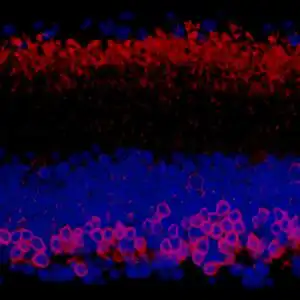
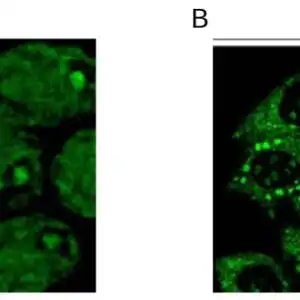
- Suitable for: WB, ICC/IF, IHC
- Reacts with: human, mouse, rat
- Isotype: IgG1
- 100 µg, 25 µg, 1 mg
mouse anti-MAP2 monoclonal antibody (A4) 9007
| target relevance |
|---|
| Homo sapiens MAP2 Microtubule-associated protein 2 |
| Protein names Microtubule-associated protein 2 |
| Gene names MAP2 |
| Function The exact function of MAP2 is unknown but MAPs may stabilize the microtubules against depolymerization. They also seem to have a stiffening effect on microtubules |
| Subcellular location Cytoplasm, cytoskeleton, Cell projection, dendrite |
| Structure Interacts with KNDC1 (via KIND2); the interaction enhances MAP2 phosphorylation and localizes KNDC1 to dendrites. Interacts with DPYSL5 (PubMed:33894126) |
| Post-translational modification Phosphorylated at serine residues in K-X-G-S motifs by MAP/microtubule affinity-regulating kinase (MARK1 or MARK2), causing detachment from microtubules, and their disassembly (By similarity). Isoform 2 is probably phosphorylated by PKA at Ser-323, Ser-354 and Ser-386 and by FYN at Tyr-67. The interaction with KNDC1 enhances MAP2 threonine phosphorylation (By similarity) |
| Keywords Alternative splicing, Calmodulin-binding, Cell projection, Cytoplasm, Cytoskeleton, Microtubule, Phosphoprotein, Proteomics identification, Reference proteome, Repeat |
| Sequence MADERKDEAKAPHWTSAPLTEASAHSHPPEIKDQGGAGEGLVRSANGFPYREDEEGAFGE HGSQGTYSNTKENGINGELTSADRETAEEVSARIVQVVTAEAVAVLKGEQEKEAQHKDQT AALPLAAEETANLPPSPPPSPASEQTVTVEEDLLTASKMEFHDQQELTPSTAEPSDQKEK ESEKQSKPGEDLKHAALVSQPETTKTYPDKKDMQGTEEEKAPLALFGHTLVASLEDMKQK TEPSLVVPGIDLPKEPPTPKEQKDWFIEMPTEAKKDEWGLVAPISPGPLTPMREKDVFDD IPKWEGKQFDSPMPSPFQGGSFTLPLDVMKNEIVTETSPFAPAFLQPDDKKSLQQTSGPA TAKDSFKIEEPHEAKPDKMAEAPPSEAMTLPKDAHIPVVEEHVMGKVLEEEKEAINQETV QQRDTFTPSGQEPILTEKETELKLEEKTTISDKEAVPKESKPPKPADEEIGIIQTSTEHT FSEQKDQEPTTDMLKQDSFPVSLEQAVTDSAMTSKTLEKAMTEPSALIEKSSIQELFEMR VDDKDKIEGVGAATSAELDMPFYEDKSGMSKYFETSALKEEATKSIEPGSDYYELSDTRE SVHESIDTMSPMHKNGDKEFQTGKESQPSPPAQEAGYSTLAQSYPSDLPEEPSSPQERMF TIDPKVYGEKRDLHSKNKDDLTLSRSLGLGGRSAIEQRSMSINLPMSCLDSIALGFNFGR GHDLSPLASDILTNTSGSMDEGDDYLPATTPALEKAPCFPVESKEEEQIEKVKATGEEST QAEISCESPFLAKDFYKNGTVMAPDLPEMLDLAGTRSRLASVSADAEVARRKSVPSETVV EDSRTGLPPVTDENHVIVKTDSQLEDLGYCVFNKYTVPLPSPVQDSENLSGESGTFYEGT DDKVRRDLATDLSLIEVKLAAAGRVKDEFSVDKEASAHISGDKSGLSKEFDQEKKANDRL DTVLEKSEEHADSKEHAKKTEEAGDEIETFGLGVTYEQALAKDLSIPTDASSEKAEKGLS SVPEIAEVEPSKKVEQGLDFAVQGQLDVKISDFGQMASGLNIDDRRATELKLEATQDMTP SSKAPQEADAFMGVESGHMKEGTKVSETEVKEKVAKPDLVHQEAVDKEESYESSGEHESL TMESLKADEGKKETSPESSLIQDEIAVKLSVEIPCPPAVSEADLATDERADVQMEFIQGP KEESKETPDISITPSDVAEPLHETIVSEPAEIQSEEEEIEAQGEYDKLLFRSDTLQITDL GVSGAREEFVETCPSEHKGVIESVVTIEDDFITVVQTTTDEGESGSHSVRFAALEQPEVE RRPSPHDEEEFEVEEAAEAQAEPKDGSPEAPASPEREEVALSEYKTETYDDYKDETTIDD SIMDADSLWVDTQDDDRSIMTEQLETIPKEEKAEKEARRSSLEKHRKEKPFKTGRGRIST PERKVAKKEPSTVSRDEVRRKKAVYKKAELAKKTEVQAHSPSRKFILKPAIKYTRPTHLS CVKRKTTAAGGESALAPSVFKQAKDKVSDGVTKSPEKRSSLPRPSSILPPRRGVSGDRDE NSFSLNSSISSSARRTTRSEPIRRAGKSGTSTPTTPGSTAITPGTPPSYSSRTPGTPGTP SYPRTPHTPGTPKSAILVPSEKKVAIIRTPPKSPATPKQLRLINQPLPDLKNVKSKIGST DNIKYQPKGGQVQIVTKKIDLSHVTSKCGSLKNIRHRPGGGRVKIESVKLDFKEKAQAKV GSLDNAHHVPGGGNVKIDSQKLNFREHAKARVDHGAEIITQSPGRSSVASPRRLSNVSSS GSINLLESPQLATLAEDVTAALAKQGL |
| UniProt accession: P11137 |
Data
 |
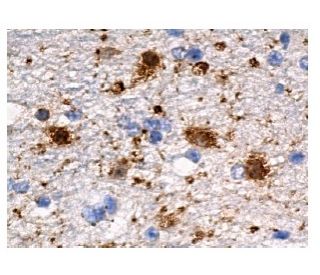 |
 |
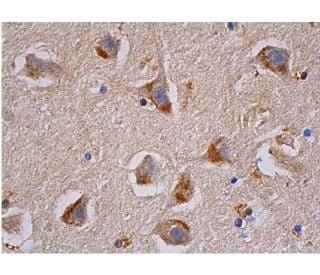 |
 |
FAQ & Publications
Frequently Asked Questions
What species does the mouse anti-MAP2 monoclonal antibody (A4) 9007 react with?
This antibody reacts with human, mouse, and rat MAP2 proteins.
Which applications has the mouse anti-MAP2 monoclonal antibody been validated for?
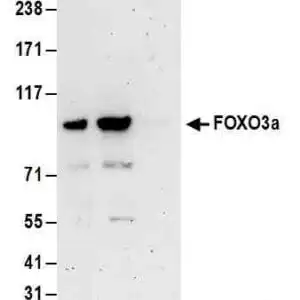
It has been tested and is suitable for Western blotting (WB), immunocytochemistry/immunofluorescence (ICC/IF), and immunohistochemistry (IHC). Recommended dilutions are 1:10000 for WB and 1:1000 for ICC/IF and IHC.
How should the mouse anti-MAP2 monoclonal antibody be stored to maintain its stability?
For short-term storage, keep the antibody at 2-8°C. For long-term storage, it should be kept at -20°C, avoiding repeated freeze/thaw cycles.
What is the immunogen used to generate the mouse anti-MAP2 monoclonal antibody (A4) 9007?
The antibody was raised against amino acids 1-300 of the human MAP2 protein.
Publications
| pmid | title | authors | citation |
|---|---|---|---|
| We haven't added any publications to our database yet. | |||
Published literature highly relevant to the biological target of this product and referencing this antibody or clone are retrieved from the PubMed database provided by the United States National Library of Medicine at the National Institutes of Health.
Protocols
| relevant to this product |
|---|
| Western blot IHC ICC |
Documents
| Batch Number | QC File | SDS |
|---|---|---|
| To view batch-specific Safety Datasheets and Quality Certificates associated with your account, please Log In. | ||
Only logged in customers who have purchased this product may leave a review.

Reviews
There are no reviews yet.