| Weight | 1 lbs |
|---|---|
| Dimensions | 9 × 5 × 2 in |
| host | mouse |
| isotype | IgG1 |
| clonality | monoclonal |
| concentration | concentrate, predilute |
| applications | IHC |
| reactivity | human |
| available size | 0.1 mL, 0.5 mL, 1 mL concentrated, 7 mL prediluted |

mouse anti-Ki-67 monoclonal antibody (MIB-1) 6238
Price range: $160.00 through $528.00
Antibody summary
- Mouse monoclonal to Ki-67
- Suitable for: Immunohistochemistry (formalin-fixed, paraffin-embedded tissues)
- Reacts with: Human
- Isotype:IgG1
- Control: Spleen, tonsil, or breast carcinomas
- Visualization: Nuclear
- 0.1, 0.5, 1.0 mL concentrated, 7 mL prediluted
mouse anti-Ki-67 monoclonal antibody MIB-1 6238
| target relevance |
|---|
| Homo sapiens MKI67 Proliferation marker protein Ki-67 |
| Protein names Proliferation marker protein Ki-67 |
| Alternative names Antigen identified by monoclonal antibody Ki-67 |
| Gene names MKI67 |
| Function Protein that associates with the surface of mitotic chromosomes and acts both as a chromosome repellent during early mitosis and chromosome attractant during late mitosis (PubMed:27362226, PubMed:32879492, PubMed:35513709, PubMed:39153474). Required to maintain individual mitotic chromosomes dispersed in the cytoplasm following nuclear envelope disassembly (PubMed:27362226). During early mitosis, relocalizes from nucleoli to the chromosome surface where it forms extended brush structures that cover a substantial fraction of the chromosome surface (PubMed:27362226). The MKI67 brush structure prevents chromosomes from collapsing into a single chromatin mass by forming a steric and electrostatic charge barrier: the protein has a high net electrical charge and acts as a surfactant, dispersing chromosomes and enabling independent chromosome motility (PubMed:27362226). During mitotic anaphase, the MKI67 brush structure collapses and MKI67 switches from a chromosome repellent to a chromosome attractant to promote chromosome clustering and facilitate the exclusion of large cytoplasmic particles from the future nuclear space (PubMed:32879492, PubMed:39153474). Mechanistically, dephosphorylation during mitotic exit and simultaneous exposure of a conserved basic patch induce the RNA-dependent formation of a liquid-like condensed phase on the chromosome surface, promoting coalescence of neighboring chromosome surfaces and clustering of chromosomes (PubMed:39153474). Binds premature ribosomal RNAs during anaphase; promoting liquid-liquid phase separation (PubMed:28935370, PubMed:39153474). Binds DNA, with a preference for supercoiled DNA and AT-rich DNA (PubMed:10878551). Does not contribute to the internal structure of mitotic chromosomes (By similarity). May play a role in chromatin organization; it is however unclear whether it plays a direct role in chromatin organization or whether it is an indirect consequence of its function in mitotic chromosome (PubMed:24867636) |
| Subcellular location Chromosome, Nucleus, Nucleus, nucleolus |
| Structure Interacts with KIF15 (PubMed:10878014). Interacts (via the FHA domain) with NIFK (PubMed:11342549, PubMed:14659764, PubMed:16244663). Interacts with PPP1CC (PubMed:24867636, PubMed:25012651). Component of a complex at least composed of ZNF335, HCFC1, CCAR2, EMSY, MKI67, RBBP5, ASH2L and WDR5; the complex is formed as a result of interactions between components of a nuclear receptor-mediated transcription complex and a histone methylation complex (PubMed:19131338). Interacts with ZNF335 (PubMed:19131338, PubMed:23178126) |
| Post-translational modification Hyperphosphorylated by CDK1 in mitosis; hyperphosphorylatiom prevents undergoing liquid-liquid phase separation (PubMed:10502411, PubMed:10653604, PubMed:25012651, PubMed:39153474). Dephosphorylated by PPP1CC at the onset of anaphase (PubMed:25012651). Dephosphorylated by protein phosphatase 2A (PP2A) at the onset of anaphase (By similarity). Dephosphorylation by protein phosphatase 2A (PP2A) and simultaneous exposure of the positively charged patch (CP) during mitotic exit induce the RNA-dependent formation of a liquid-like condensed phase on the chromosome surface (PubMed:39153474) Ubiquitinated by the APC/C complex after neuronal progenitors exit mitosis during brain development, leading to clearance from constitutive heterochromatin |
| Keywords 3D-structure, Acetylation, Alternative splicing, ATP-binding, Cell cycle, Chromosome, DNA-binding, Isopeptide bond, Nucleotide-binding, Nucleus, Phosphoprotein, Proteomics identification, Reference proteome, Repeat, Ubl conjugation |
| Sequence MWPTRRLVTIKRSGVDGPHFPLSLSTCLFGRGIECDIRIQLPVVSKQHCKIEIHEQEAIL HNFSSTNPTQVNGSVIDEPVRLKHGDVITIIDRSFRYENESLQNGRKSTEFPRKIREQEP ARRVSRSSFSSDPDEKAQDSKAYSKITEGKVSGNPQVHIKNVKEDSTADDSKDSVAQGTT NVHSSEHAGRNGRNAADPISGDFKEISSVKLVSRYGELKSVPTTQCLDNSKKNESPFWKL YESVKKELDVKSQKENVLQYCRKSGLQTDYATEKESADGLQGETQLLVSRKSRPKSGGSG HAVAEPASPEQELDQNKGKGRDVESVQTPSKAVGASFPLYEPAKMKTPVQYSQQQNSPQK HKNKDLYTTGRRESVNLGKSEGFKAGDKTLTPRKLSTRNRTPAKVEDAADSATKPENLSS KTRGSIPTDVEVLPTETEIHNEPFLTLWLTQVERKIQKDSLSKPEKLGTTAGQMCSGLPG LSSVDINNFGDSINESEGIPLKRRRVSFGGHLRPELFDENLPPNTPLKRGEAPTKRKSLV MHTPPVLKKIIKEQPQPSGKQESGSEIHVEVKAQSLVISPPAPSPRKTPVASDQRRRSCK TAPASSSKSQTEVPKRGGRKSGNLPSKRVSISRSQHDILQMICSKRRSGASEANLIVAKS WADVVKLGAKQTQTKVIKHGPQRSMNKRQRRPATPKKPVGEVHSQFSTGHANSPCTIIIG KAHTEKVHVPARPYRVLNNFISNQKMDFKEDLSGIAEMFKTPVKEQPQLTSTCHIAISNS ENLLGKQFQGTDSGEEPLLPTSESFGGNVFFSAQNAAKQPSDKCSASPPLRRQCIRENGN VAKTPRNTYKMTSLETKTSDTETEPSKTVSTANRSGRSTEFRNIQKLPVESKSEETNTEI VECILKRGQKATLLQQRREGEMKEIERPFETYKENIELKENDEKMKAMKRSRTWGQKCAP MSDLTDLKSLPDTELMKDTARGQNLLQTQDHAKAPKSEKGKITKMPCQSLQPEPINTPTH TKQQLKASLGKVGVKEELLAVGKFTRTSGETTHTHREPAGDGKSIRTFKESPKQILDPAA RVTGMKKWPRTPKEEAQSLEDLAGFKELFQTPGPSEESMTDEKTTKIACKSPPPESVDTP TSTKQWPKRSLRKADVEEEFLALRKLTPSAGKAMLTPKPAGGDEKDIKAFMGTPVQKLDL AGTLPGSKRQLQTPKEKAQALEDLAGFKELFQTPGHTEELVAAGKTTKIPCDSPQSDPVD TPTSTKQRPKRSIRKADVEGELLACRNLMPSAGKAMHTPKPSVGEEKDIIIFVGTPVQKL DLTENLTGSKRRPQTPKEEAQALEDLTGFKELFQTPGHTEEAVAAGKTTKMPCESSPPES ADTPTSTRRQPKTPLEKRDVQKELSALKKLTQTSGETTHTDKVPGGEDKSINAFRETAKQ KLDPAASVTGSKRHPKTKEKAQPLEDLAGLKELFQTPVCTDKPTTHEKTTKIACRSQPDP VDTPTSSKPQSKRSLRKVDVEEEFFALRKRTPSAGKAMHTPKPAVSGEKNIYAFMGTPVQ KLDLTENLTGSKRRLQTPKEKAQALEDLAGFKELFQTRGHTEESMTNDKTAKVACKSSQP DPDKNPASSKRRLKTSLGKVGVKEELLAVGKLTQTSGETTHTHTEPTGDGKSMKAFMESP KQILDSAASLTGSKRQLRTPKGKSEVPEDLAGFIELFQTPSHTKESMTNEKTTKVSYRAS QPDLVDTPTSSKPQPKRSLRKADTEEEFLAFRKQTPSAGKAMHTPKPAVGEEKDINTFLG TPVQKLDQPGNLPGSNRRLQTRKEKAQALEELTGFRELFQTPCTDNPTTDEKTTKKILCK SPQSDPADTPTNTKQRPKRSLKKADVEEEFLAFRKLTPSAGKAMHTPKAAVGEEKDINTF VGTPVEKLDLLGNLPGSKRRPQTPKEKAKALEDLAGFKELFQTPGHTEESMTDDKITEVS CKSPQPDPVKTPTSSKQRLKISLGKVGVKEEVLPVGKLTQTSGKTTQTHRETAGDGKSIK AFKESAKQMLDPANYGTGMERWPRTPKEEAQSLEDLAGFKELFQTPDHTEESTTDDKTTK IACKSPPPESMDTPTSTRRRPKTPLGKRDIVEELSALKQLTQTTHTDKVPGDEDKGINVF RETAKQKLDPAASVTGSKRQPRTPKGKAQPLEDLAGLKELFQTPICTDKPTTHEKTTKIA CRSPQPDPVGTPTIFKPQSKRSLRKADVEEESLALRKRTPSVGKAMDTPKPAGGDEKDMK AFMGTPVQKLDLPGNLPGSKRWPQTPKEKAQALEDLAGFKELFQTPGTDKPTTDEKTTKI ACKSPQPDPVDTPASTKQRPKRNLRKADVEEEFLALRKRTPSAGKAMDTPKPAVSDEKNI NTFVETPVQKLDLLGNLPGSKRQPQTPKEKAEALEDLVGFKELFQTPGHTEESMTDDKIT EVSCKSPQPESFKTSRSSKQRLKIPLVKVDMKEEPLAVSKLTRTSGETTQTHTEPTGDSK SIKAFKESPKQILDPAASVTGSRRQLRTRKEKARALEDLVDFKELFSAPGHTEESMTIDK NTKIPCKSPPPELTDTATSTKRCPKTRPRKEVKEELSAVERLTQTSGQSTHTHKEPASGD EGIKVLKQRAKKKPNPVEEEPSRRRPRAPKEKAQPLEDLAGFTELSETSGHTQESLTAGK ATKIPCESPPLEVVDTTASTKRHLRTRVQKVQVKEEPSAVKFTQTSGETTDADKEPAGED KGIKALKESAKQTPAPAASVTGSRRRPRAPRESAQAIEDLAGFKDPAAGHTEESMTDDKT TKIPCKSSPELEDTATSSKRRPRTRAQKVEVKEELLAVGKLTQTSGETTHTDKEPVGEGK GTKAFKQPAKRKLDAEDVIGSRRQPRAPKEKAQPLEDLASFQELSQTPGHTEELANGAAD SFTSAPKQTPDSGKPLKISRRVLRAPKVEPVGDVVSTRDPVKSQSKSNTSLPPLPFKRGG GKDGSVTGTKRLRCMPAPEEIVEELPASKKQRVAPRARGKSSEPVVIMKRSLRTSAKRIE PAEELNSNDMKTNKEEHKLQDSVPENKGISLRSRRQNKTEAEQQITEVFVLAERIEINRN EKKPMKTSPEMDIQNPDDGARKPIPRDKVTENKRCLRSARQNESSQPKVAEESGGQKSAK VLMQNQKGKGEAGNSDSMCLRSRKTKSQPAASTLESKSVQRVTRSVKRCAENPKKAEDNV CVKKIRTRSHRDSEDI |
| UniProt accession: P46013 |
Data
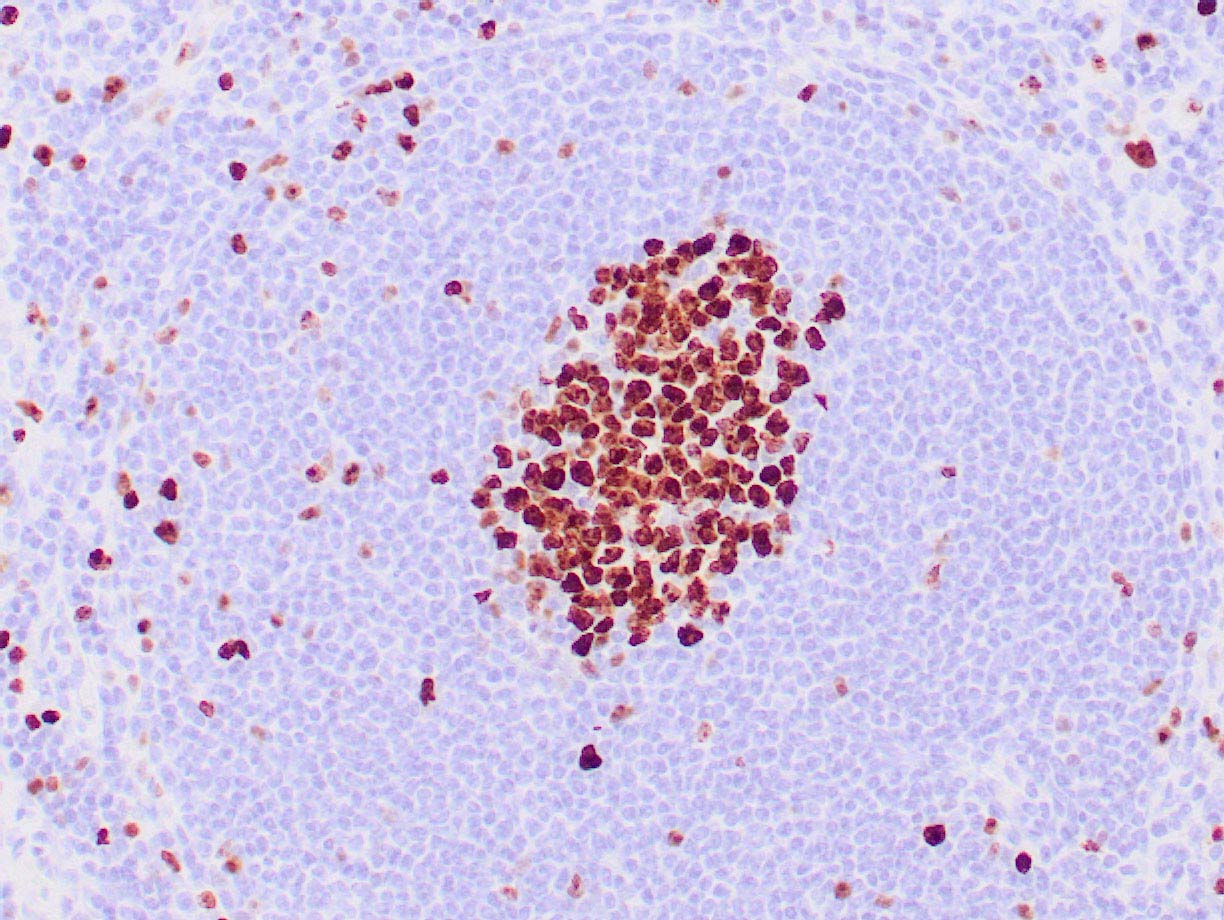 |
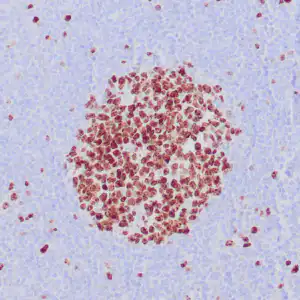
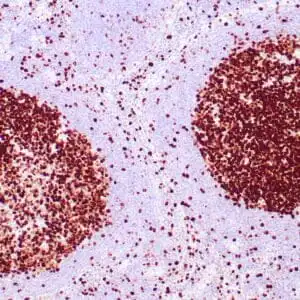
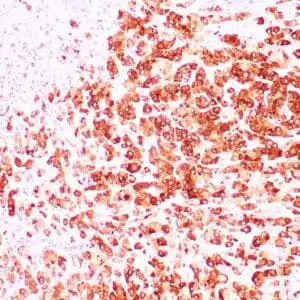
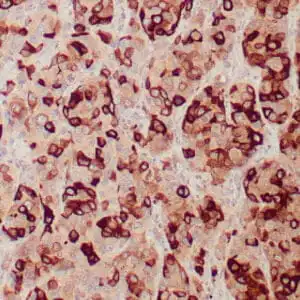
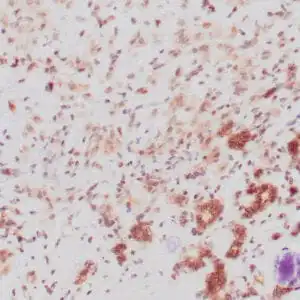
| Human tonsil stained with anti-Ki-67 antibody using peroxidase-conjugate and DAB chromogen. Note the nuclear staining of lymphocytes in a follicle. |
FAQ & Publications
Frequently Asked Questions
What species does the mouse anti-Ki-67 monoclonal antibody (MIB-1) 6238 specifically react with?
This antibody specifically reacts with human tissues.
Which applications is the mouse anti-Ki-67 monoclonal antibody (MIB-1) 6238 validated for?
It is validated for use in immunohistochemistry (IHC) on formalin-fixed, paraffin-embedded tissues.
What are the recommended storage conditions for the mouse anti-Ki-67 monoclonal antibody (MIB-1) 6238?
For short-term storage, keep the antibody at 2-8°C. For long-term storage, it should be stored at -20°C while avoiding freeze/thaw cycles.
Can you describe the available formats and concentrations for this antibody?
The antibody is available in concentrated form at 0.1 mL, 0.5 mL, and 1.0 mL sizes, as well as in a 7 mL prediluted format.
What is the immunogen used to generate the mouse anti-Ki-67 monoclonal antibody (MIB-1) 6238?
The immunogen is nuclear fractions from the Hodgkin lymphoma cell line L248 of human origin.
Publications
| pmid | title | authors | citation |
|---|---|---|---|
| We haven't added any publications to our database yet. | |||
Published literature highly relevant to the biological target of this product and referencing this antibody or clone are retrieved from the PubMed database provided by the United States National Library of Medicine at the National Institutes of Health.
Protocols
| relevant to this product |
|---|
| IHC |
Documents
| Batch Number | QC File | SDS |
|---|---|---|
| To view batch-specific Safety Datasheets and Quality Certificates associated with your account, please Log In. | ||
Only logged in customers who have purchased this product may leave a review.

Reviews
There are no reviews yet.