| Weight | 1 lbs |
|---|---|
| Dimensions | 9 × 5 × 2 in |
| host | mouse |
| isotype | IgG |
| clonality | monoclonal |
| concentration | 1 mg/mL |
| applications | ICC/IF, WB |
| reactivity | Clostridium botulinum Toxin B |
| available sizes | 500 µl |

mouse anti-Clostridium botulinum Toxin B monoclonal antibody (B363M) 8183
$620.00
Antibody summary
- Mouse monoclonal to Clostridium botulinum Toxin B
- Suitable for: ICC/IF,ELISA,RIA
- Isotype: IgG
- 500 µl
mouse anti-Clostridium botulinum Toxin B monoclonal antibody (B363M) 8183
| antibody |
|---|
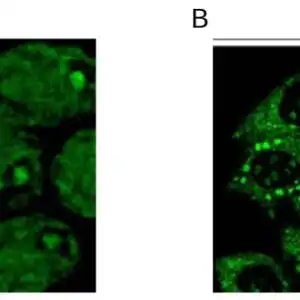
| Tested applications ICC/IF,ELISA |
| Recommended dilutions ELISA, Immunocytochemistry, Immunofluorescence End users should determine optimal dilutions for their applications. |
| Immunogen Synthetic peptide corresponding to aa 1278-1291 at the C-terminus of Clostridium botulinum Toxin B. |
| Size and concentration 500µL and lot specific |
| Form liquid |
| Storage Instructions This antibody is stable for at least one (1) year at -20° to -70°C. Store product in appropriate aliquots to avoid multiple freeze-thaw cycles. |
| Storage buffer PBS, pH 7.4. |
| Purity immunogen affinity purification |
| Clonality monoclonal |
| Isotype IgG |
| Compatible secondaries goat anti-mouse IgG, H&L chain specific, peroxidase conjugated polyclonal antibody 5486 goat anti-mouse IgG, H&L chain specific, biotin conjugated, Conjugate polyclonal antibody 2685 goat anti-mouse IgG, H&L chain specific, FITC conjugated polyclonal antibody 7854 goat anti-mouse IgG, H&L chain specific, peroxidase conjugated polyclonal antibody, crossabsorbed 1706 goat anti-mouse IgG, H&L chain specific, biotin conjugated polyclonal antibody, crossabsorbed 1716 goat anti-mouse IgG, H&L chain specific, FITC conjugated polyclonal antibody, crossabsorbed 1721 |
| Isotype control tbd |
| target relevance |
|---|
| Clostridium botulinum BOTB Botulinum neurotoxin type B |
| Protein names Botulinum neurotoxin type B |
| Alternative names Bontoxilysin-B |
| Gene names botB |
| Protein family Belongs to the peptidase M27 family |
| Function Botulinum toxin causes flaccid paralysis by inhibiting neurotransmitter (acetylcholine) release from the presynaptic membranes of nerve terminals of the eukaryotic host skeletal and autonomic nervous system, with frequent heart or respiratory failure. Precursor of botulinum neurotoxin B which has 2 coreceptors; complex polysialylated gangliosides found on neural tissue and specific membrane-anchored proteins found in synaptic vesicles (PubMed:17167418, PubMed:17167421, PubMed:17185412, PubMed:23807078). Receptor proteins are exposed on host presynaptic cell membrane during neurotransmitter release, when the toxin heavy chain (HC) binds to them (PubMed:14504267). Upon synaptic vesicle recycling the toxin is taken up via the endocytic pathway (PubMed:14504267). When the pH of the toxin-containing endosome drops a structural rearrangement occurs so that the N-terminus of the HC forms pores that allows the light chain (LC) to translocate into the cytosol (PubMed:3856850). Once in the cytosol the disulfide bond linking the 2 subunits is reduced and LC cleaves its target protein on synaptic vesicles, preventing their fusion with the cytoplasmic membrane and thus neurotransmitter release. Binds to host peripheral neuronal presynaptic membranes via synaptotagmins 1 and 2 (SYT1 and SYT2) (PubMed:14504267, PubMed:8144634). Toxin binds to the membrane proximal extra-cytoplasmic region of host SYT1 and SYT2 that is transiently exposed outside of cells during exocytosis; exogenous gangliosides enhance binding and subsequent uptake of toxin into host cells (PubMed:14504267, PubMed:15123599). Toxin uptake into neural cells requires stimulation (incubation with K(+) to stimulate SYT protein receptor exposure); subsequently the toxin colocalizes with its receptor in host cells with a concomitant decrease in target protein (synaptobrevin-2/VAMP2) immunoreactivity (PubMed:14504267). Toxin uptake can be blocked by the appropriate synaptotagmin protein fragments and gangliosides in cell culture and in mice (PubMed:14504267, PubMed:15123599). BoNT/B is a 'coincidence detector'; it requires simultaneous binding to coreceptor GT1b and low pH to transform into a membrane-bound, oligomeric channel (PubMed:21925111, PubMed:22720883). Whole toxin only has protease activity after reduction which releases LC (PubMed:1331807, PubMed:7803399) |
| Catalytic activity Limited hydrolysis of proteins of the neuroexocytosis apparatus, synaptobrevins, SNAP25 or syntaxin. No detected action on small molecule substrates. |
| Subcellular location Secreted, Host synapse, host presynaptic cell membrane, Host cytoplasmic vesicle, host secretory vesicle, host synaptic vesicle membrane |
| Structure Heterodimer; disulfide-linked heterodimer of a light chain (LC) and a heavy chain (HC) (PubMed:1331807, PubMed:3139097). At pH 4.4 in the presence of ganglioside GT1b may form trimers (PubMed:21925111, PubMed:22720883). Interacts with host receptor synaptotagmin-1 (SYT1); interaction is improved in the presence of gangliosides (PubMed:14504267, PubMed:19650874, PubMed:8144634). Interacts with host receptor synaptotagmin-2 (SYT2) (PubMed:14504267, PubMed:15123599, PubMed:17167418, PubMed:17167421, PubMed:19650874, PubMed:23807078). SYT2 interaction and toxin uptake do not require gangliosides but are improved in their presence (PubMed:14504267, PubMed:15123599). HC interacts with a complex including at least host synaptic vesicle glycoprotein 2 (SV2) and synaptotagmin-1 (SYT1); copurification does not depend on glycosylation of either protein (PubMed:19476346) |
| Keywords 3D-structure, Direct protein sequencing, Disulfide bond, Host cell membrane, Host cytoplasm, Host cytoplasmic vesicle, Host membrane, Host synapse, Hydrolase, Lipid-binding, Membrane, Metal-binding, Metalloprotease, Neurotoxin, Pharmaceutical, Protease, Secreted, Toxin, Transmembrane, Virulence, Zinc |
| Sequence MPVTINNFNYNDPIDNNNIIMMEPPFARGTGRYYKAFKITDRIWIIPERYTFGYKPEDFN KSSGIFNRDVCEYYDPDYLNTNDKKNIFLQTMIKLFNRIKSKPLGEKLLEMIINGIPYLG DRRVPLEEFNTNIASVTVNKLISNPGEVERKKGIFANLIIFGPGPVLNENETIDIGIQNH FASREGFGGIMQMKFCPEYVSVFNNVQENKGASIFNRRGYFSDPALILMHELIHVLHGLY GIKVDDLPIVPNEKKFFMQSTDAIQAEELYTFGGQDPSIITPSTDKSIYDKVLQNFRGIV DRLNKVLVCISDPNININIYKNKFKDKYKFVEDSEGKYSIDVESFDKLYKSLMFGFTETN IAENYKIKTRASYFSDSLPPVKIKNLLDNEIYTIEEGFNISDKDMEKEYRGQNKAINKQA YEEISKEHLAVYKIQMCKSVKAPGICIDVDNEDLFFIADKNSFSDDLSKNERIEYNTQSN YIENDFPINELILDTDLISKIELPSENTESLTDFNVDVPVYEKQPAIKKIFTDENTIFQY LYSQTFPLDIRDISLTSSFDDALLFSNKVYSFFSMDYIKTANKVVEAGLFAGWVKQIVND FVIEANKSNTMDKIADISLIVPYIGLALNVGNETAKGNFENAFEIAGASILLEFIPELLI PVVGAFLLESYIDNKNKIIKTIDNALTKRNEKWSDMYGLIVAQWLSTVNTQFYTIKEGMY KALNYQAQALEEIIKYRYNIYSEKEKSNINIDFNDINSKLNEGINQAIDNINNFINGCSV SYLMKKMIPLAVEKLLDFDNTLKKNLLNYIDENKLYLIGSAEYEKSKVNKYLKTIMPFDL SIYTNDTILIEMFNKYNSEILNNIILNLRYKDNNLIDLSGYGAKVEVYDGVELNDKNQFK LTSSANSKIRVTQNQNIIFNSVFLDFSVSFWIRIPKYKNDGIQNYIHNEYTIINCMKNNS GWKISIRGNRIIWTLIDINGKTKSVFFEYNIREDISEYINRWFFVTITNNLNNAKIYING KLESNTDIKDIREVIANGEIIFKLDGDIDRTQFIWMKYFSIFNTELSQSNIEERYKIQSY SEYLKDFWGNPLMYNKEYYMFNAGNKNSYIKLKKDSPVGEILTRSKYNQNSKYINYRDLY IGEKFIIRRKSNSQSINDDIVRKEDYIYLDFFNLNQEWRVYTYKYFKKEEEKLFLAPISD SDEFYNTIQIKEYDEQPTYSCQLLFKKDEESTDEIGLIGIHRFYESGIVFEEYKDYFCIS KWYLKEVKRKPYNLKLGCNWQFIPKDEGWTE |
| UniProt accession: P10844 |
Data
| No results found |
FAQ & Publications
Frequently Asked Questions
What applications is the mouse anti-Clostridium botulinum Toxin B monoclonal antibody (B363M) validated for?
This monoclonal antibody is suitable for use in immunocytochemistry (ICC/IF), ELISA, and radioimmunoassay (RIA) applications. Recommended dilutions should be optimized by the end user for their specific experimental conditions.
How should this antibody be stored to ensure stability and prevent degradation?
The antibody is stable for at least one year when stored at temperatures between -20°C and -70°C. It is recommended to aliquot the product to avoid multiple freeze-thaw cycles and store it in its supplied storage buffer, which is PBS at pH 7.4.
Publications
| pmid | title | authors | citation |
|---|---|---|---|
| We haven't added any publications to our database yet. | |||
Published literature highly relevant to the biological target of this product and referencing this antibody or clone are retrieved from the PubMed database provided by the United States National Library of Medicine at the National Institutes of Health.
Protocols
| relevant to this product |
|---|
| Western blot IHC ICC |
Documents
| Batch Number | QC File | SDS |
|---|---|---|
| To view batch-specific Safety Datasheets and Quality Certificates associated with your account, please Log In. | ||
Only logged in customers who have purchased this product may leave a review.


Reviews
There are no reviews yet.