| Weight | 1 lbs |
|---|---|
| Dimensions | 9 × 5 × 2 in |
| host | mouse |
| isotype | IgG2b |
| clonality | monoclonal |
| concentration | 1 mg/mL |
| applications | ICC/IF, WB |
| reactivity | Annexin A1 |
| available sizes | 100 µg |

mouse anti-Annexin A1 monoclonal antibody (A1A7) 6727
$520.00
Antibody summary
- Mouse monoclonal to Annexin A1
- Suitable for: WB,IP
- Isotype: IgG2b
- 100 µg
mouse anti-Annexin A1 monoclonal antibody (A1A7) 6727
| antibody |
|---|
| Tested applications WB,IP |
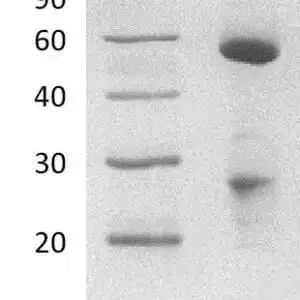
| Recommended dilutions Immunoblotting: use at 1-10ug/ml. A band of ~39kDa is detected. Immunohistochemistry: use at 2- 20ug/ml. Immunoprecipitation: use at 1-2ug per 100-500ug of total protein. These are recommended concentrations. End user should determine optimal concentrations for their |
| Immunogen Annexin 1 isolated from human neutrophils. |
| Size and concentration 100µg and |
| Form lyophilized |
| Storage Instructions This product is stable for at least one (1) year at -20°C to -70°C. Reconstituted product should be stored in appropriate aliquots to avoid repeated freeze-thaw cycles. |
| Storage buffer Lyophilized, 0.1M Tris, 0.1M glycine, 2% sucrose |
| Purity protein affinity purification |
| Clonality monoclonal |
| Isotype IgG2b |
| Compatible secondaries goat anti-mouse IgG, H&L chain specific, peroxidase conjugated polyclonal antibody 5486 goat anti-mouse IgG, H&L chain specific, biotin conjugated, Conjugate polyclonal antibody 2685 goat anti-mouse IgG, H&L chain specific, FITC conjugated polyclonal antibody 7854 goat anti-mouse IgG, H&L chain specific, peroxidase conjugated polyclonal antibody, crossabsorbed 1706 goat anti-mouse IgG, H&L chain specific, biotin conjugated polyclonal antibody, crossabsorbed 1716 goat anti-mouse IgG, H&L chain specific, FITC conjugated polyclonal antibody, crossabsorbed 1721 |
| Isotype control Mouse monocolonal IgG2b - Isotype Control |
| target relevance |
|---|
| Homo sapiens ANXA1 Annexin A1 |
| Protein names Annexin A1 |
| Alternative names Annexin I, Annexin-1, Calpactin II, Calpactin-2, Chromobindin-9, Lipocortin I, Phospholipase A2 inhibitory protein, p35 |
| Gene names ANXA1 |
| Protein family Belongs to the annexin family |
| Function Plays important roles in the innate immune response as effector of glucocorticoid-mediated responses and regulator of the inflammatory process. Has anti-inflammatory activity (PubMed:8425544). Plays a role in glucocorticoid-mediated down-regulation of the early phase of the inflammatory response (By similarity). Contributes to the adaptive immune response by enhancing signaling cascades that are triggered by T-cell activation, regulates differentiation and proliferation of activated T cells (PubMed:17008549). Promotes the differentiation of T cells into Th1 cells and negatively regulates differentiation into Th2 cells (PubMed:17008549). Has no effect on unstimulated T cells (PubMed:17008549). Negatively regulates hormone exocytosis via activation of the formyl peptide receptors and reorganization of the actin cytoskeleton (PubMed:19625660). Has high affinity for Ca(2+) and can bind up to eight Ca(2+) ions (By similarity). Displays Ca(2+)-dependent binding to phospholipid membranes (PubMed:2532504, PubMed:8557678). Plays a role in the formation of phagocytic cups and phagosomes. Plays a role in phagocytosis by mediating the Ca(2+)-dependent interaction between phagosomes and the actin cytoskeleton (By similarity). In the context of antitumor immunity, interacts with FPR1 on dendritic cells allowing for tumor-associated antigens uptake and cross-presentation to T cells to mount an antitumor specific T cell response |
| Subcellular location Nucleus, Cytoplasm, Cell projection, cilium, Cell membrane, Membrane, Endosome membrane, Basolateral cell membrane, Apical cell membrane, Lateral cell membrane, Secreted, Secreted, extracellular space, Cell membrane, Secreted, extracellular exosome, Cytoplasmic vesicle, secretory vesicle lumen, Cell projection, phagocytic cup, Early endosome, Cytoplasmic vesicle membrane |
| Structure Homodimer; non-covalently linked (By similarity). Homodimer; linked by transglutamylation (PubMed:2532504). Homodimers linked by transglutamylation are observed in placenta, but not in other tissues (PubMed:2532504). Interacts with S100A11 (PubMed:10673436, PubMed:8557678). Heterotetramer, formed by two molecules each of S100A11 and ANXA1 (PubMed:10673436). Interacts with DYSF (By similarity). Interacts with EGFR (By similarity) |
| Post-translational modification Phosphorylated by protein kinase C, EGFR and TRPM7 (PubMed:15485879, PubMed:2457390). Phosphorylated in response to EGF treatment (PubMed:2532504) Sumoylated Proteolytically cleaved by cathepsin CTSG to release the active N-terminal peptide Ac2-26 |
| Keywords 3D-structure, Acetylation, Adaptive immunity, Annexin, Calcium, Calcium/phospholipid-binding, Cell membrane, Cell projection, Cilium, Cytoplasm, Cytoplasmic vesicle, Direct protein sequencing, Disulfide bond, Endosome, Immunity, Inflammatory response, Innate immunity, Isopeptide bond, Membrane, Metal-binding, Nucleus, Pharmaceutical, Phospholipase A2 inhibitor, Phosphoprotein, Proteomics identification, Reference proteome, Repeat, Secreted, Ubl conjugation |
| Sequence MAMVSEFLKQAWFIENEEQEYVQTVKSSKGGPGSAVSPYPTFNPSSDVAALHKAIMVKGV DEATIIDILTKRNNAQRQQIKAAYLQETGKPLDETLKKALTGHLEEVVLALLKTPAQFDA DELRAAMKGLGTDEDTLIEILASRTNKEIRDINRVYREELKRDLAKDITSDTSGDFRNAL LSLAKGDRSEDFGVNEDLADSDARALYEAGERRKGTDVNVFNTILTTRSYPQLRRVFQKY TKYSKHDMNKVLDLELKGDIEKCLTAIVKCATSKPAFFAEKLHQAMKGVGTRHKALIRIM VSRSEIDMNDIKAFYQKMYGISLCQAILDETKGDYEKILVALCGGN |
| UniProt accession: P04083 |
Data
| No results found |
FAQ & Publications
Frequently Asked Questions
What applications is the mouse anti-Annexin A1 monoclonal antibody (A1A7) validated for?
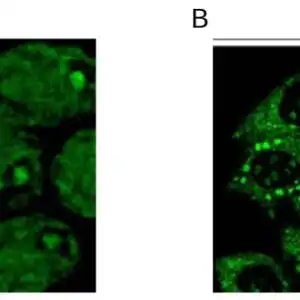
This antibody is tested and suitable for Western blotting (WB) and immunoprecipitation (IP). It is also applicable for immunocytochemistry/immunofluorescence (ICC/IF).
How should the mouse anti-Annexin A1 antibody be stored to maintain stability?
The lyophilized antibody is stable for at least one year when stored at -20°C to -70°C. After reconstitution, it should be aliquoted appropriately to avoid repeated freeze-thaw cycles.
What is the recommended concentration range for using this antibody in immunoblotting and immunohistochemistry?
For immunoblotting, use the antibody at 1-10 µg/mL, where it detects a band of approximately 39 kDa. For immunohistochemistry, the recommended concentration is between 2-20 µg/mL.
What is the host species and isotype of this Annexin A1 monoclonal antibody?
The antibody is a mouse monoclonal antibody with an IgG2b isotype.
Publications
| pmid | title | authors | citation |
|---|---|---|---|
| We haven't added any publications to our database yet. | |||
Published literature highly relevant to the biological target of this product and referencing this antibody or clone are retrieved from the PubMed database provided by the United States National Library of Medicine at the National Institutes of Health.
Protocols
| relevant to this product |
|---|
| Western blot |
Documents
| Batch Number | QC File | SDS |
|---|---|---|
| To view batch-specific Safety Datasheets and Quality Certificates associated with your account, please Log In. | ||
Only logged in customers who have purchased this product may leave a review.


Reviews
There are no reviews yet.