| Weight | 1 lbs |
|---|---|
| Dimensions | 9 × 5 × 2 in |
| host | mouse |
| isotype | IgG1 |
| clonality | monoclonal |
| concentration | concentrate, predilute |
| applications | IHC |
| reactivity | human |
| available size | 0.1 mL, 0.5 mL, 1 mL concentrated, 7 mL prediluted |

mouse anti-CD11c monoclonal antibody (ZM103) 6057
Price range: $160.00 through $528.00
Antibody summary
- Mouse monoclonal to CD11c
- Suitable for: Immunohistochemistry (formalin-fixed, paraffin-embedded tissues)
- Reacts with: Human
- Isotype:IgG1
- Control: Tonsil, lymph node
- Visualization: Membrane
- 0.1, 0.5, 1.0 mL concentrated, 7 mL prediluted
mouse anti-CD11c monoclonal antibody ZM103 6057
| target relevance |
|---|
| Homo sapiens ITGAX Integrin alpha-X |
| Protein names Integrin alpha-X |
| Alternative names CD11 antigen-like family member C, Leu M5, Leukocyte adhesion glycoprotein p150,95 alpha chain, Leukocyte adhesion receptor p150,95 |
| Gene names ITGAX |
| Protein family Belongs to the integrin alpha chain family |
| Function Integrin alpha-X/beta-2 is a receptor for fibrinogen. It recognizes the sequence G-P-R in fibrinogen. It mediates cell-cell interaction during inflammatory responses. It is especially important in monocyte adhesion and chemotaxis. Functions as a receptor of the erythrocyte-specific adhesion molecule ICAM4 and mediates erythrophagocytosis (PubMed:16985175) |
| Subcellular location Cell membrane |
| Structure Heterodimer of an alpha and a beta subunit. Alpha-X associates with beta-2 |
| Keywords 3D-structure, Calcium, Cell adhesion, Cell membrane, Direct protein sequencing, Disulfide bond, Glycoprotein, Integrin, Magnesium, Membrane, Metal-binding, Proteomics identification, Receptor, Reference proteome, Repeat, Signal, Transmembrane, Transmembrane helix |
| Sequence MTRTRAALLLFTALATSLGFNLDTEELTAFRVDSAGFGDSVVQYANSWVVVGAPQKITAA NQTGGLYQCGYSTGACEPIGLQVPPEAVNMSLGLSLASTTSPSQLLACGPTVHHECGRNM YLTGLCFLLGPTQLTQRLPVSRQECPRQEQDIVFLIDGSGSISSRNFATMMNFVRAVISQ FQRPSTQFSLMQFSNKFQTHFTFEEFRRSSNPLSLLASVHQLQGFTYTATAIQNVVHRLF HASYGARRDAAKILIVITDGKKEGDSLDYKDVIPMADAAGIIRYAIGVGLAFQNRNSWKE LNDIASKPSQEHIFKVEDFDALKDIQNQLKEKIFAIEGTETTSSSSFELEMAQEGFSAVF TPDGPVLGAVGSFTWSGGAFLYPPNMSPTFINMSQENVDMRDSYLGYSTELALWKGVQSL VLGAPRYQHTGKAVIFTQVSRQWRMKAEVTGTQIGSYFGASLCSVDVDSDGSTDLVLIGA PHYYEQTRGGQVSVCPLPRGWRRWWCDAVLYGEQGHPWGRFGAALTVLGDVNGDKLTDVV IGAPGEEENRGAVYLFHGVLGPSISPSHSQRIAGSQLSSRLQYFGQALSGGQDLTQDGLV DLAVGARGQVLLLRTRPVLWVGVSMQFIPAEIPRSAFECREQVVSEQTLVQSNICLYIDK RSKNLLGSRDLQSSVTLDLALDPGRLSPRATFQETKNRSLSRVRVLGLKAHCENFNLLLP SCVEDSVTPITLRLNFTLVGKPLLAFRNLRPMLAADAQRYFTASLPFEKNCGADHICQDN LGISFSFPGLKSLLVGSNLELNAEVMVWNDGEDSYGTTITFSHPAGLSYRYVAEGQKQGQ LRSLHLTCDSAPVGSQGTWSTSCRINHLIFRGGAQITFLATFDVSPKAVLGDRLLLTANV SSENNTPRTSKTTFQLELPVKYAVYTVVSSHEQFTKYLNFSESEEKESHVAMHRYQVNNL GQRDLPVSINFWVPVELNQEAVWMDVEVSHPQNPSLRCSSEKIAPPASDFLAHIQKNPVL DCSIAGCLRFRCDVPSFSVQEELDFTLKGNLSFGWVRQILQKKVSVVSVAEITFDTSVYS QLPGQEAFMRAQTTTVLEKYKVHNPTPLIVGSSIGGLLLLALITAVLYKVGFFKRQYKEM MEEANGQIAPENGTQTPSPPSEK |
| UniProt accession: P20702 |
Data
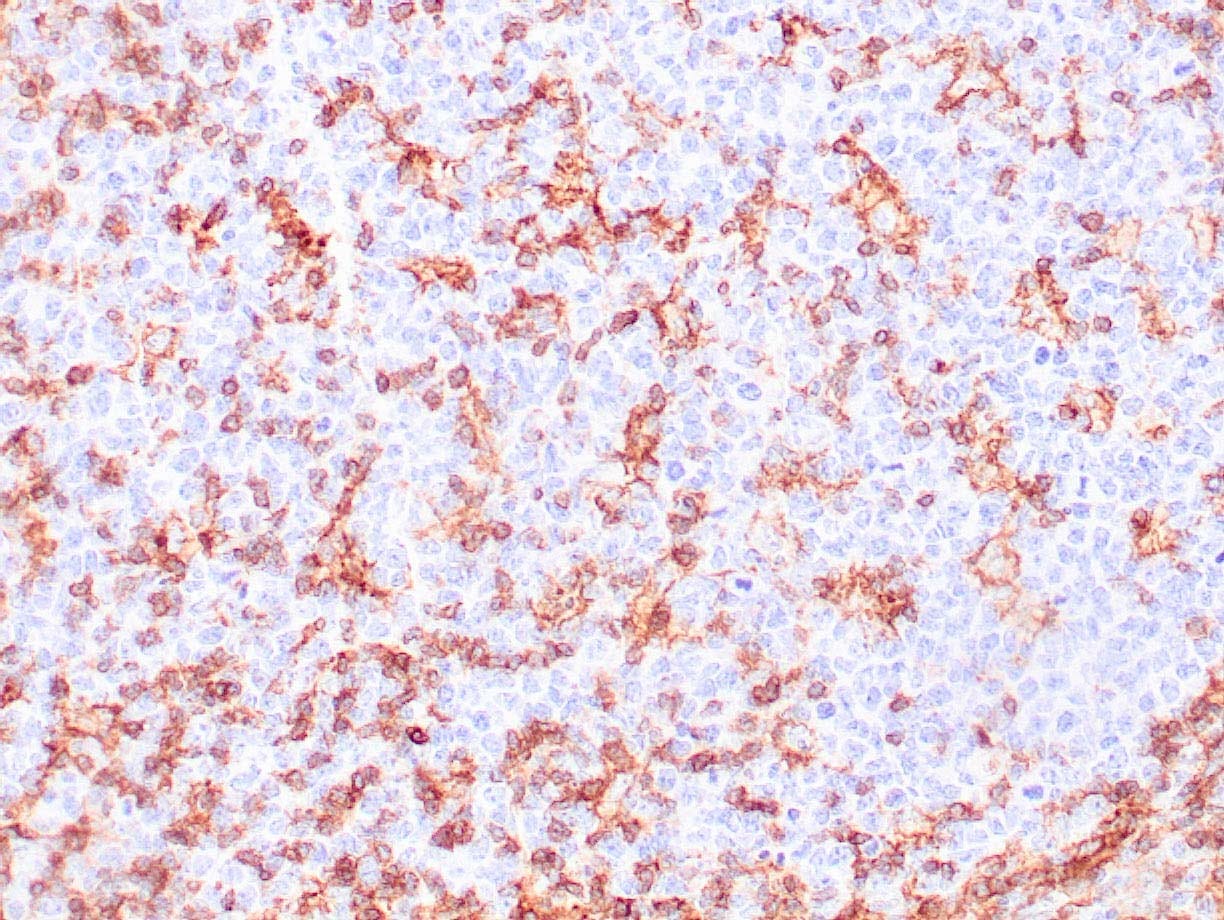 |
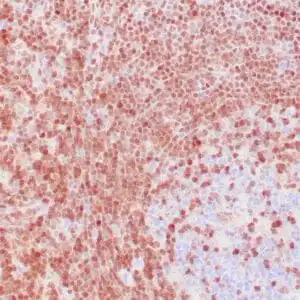
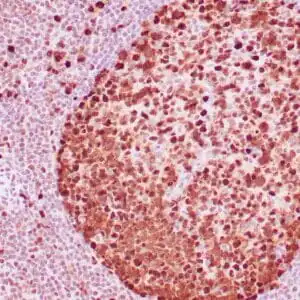
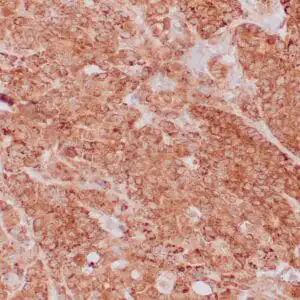
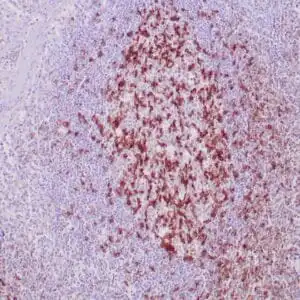
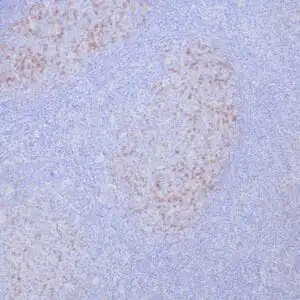
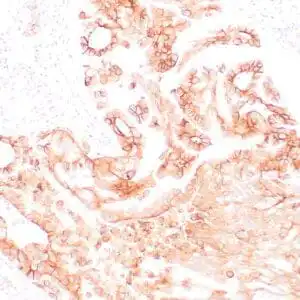
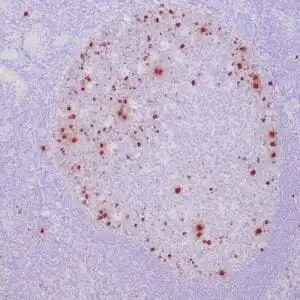
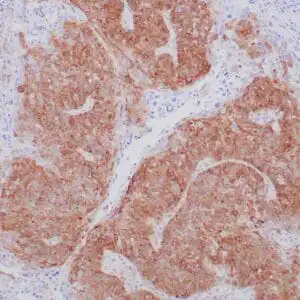
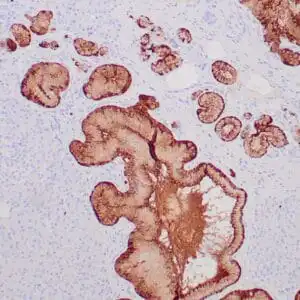
| Human tonsil stained with anti-CD11c antibody using peroxidase-conjugate and DAB chromogen. Note strong membranous staining of lymphocytes. |
FAQ & Publications
Frequently Asked Questions
What species does the mouse anti-CD11c monoclonal antibody (ZM103) specifically react with?
This antibody is reactive with human species, making it suitable for studies involving human tissue samples.
Which applications and tissue types is the anti-CD11c antibody validated for?
The antibody is validated for Immunohistochemistry (IHC) on formalin-fixed, paraffin-embedded tissues, with tonsil and lymph node tissues recommended as positive controls.
How should the mouse anti-CD11c monoclonal antibody be stored to maintain stability?
For short-term storage, keep the antibody at 2-8°C. For long-term preservation, store it at -20°C and avoid repeated freeze-thaw cycles to maintain antibody integrity.
Publications
| pmid | title | authors | citation |
|---|---|---|---|
| We haven't added any publications to our database yet. | |||
Published literature highly relevant to the biological target of this product and referencing this antibody or clone are retrieved from the PubMed database provided by the United States National Library of Medicine at the National Institutes of Health.
Protocols
| relevant to this product |
|---|
| IHC |
Documents
| Batch Number | QC File | SDS |
|---|---|---|
| To view batch-specific Safety Datasheets and Quality Certificates associated with your account, please Log In. | ||
Only logged in customers who have purchased this product may leave a review.
Reviews
There are no reviews yet.