| Weight | 1 lbs |
|---|---|
| Dimensions | 9 × 5 × 2 in |
| host | mouse |
| isotype | IgG |
| clonality | monoclonal |
| concentration | concentrate, predilute |
| applications | IHC |
| reactivity | human |
| available size | 0.1 mL, 0.5 mL, 1 mL concentrated, 7 mL prediluted |

rabbit anti-p57Kip2 monoclonal antibody (ZR230) 6314
Price range: $160.00 through $528.00
Antibody summary
- Rabbit monoclonal to p57Kip2
- Suitable for: Immunohistochemistry (formalin-fixed, paraffin-embedded tissues)
- Reacts with: Human
- Isotype:IgG
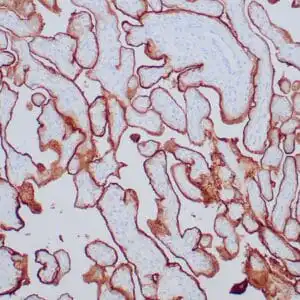
- Control: Colon carcinoma or placenta
- Visualization: Nucleus
- 0.1, 0.5, 1.0 mL concentrated, 7 mL prediluted
rabbit anti-p57Kip2 monoclonal antibody ZR230 6314
| target relevance |
|---|
| Homo sapiens CDKN1C Cyclin-dependent kinase inhibitor 1C |
| Protein names Cyclin-dependent kinase inhibitor 1C |
| Alternative names Cyclin-dependent kinase inhibitor p57, p57Kip2 |
| Gene names CDKN1C |
| Protein family Belongs to the CDI family |
| Function Potent tight-binding inhibitor of several G1 cyclin/CDK complexes (cyclin E-CDK2, cyclin D2-CDK4, and cyclin A-CDK2) and, to lesser extent, of the mitotic cyclin B-CDC2. Negative regulator of cell proliferation. May play a role in maintenance of the non-proliferative state throughout life |
| Subcellular location Nucleus |
| Structure Interacts with PCNA |
| Involvement in disease Beckwith-Wiedemann syndrome A disorder characterized by anterior abdominal wall defects including exomphalos (omphalocele), pre- and postnatal overgrowth, and macroglossia. Additional less frequent complications include specific developmental defects and a predisposition to embryonal tumors. Intrauterine growth retardation, metaphyseal dysplasia, adrenal hypoplasia congenita, and genital anomalies A rare condition characterized by intrauterine growth restriction, metaphyseal dysplasia, congenital adrenal hypoplasia, and genital anomalies. Patients with this condition may present shortly after birth with severe adrenal insufficiency, which can be life-threatening if not recognized early and commenced on steroid replacement therapy. Other reported features in this condition include, hypercalciuria and/or hypercalcemia, craniosynostosis, cleft palate, and scoliosis. |
| Keywords Alternative splicing, Cell cycle, Disease variant, Methylation, Nucleus, Phosphoprotein, Protein kinase inhibitor, Proteomics identification, Reference proteome, Repeat, Tumor suppressor |
| Sequence MSDASLRSTSTMERLVARGTFPVLVRTSACRSLFGPVDHEELSRELQARLAELNAEDQNR WDYDFQQDMPLRGPGRLQWTEVDSDSVPAFYRETVQVGRCRLLLAPRPVAVAVAVSPPLE PAAESLDGLEEAPEQLPSVPVPAPASTPPPVPVLAPAPAPAPAPVAAPVAAPVAVAVLAP APAPAPAPAPAPAPVAAPAPAPAPAPAPAPAPAPAPDAAPQESAEQGANQGQRGQEPLAD QLHSGISGRPAAGTAAASANGAAIKKLSGPLISDFFAKRKRSAPEKSSGDVPAPCPSPSA APGVGSVEQTPRKRLR |
| UniProt accession: P49918 |
Data
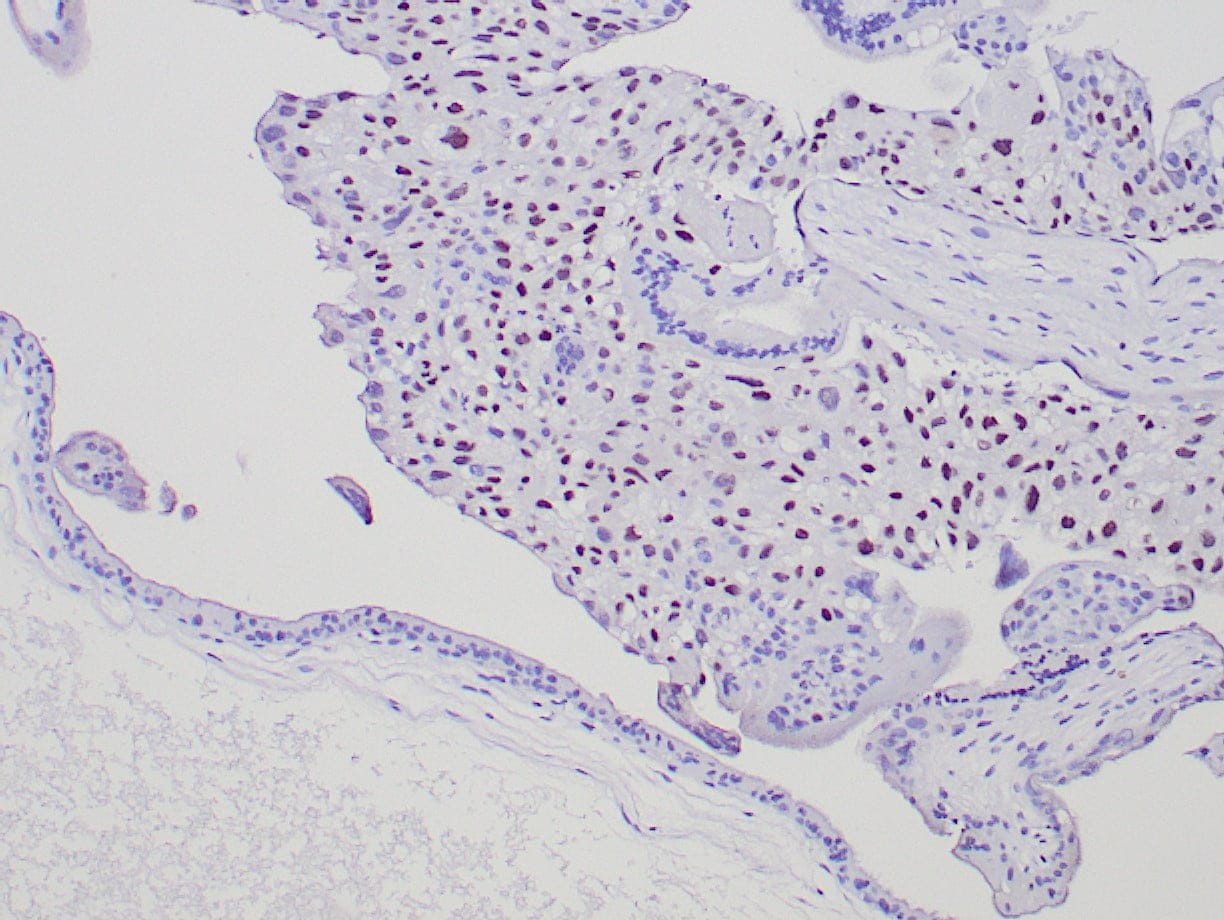 |
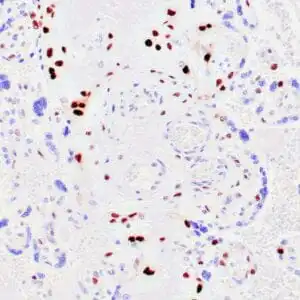
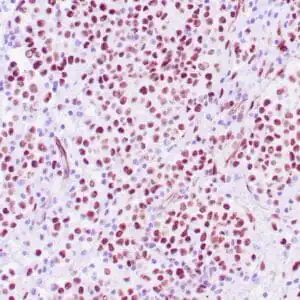
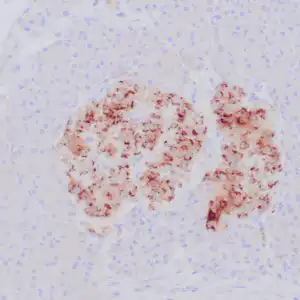
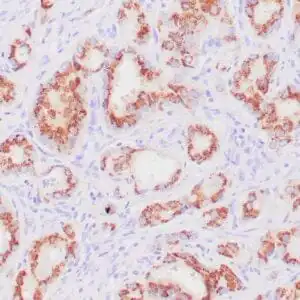
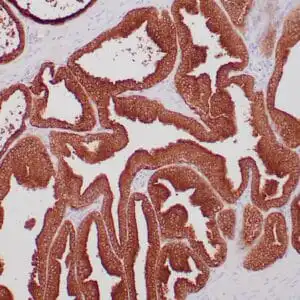
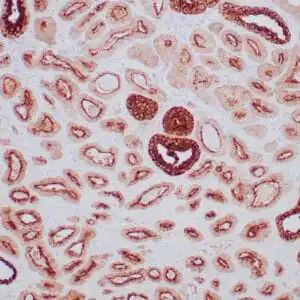
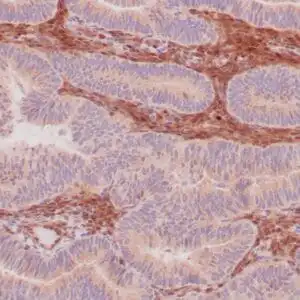
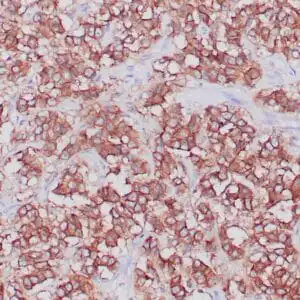
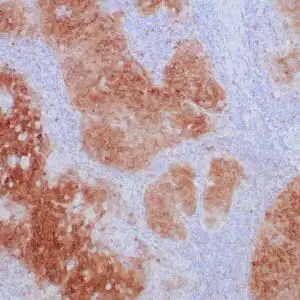
| Formalin-fixed, paraffin-embedded human complete moles stained with anti-p57 antibody |
FAQ & Publications
Frequently Asked Questions
What species does the rabbit anti-p57Kip2 monoclonal antibody (ZR230) specifically react with?
This antibody is reactive with human species, making it suitable for studies involving human tissue samples.
For which applications is the rabbit anti-p57Kip2 monoclonal antibody (ZR230) recommended?
It is recommended for Immunohistochemistry (IHC) on formalin-fixed, paraffin-embedded tissues.
How should the rabbit anti-p57Kip2 monoclonal antibody (ZR230) be stored to maintain its stability?
For short-term storage, keep the antibody at 2-8°C, and for long-term storage, it should be kept at -20°C while avoiding repeated freeze/thaw cycles.
What is the recommended dilution range for using the concentrated form of this antibody in IHC?
The concentrated antibody is recommended to be diluted between 1:100 and 1:200 for optimal immunohistochemical staining.
What is the host species and clonality of the anti-p57Kip2 antibody (ZR230)?
This antibody is a rabbit monoclonal antibody, providing high specificity and affinity for the p57Kip2 target.
Publications
| pmid | title | authors | citation |
|---|---|---|---|
| We haven't added any publications to our database yet. | |||
Published literature highly relevant to the biological target of this product and referencing this antibody or clone are retrieved from the PubMed database provided by the United States National Library of Medicine at the National Institutes of Health.
Protocols
| relevant to this product |
|---|
| IHC |
Documents
| Batch Number | QC File | SDS |
|---|---|---|
| To view batch-specific Safety Datasheets and Quality Certificates associated with your account, please Log In. | ||
Only logged in customers who have purchased this product may leave a review.

Reviews
There are no reviews yet.