| Weight | 1 lbs |
|---|---|
| Dimensions | 9 × 5 × 2 in |
| host | mouse |
| isotype | IgG |
| clonality | monoclonal |
| concentration | concentrate, predilute |
| applications | IHC |
| reactivity | human |
| available size | 0.1 mL, 0.5 mL, 1 mL concentrated, 7 mL prediluted |

rabbit anti-MUC-5AC monoclonal antibody (ZR19) 6269
Price range: $160.00 through $528.00
Antibody summary
- Rabbit monoclonal to MUC-5AC
- Suitable for: Immunohistochemistry (formalin-fixed, paraffin-embedded tissues)
- Reacts with: Human
- Isotype:IgG
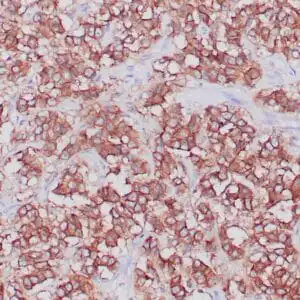
- Control: Gastric carcinoma
- Visualization: Cell membrane
- 0.1, 0.5, 1.0 mL concentrated, 7 mL prediluted
rabbit anti-MUC-5AC monoclonal antibody ZR19 6269
| target relevance |
|---|
| Homo sapiens MUC5AC Mucin-5AC |
| Protein names Mucin-5AC |
| Alternative names Gastric mucin, Major airway glycoprotein, Mucin-5 subtype AC, tracheobronchial, Tracheobronchial mucin |
| Gene names MUC5AC |
| Function Gel-forming glycoprotein of gastric and respiratory tract epithelia that protects the mucosa from infection and chemical damage by binding to inhaled microorganisms and particles that are subsequently removed by the mucociliary system (PubMed:14535999, PubMed:14718370). Interacts with H.pylori in the gastric epithelium, Barrett's esophagus as well as in gastric metaplasia of the duodenum (GMD) (PubMed:14535999) |
| Subcellular location Secreted |
| Structure Homomultimer; disulfide-linked (PubMed:14718370). The N- and C-terminus mediate their assembly into higher order structures to form filaments (By similarity). The CTCK domains of two polypeptides associate in the endoplasmic reticulum to generate intermolecularly disulfide-bonded dimers (By similarity). These dimers progress to the Golgi apparatus, which is a more acidic environment than the endoplasmic reticulum. Under acidic conditions, the N-termini form non-covalent intermolecular interactions that juxtapose assemblies from different CTCK-linked dimers to produce long, disulfide-linked polymers that remain highly compact until secretion (By similarity) |
| Post-translational modification C-, O- and N-glycosylated (PubMed:14718370). O-glycosylated on the second and last Thr of the Thr-/Ser-rich tandem repeats TTPSPVPTTSTTSA (PubMed:14718370, PubMed:22186971, PubMed:25939779). One form of glycosylation is also known as Lewis B (LeB) blood group antigen, a tetrasaccharide consisting of N-acetylglucosamine having a fucosyl residue attached (PubMed:14535999). It has a role as an epitope and antigen and functions as a receptor for H.pylori binding and facilitates infection (PubMed:14535999). C-mannosylation in the Cys-rich subdomains may be required for proper folding of these regions and for export from the endoplasmic reticulum during biosynthesis (PubMed:14718370) Proteolytic cleavage in the C-terminal is initiated early in the secretory pathway and does not involve a serine protease. The extent of cleavage is increased in the acidic parts of the secretory pathway. Cleavage generates a reactive group which could link the protein to a primary amide |
| Keywords 3D-structure, Copper, Direct protein sequencing, Disulfide bond, Glycoprotein, Metal-binding, Proteomics identification, Reference proteome, Repeat, Secreted, Signal |
| Sequence MSVGRRKLALLWALALALACTRHTGHAQDGSSESSYKHHPALSPIARGPSGVPLRGATVF PSLRTIPVVRASNPAHNGRVCSTWGSFHYKTFDGDVFRFPGLCNYVFSEHCGAAYEDFNI QLRRSQESAAPTLSRVLMKVDGVVIQLTKGSVLVNGHPVLLPFSQSGVLIQQSSSYTKVE ARLGLVLMWNHDDSLLLELDTKYANKTCGLCGDFNGMPVVSELLSHNTKLTPMEFGNLQK MDDPTDQCQDPVPEPPRNCSTGFGICEELLHGQLFSGCVALVDVGSYLEACRQDLCFCED TDLLSCVCHTLAEYSRQCTHAGGLPQDWRGPDFCPQKCPNNMQYHECRSPCADTCSNQEH SRACEDHCVAGCFCPEGTVLDDIGQTGCVPVSKCACVYNGAAYAPGATYSTDCTNCTCSG GRWSCQEVPCPGTCSVLGGAHFSTFDGKQYTVHGDCSYVLTKPCDSSAFTVLAELRRCGL TDSETCLKSVTLSLDGAQTVVVIKASGEVFLNQIYTQLPISAANVTIFRPSTFFIIAQTS LGLQLNLQLVPTMQLFMQLAPKLRGQTCGLCGNFNSIQADDFRTLSGVVEATAAAFFNTF KTQAACPNIRNSFEDPCSLSVENEKYAQHWCSQLTDADGPFGRCHAAVKPGTYYSNCMFD TCNCERSEDCLCAALSSYVHACAAKGVQLGGWRDGVCTKPMTTCPKSMTYHYHVSTCQPT CRSLSEGDITCSVGFIPVDGCICPKGTFLDDTGKCVQASNCPCYHRGSMIPNGESVHDSG AICTCTHGKLSCIGGQAPAPVCAAPMVFFDCRNATPGDTGAGCQKSCHTLDMTCYSPQCV PGCVCPDGLVADGEGGCITAEDCPCVHNEASYRAGQTIRVGCNTCTCDSRMWRCTDDPCL ATCAVYGDGHYLTFDGQSYSFNGDCEYTLVQNHCGGKDSTQDSFRVVTENVPCGTTGTTC SKAIKIFLGGFELKLSHGKVEVIGTDESQEVPYTIRQMGIYLVVDTDIGLVLLWDKKTSI FINLSPEFKGRVCGLCGNFDDIAVNDFATRSRSVVGDVLEFGNSWKLSPSCPDALAPKDP CTANPFRKSWAQKQCSILHGPTFAACHAHVEPARYYEACVNDACACDSGGDCECFCTAVA AYAQACHEVGLCVSWRTPSICPLFCDYYNPEGQCEWHYQPCGVPCLRTCRNPRGDCLRDV RGLEGCYPKCPPEAPIFDEDKMQCVATCPTPPLPPRCHVHGKSYRPGAVVPSDKNCQSCL CTERGVECTYKAEACVCTYNGQRFHPGDVIYHTTDGTGGCISARCGANGTIERRVYPCSP TTPVPPTTFSFSTPPLVVSSTHTPSNGPSSAHTGPPSSAWPTTAGTSPRTRLPTASASLP PVCGEKCLWSPWMDVSRPGRGTDSGDFDTLENLRAHGYRVCESPRSVECRAEDAPGVPLR ALGQRVQCSPDVGLTCRNREQASGLCYNYQIRVQCCTPLPCSTSSSPAQTTPPTTSKTTE TRASGSSAPSSTPGTVSLSTARTTPAPGTATSVKKTFSTPSPPPVPATSTSSMSTTAPGT SVVSSKPTPTEPSTSSCLQELCTWTEWIDGSYPAPGINGGDFDTFQNLRDEGYTFCESPR SVQCRAESFPNTPLADLGQDVICSHTEGLICLNKNQLPPICYNYEIRIQCCETVNVCRDI TRLPKTVATTRPTPHPTGAQTQTTFTTHMPSASTEQPTATSRGGPTATSVTQGTHTTLVT RNCHPRCTWTKWFDVDFPSPGPHGGDKETYNNIIRSGEKICRRPEEITRLQCRAKSHPEV SIEHLGQVVQCSREEGLVCRNQDQQGPFKMCLNYEVRVLCCETPRGCHMTSTPGSTSSSP AQTTPSTTSKTTETQASGSSAPSSTPGTVSLSTARTTPAPGTATSVKKTFSTPSPPPVPA TSTSSMSTTAPGTSVVSSKPTPTEPSTSSCLQELCTWTEWIDGSYPAPGINGGDFDTFQN LRDEGYTFCESPRSVQCRAESFPNTPLADLGQDVICSHTEGLICLNKNQLPPICYNYEIR IQCCETVNVCRDITRPPKTVATTRPTPHPTGAQTQTTFTTHMPSASTEQPTATSRGGPTA TSVTQGTHTTPVTRNCHPRCTWTTWFDVDFPSPGPHGGDKETYNNIIRSGEKICRRPEEI TRLQCRAKSHPEVSIEHLGQVVQCSREEGLVCRNQDQQGPFKMCLNYEVRVLCCETPKGC PVTSTPVTAPSTPSGRATSPTQSTSSWQKSRTTTLVTTSTTSTPQTSTTYAHTTSTTSAP TARTTSAPTTRTTSASPASTTSGPGNTPSPVPTTSTISAPTTSITSAPTTSTTSAPTSST TSGPGTTPSPVPTTSITSAPTTSTTSAPTTSTTSARTSSTTSATTTSRISGPETTPSPVP TTSTTSATTTSTTSAPTTSTTSAPTSSTTSSPQTSTTSAPTTSTTSGPGTTPSPVPTTST TSAPTTRTTSAPKSSTTSAATTSTTSGPETTPRPVPTTSTTSSPTTSTTSAPTTSTTSAS TTSTTSGAGTTPSPVPTTSTTSAPTTSTTSAPISSTTSATTTSTTSGPGTTPSPVPTTST TSAPTTSTTSGPGTTPSAVPTTSITSAPTTSTNSAPISSTTSATTTSRISGPETTPSPVP TASTTSASTTSTTSGPGTTPSPVPTTSTISVPTTSTTSASTTSTTSASTTSTTSGPGTTP SPVPTTSTTSAPTTSTTSAPTTSTISAPTTSTTSATTTSTTSAPTPRRTSAPTTSTISAS TTSTTSATTTSTTSATTTSTISAPTTSTTLSPTTSTTSTTITSTTSAPISSTTSTPQTST TSAPTTSTTSGPGTTSSPVPTTSTTSAPTTSTTSAPTTRTTSVPTSSTTSTATTSTTSGP GTTPSPVPTTSTTSAPTTRTTSAPTTSTTSAPTTSTTSAPTSSTTSATTTSTISVPTTST TSVPGTTPSPVPTTSTISVPTTSTTSASTTSTTSGPGTTPSPVPTTSTTSAPTTSTTSAP TTSTISAPTTSTPSAPTTSTTLAPTTSTTSAPTTSTTSTPTSSTTSSPQTSTTSASTTSI TSGPGTTPSPVPTTSTTSAPTTSTTSAATTSTISAPTTSTTSAPTTSTTSASTASKTSGL GTTPSPIPTTSTTSPPTTSTTSASTASKTSGPGTTPSPVPTTSTIFAPRTSTTSASTTST TPGPGTTPSPVPTTSTASVSKTSTSHVSISKTTHSQPVTRDCHLRCTWTKWFDIDFPSPG PHGGDKETYNNIIRSGEKICRRPEEITRLQCRAESHPEVSIEHLGQVVQCSREEGLVCRN QDQQGPFKMCLNYEVRVLCCETPKGCPVTSTPVTAPSTPSGRATSPTQSTSSWQKSRTTT LVTTSTTSTPQTSTTSAPTTSTTSAPTTSTTSAPTTSTTSTPQTSISSAPTSSTTSAPTS STISARTTSIISAPTTSTTSSPTTSTTSATTTSTTSAPTSSTTSTPQTSKTSAATSSTTS GSGTTPSPVTTTSTASVSKTSTSHVSVSKTTHSQPVTRDCHPRCTWTKWFDVDFPSPGPH GGDKETYNNIIRSGEKICRRPEEITRLQCRAKSHPEVSIEHLGQVVQCSREEGLVCRNQD QQGPFKMCLNYEVRVLCCETPKGCPVTSTSVTAPSTPSGRATSPTQSTSSWQKSRTTTLV TSSITSTTQTSTTSAPTTSTTPASIPSTTSAPTTSTTSAPTTSTTSAPTTSTTSTPQTTT SSAPTSSTTSAPTTSTISAPTTSTISAPTTSTTSAPTASTTSAPTSTSSAPTTNTTSAPT TSTTSAPITSTISAPTTSTTSTPQTSTISSPTTSTTSTPQTSTTSSPTTSTTSAPTTSTT SAPTTSTTSTPQTSISSAPTSSTTSAPTASTISAPTTSTTSFHTTSTTSPPTSSTSSTPQ TSKTSAATSSTTSGSGTTPSPVPTTSTASVSKTSTSHVSVSKTTHSQPVTRDCHPRCTWT KWFDVDFPSPGPHGGDKETYNNIIRSGEKICRRPEEITRLQCRAESHPEVSIEHLGQVVQ CSREEGLVCRNQDQQGPFKMCLNYEVRVLCCETPKGCPVTSTPVTAPSTPSGRATSPTQS TSSWQKSRTTTLVTTSTTSTPQTSTTSAPTTSTIPASTPSTTSAPTTSTTSAPTTSTTSA PTHRTTSGPTTSTTLAPTTSTTSAPTTSTNSAPTTSTISASTTSTISAPTTSTISSPTSS TTSTPQTSKTSAATSSTTSGSGTTPSPVPTTSTTSASTTSTTSAPTTSTTSGPGTTPSPV PSTSTTSAATTSTTSAPTTRTTSAPTSSMTSGPGTTPSPVPTTSTTSAPTTSTTSGPGTT PSPVPTTSTTSAPITSTTSGPGSTPSPVPTTSTTSAPTTSTTSASTASTTSGPGTTPSPV PTTSTTSAPTTRTTSASTASTTSGPGSTPSPVPTTSTTSAPTTRTTPASTASTTSGPGTT PSPVPTTSTTSASTTSTISLPTTSTTSAPITSMTSGPGTTPSPVPTTSTTSAPTTSTTSA STASTTSGPGTTPSPVPTTSTTSAPTTSTTSASTASTTSGPGTSLSPVPTTSTTSAPTTS TTSGPGTTPSPVPTTSTTSAPTTSTTSGPGTTPSPVPTTSTTPVSKTSTSHLSVSKTTHS QPVTSDCHPLCAWTKWFDVDFPSPGPHGGDKETYNNIIRSGEKICRRPEEITRLQCRAES HPEVNIEHLGQVVQCSREEGLVCRNQDQQGPFKMCLNYEVRVLCCETPRGCPVTSVTPYG TSPTNALYPSLSTSMVSASVASTSVASSSVASSSVAYSTQTCFCNVADRLYPAGSTIYRH RDLAGHCYYALCSQDCQVVRGVDSDCPSTTLPPAPATSPSISTSEPVTELGCPNAVPPRK KGETWATPNCSEATCEGNNVISLRPRTCPRVEKPTCANGYPAVKVADQDGCCHHYQCQCV CSGWGDPHYITFDGTYYTFLDNCTYVLVQQIVPVYGHFRVLVDNYFCGAEDGLSCPRSII LEYHQDRVVLTRKPVHGVMTNEIIFNNKVVSPGFRKNGIVVSRIGVKMYATIPELGVQVM FSGLIFSVEVPFSKFANNTEGQCGTCTNDRKDECRTPRGTVVASCSEMSGLWNVSIPDQP ACHRPHPTPTTVGPTTVGSTTVGPTTVGSTTVGPTTPPAPCLPSPICQLILSKVFEPCHT VIPPLLFYEGCVFDRCHMTDLDVVCSSLELYAALCASHDICIDWRGRTGHMCPFTCPADK VYQPCGPSNPSYCYGNDSASLGALPEAGPITEGCFCPEGMTLFSTSAQVCVPTGCPRCLG PHGEPVKVGHTVGMDCQECTCEAATWTLTCRPKLCPLPPACPLPGFVPVPAAPQAGQCCP QYSCACNTSRCPAPVGCPEGARAIPTYQEGACCPVQNCSWTVCSINGTLYQPGAVVSSSL CETCRCELPGGPPSDAFVVSCETQICNTHCPVGFEYQEQSGQCCGTCVQVACVTNTSKSP AHLFYPGETWSDAGNHCVTHQCEKHQDGLVVVTTKKACPPLSCSLDEARMSKDGCCRFCP PPPPPYQNQSTCAVYHRSLIIQQQGCSSSEPVRLAYCRGNCGDSSSMYSLEGNTVEHRCQ CCQELRTSLRNVTLHCTDGSSRAFSYTEVEECGCMGRRCPAPGDTQHSEEAEPEPSQEAE SGSWERGVPVSPMH |
| UniProt accession: P98088 |
Data
 |
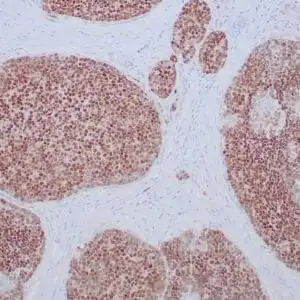
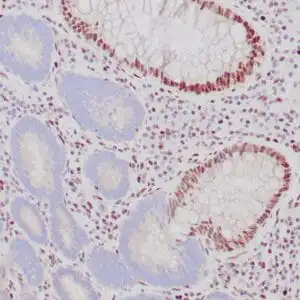
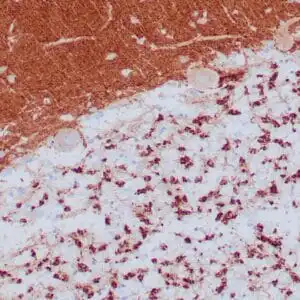
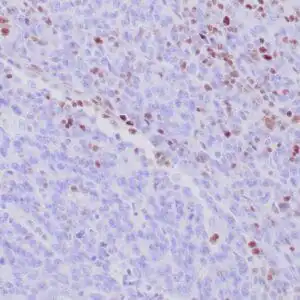
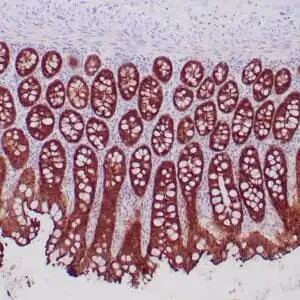
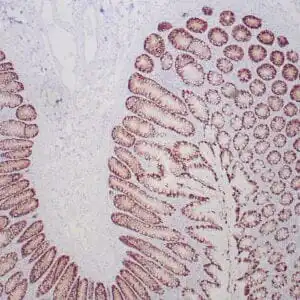
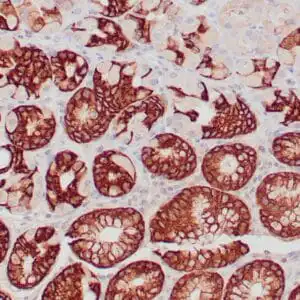
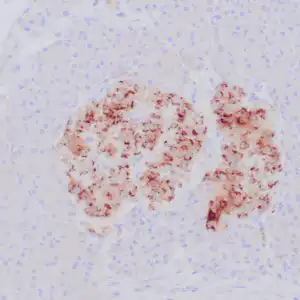
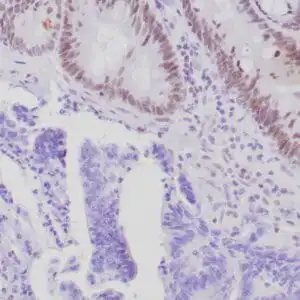
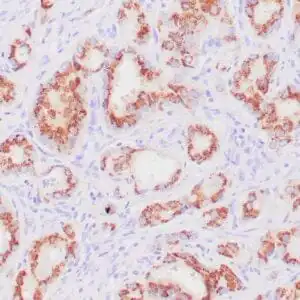
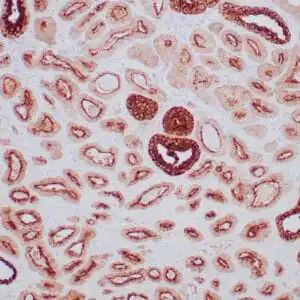
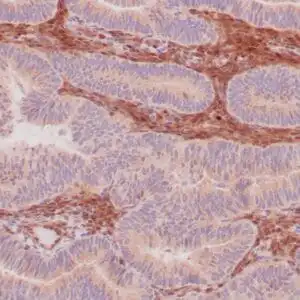
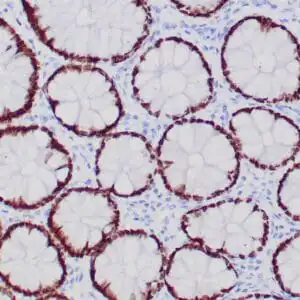
| Formalin-fixed, paraffin-embedded human stomach stained with anti MUC-5AC antibody using peroxidase-conjugate and DAB chromogen. Note the cytoplasmic staining of gastric body glands |
FAQ & Publications
Frequently Asked Questions
What is the recommended application for the rabbit anti-MUC-5AC monoclonal antibody (ZR19) 6269?
This antibody is suitable for immunohistochemistry (IHC) on formalin-fixed, paraffin-embedded human tissues.
How should the rabbit anti-MUC-5AC monoclonal antibody (ZR19) 6269 be stored to maintain stability?
For short term storage, keep the antibody at 2-8°C. For longer term storage, it should be kept at -20°C and freeze/thaw cycles should be avoided.
Which species does the rabbit anti-MUC-5AC monoclonal antibody (ZR19) 6269 specifically react with?
This monoclonal antibody reacts specifically with human MUC-5AC protein.
What is the immunogen used to generate the rabbit anti-MUC-5AC monoclonal antibody (ZR19) 6269?
The antibody was raised against recombinant full-length human MUC5AC protein.
Publications
| pmid | title | authors | citation |
|---|---|---|---|
| We haven't added any publications to our database yet. | |||
Published literature highly relevant to the biological target of this product and referencing this antibody or clone are retrieved from the PubMed database provided by the United States National Library of Medicine at the National Institutes of Health.
Protocols
| relevant to this product |
|---|
| IHC |
Documents
| Batch Number | QC File | SDS |
|---|---|---|
| To view batch-specific Safety Datasheets and Quality Certificates associated with your account, please Log In. | ||
Only logged in customers who have purchased this product may leave a review.

Reviews
There are no reviews yet.