| Weight | 1 lbs |
|---|---|
| Dimensions | 9 × 5 × 2 in |
| host | mouse |
| isotype | IgG2b |
| clonality | monoclonal |
| concentration | concentrate, predilute |
| applications | IHC |
| reactivity | human |
| available size | 0.1 mL, 0.5 mL, 1 mL concentrated, 7 mL prediluted |

mouse anti-SOX-2 monoclonal antibody (ZM57) 6367
Price range: $160.00 through $528.00
Antibody summary
- Mouse monoclonal to SOX-2
- Suitable for: Immunohistochemistry (formalin-fixed, paraffin-embedded tissues)
- Reacts with: Human
- Isotype:IgG2b
- Control: Normal brain tissue and astrocytoma
- Visualization: Nuclear
- 0.1, 0.5, 1.0 mL concentrated, 7 mL prediluted
mouse anti-SOX-2 monoclonal antibody ZM57 6367
| target relevance |
|---|
| Homo sapiens SOX2 Transcription factor SOX-2 |
| Protein names Transcription factor SOX-2 |
| Gene names SOX2 |
| Function Transcription factor that forms a trimeric complex with OCT4 on DNA and controls the expression of a number of genes involved in embryonic development such as YES1, FGF4, UTF1 and ZFP206 (By similarity). Binds to the proximal enhancer region of NANOG (By similarity). Critical for early embryogenesis and for embryonic stem cell pluripotency (PubMed:18035408). Downstream SRRT target that mediates the promotion of neural stem cell self-renewal (By similarity). Keeps neural cells undifferentiated by counteracting the activity of proneural proteins and suppresses neuronal differentiation (By similarity). May function as a switch in neuronal development (By similarity) |
| Subcellular location Nucleus speckle, Cytoplasm, Nucleus |
| Structure Interacts with ZSCAN10 (By similarity). Interacts with SOX3 and FGFR1 (By similarity). Interacts with GLIS1 (PubMed:21654807). Interacts with POU5F1; binds synergistically with POU5F1 to DNA (By similarity). Interacts with DDX56 (By similarity). Interacts with L3MBTL3 and DCAF5; the interaction requires methylation at Lys-42 and is necessary to target SOX2 for ubiquitination by the CRL4-DCAF5 E3 ubiquitin ligase complex (PubMed:30442713). Interacts with RCOR1/CoREST (By similarity) (PubMed:30442713). Interacts with PHF20L1; the interaction requires methylation at Lys-42 and Lys-117 and protects SOX2 from degradation (PubMed:29358331). Interacts with TRIM26; this interaction prevents ubiquitination by WWP2 (PubMed:34732716) |
| Post-translational modification Sumoylation inhibits binding on DNA and negatively regulates the FGF4 transactivation Methylation at Lys-42 and Lys-117 is necessary for the regulation of SOX2 proteasomal degradation Ubiquitinated by WWP2, leading to proteasomal degradation |
| Involvement in disease Microphthalmia, syndromic, 3 A disease characterized by the rare association of malformations including uni- or bilateral anophthalmia or microphthalmia, and esophageal atresia with trachoesophageal fistula. Microphthalmia is a disorder of eye formation, ranging from small size of a single eye to complete bilateral absence of ocular tissues (anophthalmia). In many cases, microphthalmia/anophthalmia occurs in association with syndromes that include non-ocular abnormalities. |
| Keywords 3D-structure, Activator, Cytoplasm, Developmental protein, Disease variant, DNA-binding, Isopeptide bond, Methylation, Microphthalmia, Nucleus, Phosphoprotein, Proteomics identification, Reference proteome, Transcription, Transcription regulation, Ubl conjugation |
| Sequence MYNMMETELKPPGPQQTSGGGGGNSTAAAAGGNQKNSPDRVKRPMNAFMVWSRGQRRKMA QENPKMHNSEISKRLGAEWKLLSETEKRPFIDEAKRLRALHMKEHPDYKYRPRRKTKTLM KKDKYTLPGGLLAPGGNSMASGVGVGAGLGAGVNQRMDSYAHMNGWSNGSYSMMQDQLGY PQHPGLNAHGAAQMQPMHRYDVSALQYNSMTSSQTYMNGSPTYSMSYSQQGTPGMALGSM GSVVKSEASSSPPVVTSSSHSRAPCQAGDLRDMISMYLPGAEVPEPAAPSRLHMSQHYQS GPVPGTAINGTLPLSHM |
| UniProt accession: P48431 |
Data
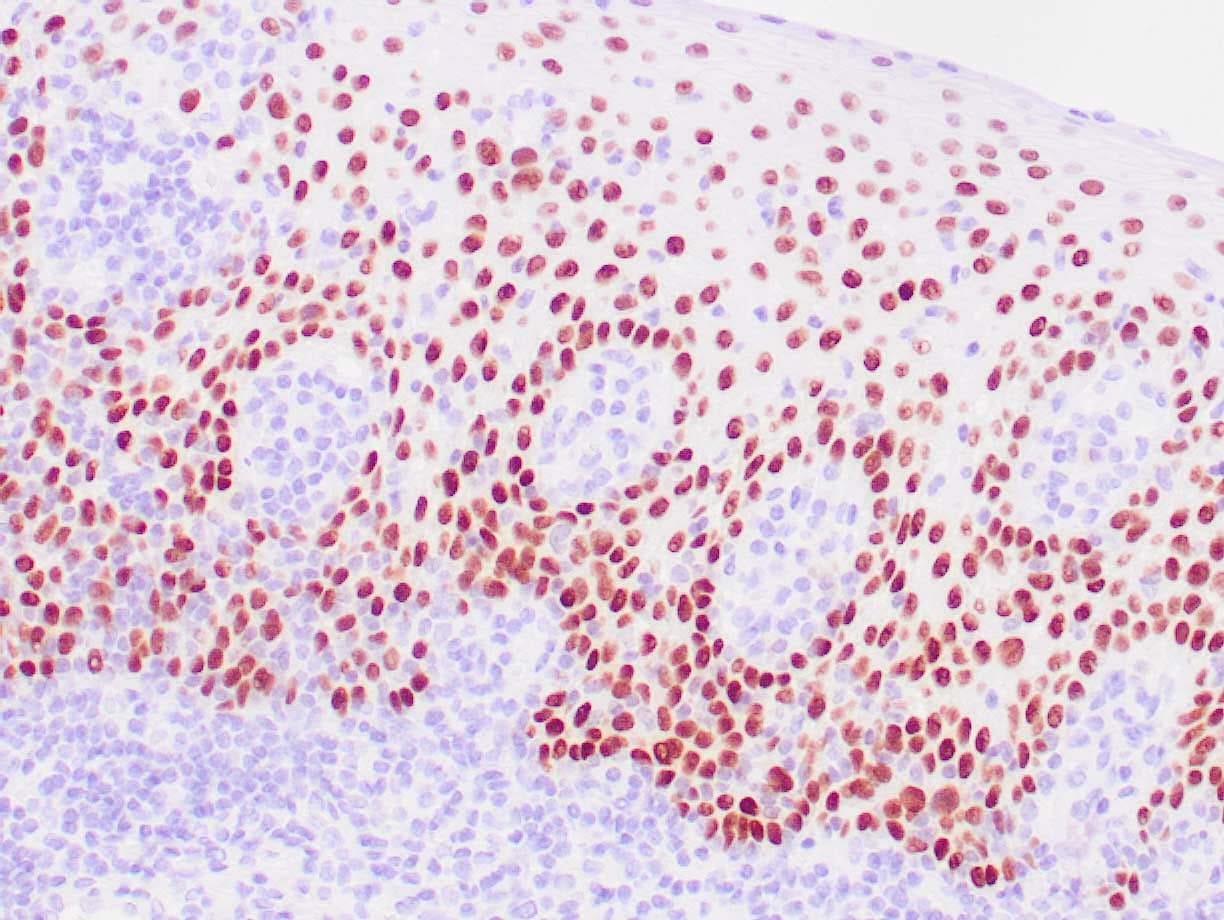 |
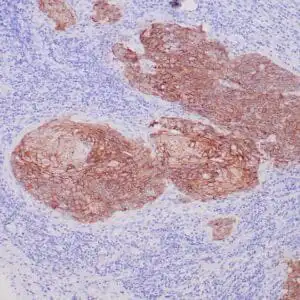
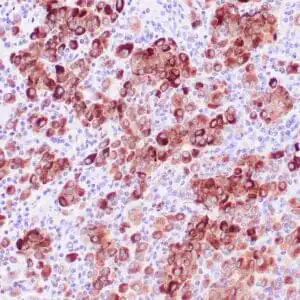
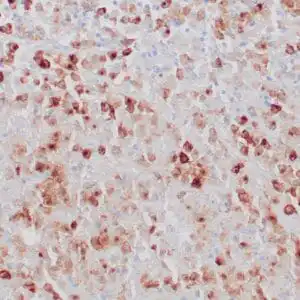
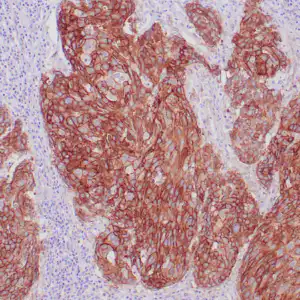
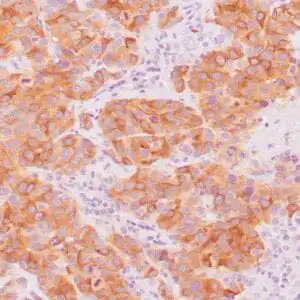
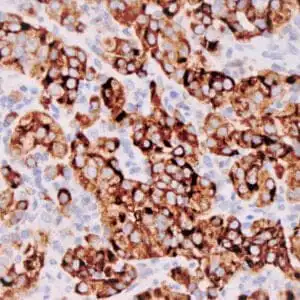
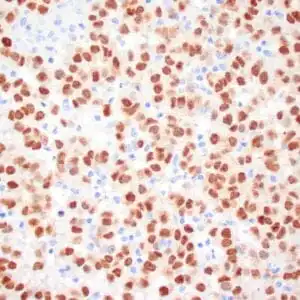
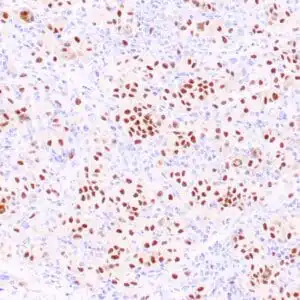
| Human skin stained with anti-SOX-2 antibody using peroxidase-conjugate and DAB chromogen. Note the nuclear staining of keratinocytes.. |
FAQ & Publications
Frequently Asked Questions
What species does the mouse anti-SOX-2 monoclonal antibody (ZM57) 6367 react with?
This antibody specifically reacts with human SOX-2 protein.
For which application is the mouse anti-SOX-2 monoclonal antibody (ZM57) validated?
It is suitable and validated for Immunohistochemistry (IHC) on formalin-fixed, paraffin-embedded tissues.
What are the recommended storage conditions for the mouse anti-SOX-2 monoclonal antibody (ZM57)?
For short-term storage, keep the antibody at 2-8°C. For long-term storage, it should be kept at -20°C while avoiding repeated freeze/thaw cycles.
What form and sizes are available for the mouse anti-SOX-2 monoclonal antibody (ZM57) 6367?
The antibody is available in liquid form as concentrated solutions of 0.1 mL, 0.5 mL, and 1.0 mL, as well as a 7 mL prediluted format.
Publications
| pmid | title | authors | citation |
|---|---|---|---|
| We haven't added any publications to our database yet. | |||
Published literature highly relevant to the biological target of this product and referencing this antibody or clone are retrieved from the PubMed database provided by the United States National Library of Medicine at the National Institutes of Health.
Protocols
| relevant to this product |
|---|
| IHC |
Documents
| Batch Number | QC File | SDS |
|---|---|---|
| To view batch-specific Safety Datasheets and Quality Certificates associated with your account, please Log In. | ||
Only logged in customers who have purchased this product may leave a review.
Reviews
There are no reviews yet.