| Weight | 1 lbs |
|---|---|
| Dimensions | 9 × 5 × 2 in |
| host | mouse |
| isotype | IgG1 |
| clonality | monoclonal |
| concentration | 1 mg/mL |
| applications | ICC/IF, WB |
| reactivity | Otoferlin |
| available sizes | 100 µg |

mouse anti-Otoferlin monoclonal antibody (13A9) 6467
$520.00
Antibody summary
- Mouse monoclonal to Otoferlin
- Suitable for: WB,IF,IHC
- Isotype: IgG1
- 100 µg
mouse anti-Otoferlin monoclonal antibody (13A9) 6467
| antibody |
|---|
| Tested applications WB,IHC,IHC,ICC/IF |
| Recommended dilutions Immunoblotting: use at 1-5ug/mL. A band of ~220kDa is detected. Immunofluorescence: use at 2-10ug/mL. These are recommended concentrations. Enduser should determine optimal concentrations for their applications. |
| Immunogen GST fusion protein corresponding to aa 1-395 of human otoferlin (accession no. Q9HC10). |
| Size and concentration 100µg and |
| Form lyophilized |
| Storage Instructions This product is stable for at least one (1) year at -20°C to -70°C. Reconstituted product should be stored in appropriate aliquots to avoid repeated freeze-thaw cycles. |
| Storage buffer Lyophilized, 0.1M Tris, 0.1M glycine, 2% sucrose |
| Purity protein affinity purification |
| Clonality monoclonal |
| Isotype IgG1 |
| Compatible secondaries goat anti-mouse IgG, H&L chain specific, peroxidase conjugated polyclonal antibody 5486 goat anti-mouse IgG, H&L chain specific, biotin conjugated, Conjugate polyclonal antibody 2685 goat anti-mouse IgG, H&L chain specific, FITC conjugated polyclonal antibody 7854 goat anti-mouse IgG, H&L chain specific, peroxidase conjugated polyclonal antibody, crossabsorbed 1706 goat anti-mouse IgG, H&L chain specific, biotin conjugated polyclonal antibody, crossabsorbed 1716 goat anti-mouse IgG, H&L chain specific, FITC conjugated polyclonal antibody, crossabsorbed 1721 |
| Isotype control Mouse monocolonal IgG1 - Isotype Control |
| target relevance |
|---|
| Homo sapiens OTOF Otoferlin |
| Protein names Otoferlin |
| Alternative names Fer-1-like protein 2 |
| Gene names OTOF |
| Protein family Belongs to the ferlin family |
| Function Key calcium ion sensor involved in the Ca(2+)-triggered synaptic vesicle-plasma membrane fusion and in the control of neurotransmitter release at these output synapses. Interacts in a calcium-dependent manner to the presynaptic SNARE proteins at ribbon synapses of cochlear inner hair cells (IHCs) to trigger exocytosis of neurotransmitter. Also essential to synaptic exocytosis in immature outer hair cells (OHCs). May also play a role within the recycling of endosomes (By similarity) |
| Subcellular location Cytoplasmic vesicle, secretory vesicle, synaptic vesicle membrane, Basolateral cell membrane, Endoplasmic reticulum membrane, Golgi apparatus membrane, Presynaptic cell membrane, Cell membrane, Golgi apparatus, trans-Golgi network |
| Structure Interacts with SNAP2; the interaction is direct. Interacts with STX1; the interaction is direct. Interacts with RAB8B (By similarity) |
| Involvement in disease Deafness, autosomal recessive, 9 A form of non-syndromic sensorineural hearing loss. Sensorineural deafness results from damage to the neural receptors of the inner ear, the nerve pathways to the brain, or the area of the brain that receives sound information. Auditory neuropathy, autosomal recessive, 1 A form of sensorineural hearing loss with absent or severely abnormal auditory brainstem response, in the presence of normal cochlear outer hair cell function and normal otoacoustic emissions. Auditory neuropathies result from a lesion in the area including the inner hair cells, connections between the inner hair cells and the cochlear branch of the auditory nerve, the auditory nerve itself and auditory pathways of the brainstem. In some cases AUNB1 phenotype can be temperature sensitive. |
| Keywords Alternative splicing, Calcium, Cell membrane, Cell projection, Coiled coil, Cytoplasmic vesicle, Deafness, Disease variant, Endoplasmic reticulum, Golgi apparatus, Hearing, Membrane, Metal-binding, Neuropathy, Non-syndromic deafness, Proteomics identification, Reference proteome, Repeat, Signal-anchor, Synapse, Transmembrane, Transmembrane helix |
| Sequence MALLIHLKTVSELRGRGDRIAKVTFRGQSFYSRVLENCEDVADFDETFRWPVASSIDRNE MLEIQVFNYSKVFSNKLIGTFRMVLQKVVEESHVEVTDTLIDDNNAIIKTSLCVEVRYQA TDGTVGSWDDGDFLGDESLQEEEKDSQETDGLLPGSRPSSRPPGEKSFRRAGRSVFSAMK LGKNRSHKEEPQRPDEPAVLEMEDLDHLAIRLGDGLDPDSVSLASVTALTTNVSNKRSKP DIKMEPSAGRPMDYQVSITVIEARQLVGLNMDPVVCVEVGDDKKYTSMKESTNCPYYNEY FVFDFHVSPDVMFDKIIKISVIHSKNLLRSGTLVGSFKMDVGTVYSQPEHQFHHKWAILS DPDDISSGLKGYVKCDVAVVGKGDNIKTPHKANETDEDDIEGNLLLPEGVPPERQWARFY VKIYRAEGLPRMNTSLMANVKKAFIGENKDLVDPYVQVFFAGQKGKTSVQKSSYEPLWNE QVVFTDLFPPLCKRMKVQIRDSDKVNDVAIGTHFIDLRKISNDGDKGFLPTLGPAWVNMY GSTRNYTLLDEHQDLNEGLGEGVSFRARLLLGLAVEIVDTSNPELTSSTEVQVEQATPIS ESCAGKMEEFFLFGAFLEASMIDRRNGDKPITFEVTIGNYGNEVDGLSRPQRPRPRKEPG DEEEVDLIQNASDDEAGDAGDLASVSSTPPMRPQVTDRNYFHLPYLERKPCIYIKSWWPD QRRRLYNANIMDHIADKLEEGLNDIQEMIKTEKSYPERRLRGVLEELSCGCCRFLSLADK DQGHSSRTRLDRERLKSCMRELENMGQQARMLRAQVKRHTVRDKLRLCQNFLQKLRFLAD EPQHSIPDIFIWMMSNNKRVAYARVPSKDLLFSIVEEETGKDCAKVKTLFLKLPGKRGFG SAGWTVQAKVELYLWLGLSKQRKEFLCGLPCGFQEVKAAQGLGLHAFPPVSLVYTKKQAF QLRAHMYQARSLFAADSSGLSDPFARVFFINQSQCTEVLNETLCPTWDQMLVFDNLELYG EAHELRDDPPIIVIEIYDQDSMGKADFMGRTFAKPLVKMADEAYCPPRFPPQLEYYQIYR GNATAGDLLAAFELLQIGPAGKADLPPINGPVDVDRGPIMPVPMGIRPVLSKYRVEVLFW GLRDLKRVNLAQVDRPRVDIECAGKGVQSSLIHNYKKNPNFNTLVKWFEVDLPENELLHP PLNIRVVDCRAFGRYTLVGSHAVSSLRRFIYRPPDRSAPSWNTTVRLLRRCRVLCNGGSS SHSTGEVVVTMEPEVPIKKLETMVKLDATSEAVVKVDVAEEEKEKKKKKKGTAEEPEEEE PDESMLDWWSKYFASIDTMKEQLRQQEPSGIDLEEKEEVDNTEGLKGSMKGKEKARAAKE EKKKKTQSSGSGQGSEAPEKKKPKIDELKVYPKELESEFDNFEDWLHTFNLLRGKTGDDE DGSTEEERIVGRFKGSLCVYKVPLPEDVSREAGYDSTYGMFQGIPSNDPINVLVRVYVVR ATDLHPADINGKADPYIAIRLGKTDIRDKENYISKQLNPVFGKSFDIEASFPMESMLTVA VYDWDLVGTDDLIGETKIDLENRFYSKHRATCGIAQTYSTHGYNIWRDPMKPSQILTRLC KDGKVDGPHFGPPGRVKVANRVFTGPSEIEDENGQRKPTDEHVALLALRHWEDIPRAGCR LVPEHVETRPLLNPDKPGIEQGRLELWVDMFPMDMPAPGTPLDISPRKPKKYELRVIIWN TDEVVLEDDDFFTGEKSSDIFVRGWLKGQQEDKQDTDVHYHSLTGEGNFNWRYLFPFDYL AAEEKIVISKKESMFSWDETEYKIPARLTLQIWDADHFSADDFLGAIELDLNRFPRGAKT AKQCTMEMATGEVDVPLVSIFKQKRVKGWWPLLARNENDEFELTGKVEAELHLLTAEEAE KNPVGLARNEPDPLEKPNRPDTSFIWFLNPLKSARYFLWHTYRWLLLKLLLLLLLLLLLA LFLYSVPGYLVKKILGA |
| UniProt accession: Q9HC10 |
Data
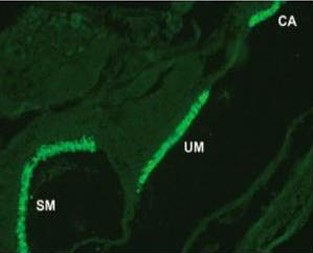 |
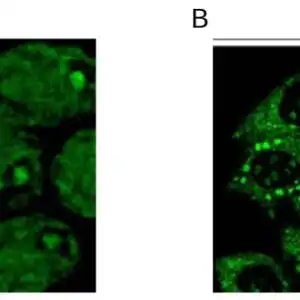
| Immunocytochemistry: use at 2-10ug/ml. Detection of TG3 in human foreskin with #90022. |
FAQ & Publications
Frequently Asked Questions
What applications is the mouse anti-Otoferlin monoclonal antibody (13A9) suitable for?
This antibody is suitable for Western blotting (WB), immunofluorescence (IF), and immunohistochemistry (IHC) applications.
How should the mouse anti-Otoferlin monoclonal antibody be stored to maintain stability?
The product is stable for at least one year when stored at -20°C to -70°C. After reconstitution, it should be aliquoted appropriately to avoid repeated freeze-thaw cycles.
What is the recommended dilution range for using this antibody in immunoblotting and immunofluorescence?
For immunoblotting, use at 1-5 µg/mL; for immunofluorescence, use at 2-10 µg/mL. Optimal concentrations should be determined by the end user for their specific applications.
Publications
| pmid | title | authors | citation |
|---|---|---|---|
| We haven't added any publications to our database yet. | |||
Published literature highly relevant to the biological target of this product and referencing this antibody or clone are retrieved from the PubMed database provided by the United States National Library of Medicine at the National Institutes of Health.
Protocols
| relevant to this product |
|---|
| Western blot IHC ICC |
Documents
| Batch Number | QC File | SDS |
|---|---|---|
| To view batch-specific Safety Datasheets and Quality Certificates associated with your account, please Log In. | ||
Only logged in customers who have purchased this product may leave a review.


Reviews
There are no reviews yet.