| Weight | 1 lbs |
|---|---|
| Dimensions | 9 × 5 × 2 in |
| host | mouse |
| isotype | IgG1 |
| clonality | monoclonal |
| concentration | 1 mg/mL |
| applications | ICC/IF, WB |
| reactivity | Laminin |
| available sizes | 100 µg |
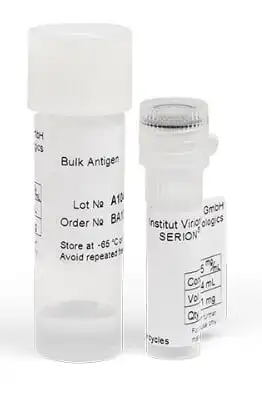
mouse anti-Laminin monoclonal antibody (LN82-13) 9637
$509.00
Antibody summary
- Mouse monoclonal to Laminin
- Suitable for: ELISA,IHC
- Isotype: IgG1
- 100 µg
mouse anti-Laminin monoclonal antibody (LN82-13) 9637
| target relevance |
|---|
| Homo sapiens LAMA1 Laminin subunit alpha-1 |
| Protein names Laminin subunit alpha-1 |
| Alternative names Laminin A chain, Laminin-1 subunit alpha, Laminin-3 subunit alpha, S-laminin subunit alpha |
| Gene names LAMA1 |
| Function Binding to cells via a high affinity receptor, laminin is thought to mediate the attachment, migration and organization of cells into tissues during embryonic development by interacting with other extracellular matrix components. As a ligand for alpha-dystroglycan, it is involved in a number of processes including epithelium branching morphogenesis, down-regulation of apoptotic signals in muscle via the activation of PI3K/AKT signaling, and activation of RAC1 signaling. As a subunit of laminin-1 (also known as laminin-111 or EHS laminin), it is involved in the stimulation of agrin-induced receptor clustering through a MuSK-independent pathway |
| Subcellular location Secreted, extracellular space, extracellular matrix, basement membrane |
| Structure Laminin is a complex glycoprotein, consisting of three different polypeptide chains (alpha, beta, gamma), which are bound to each other by disulfide bonds into a cross-shaped molecule comprising one long and three short arms with globules at each end. Alpha-1 is a subunit of laminin-1 (laminin-111 or EHS laminin) and laminin-3 (laminin-121 or S-laminin). Interacts with alpha-dystroglycan; the interaction is required for a number of processes including epithelium branching morphogenesis, and down-regulation of apoptotic signals in muscle via the activation of PI3K/AKT signaling |
| Post-translational modification Tyrosine phosphorylated by PKDCC/VLK |
| Involvement in disease Poretti-Boltshauser syndrome An autosomal recessive disorder characterized by cerebellar dysplasia, cerebellar vermis atrophy, cerebellar cysts in most patients, high myopia, variable retinal dystrophy, and eye movement abnormalities including strabismus, ocular apraxia, nystagmus. Affected individuals have ataxia, delayed motor development, language impairment, and intellectual disability with variable severity. |
| Keywords Basement membrane, Cell adhesion, Coiled coil, Disulfide bond, Extracellular matrix, Glycoprotein, Laminin EGF-like domain, Phosphoprotein, Proteomics identification, Reference proteome, Repeat, Secreted, Signal |
| Sequence MRGGVLLVLLLCVAAQCRQRGLFPAILNLASNAHISTNATCGEKGPEMFCKLVEHVPGRP VRNPQCRICDGNSANPRERHPISHAIDGTNNWWQSPSIQNGREYHWVTITLDLRQVFQVA YVIIKAANAPRPGNWILERSLDGTTFSPWQYYAVSDSECLSRYNITPRRGPPTYRADDEV ICTSYYSRLVPLEHGEIHTSLINGRPSADDLSPKLLEFTSARYIRLRLQRIRTLNADLMT LSHREPKELDPIVTRRYYYSIKDISVGGMCICYGHASSCPWDETTKKLQCQCEHNTCGES CNRCCPGYHQQPWRPGTVSSGNTCEACNCHNKAKDCYYDESVAKQKKSLNTAGQFRGGGV CINCLQNTMGINCETCIDGYYRPHKVSPYEDEPCRPCNCDPVGSLSSVCIKDDLHSDLHN GKQPGQCPCKEGYTGEKCDRCQLGYKDYPTCVSCGCNPVGSASDEPCTGPCVCKENVEGK ACDRCKPGFYNLKEKNPRGCSECFCFGVSDVCSSLSWPVGQVNSMSGWLVTDLISPRKIP SQQDALGGRHQVSINNTAVMQRLAPKYYWAAPEAYLGNKLTAFGGFLKYTVSYDIPVETV DSNLMSHADVIIKGNGLTLSTQAEGLSLQPYEEYLNVVRLVPENFQDFHSKRQIDRDQLM TVLANVTHLLIRANYNSAKMALYRLESVSLDIASSNAIDLVVAADVEHCECPQGYTGTSC ESCLSGYYRVDGILFGGICQPCECHGHAAECNVHGVCIACAHNTTGVHCEQCLPGFYGEP SRGTPGDCQPCACPLTIASNNFSPTCHLNDGDEVVCDWCAPGYSGAWCERCADGYYGNPT VPGESCVPCDCSGNVDPSEAGHCDSVTGECLKCLGNTDGAHCERCADGFYGDAVTAKNCR ACECHVKGSHSAVCHLETGLCDCKPNVTGQQCDQCLHGYYGLDSGHGCRPCNCSVAGSVS DGCTDEGQCHCVPGVAGKRCDRCAHGFYAYQDGSCTPCDCPHTQNTCDPETGECVCPPHT QGVKCEECEDGHWGYDAEVGCQACNCSLVGSTHHRCDVVTGHCQCKSKFGGRACDQCSLG YRDFPDCVPCDCDLRGTSGDACNLEQGLCGCVEETGACPCKENVFGPQCNECREGTFALR ADNPLGCSPCFCSGLSHLCSELEDYVRTPVTLGSDQPLLRVVSQSNLRGTTEGVYYQAPD FLLDAATVRQHIRAEPFYWRLPQQFQGDQLMAYGGKLKYSVAFYSLDGVGTSNFEPQVLI KGGRIRKQVIYMDAPAPENGVRQEQEVAMRENFWKYFNSVSEKPVTREDFMSVLSDIEYI LIKASYGQGLQQSRISDISMEVGRKAEKLHPEEEVASLLENCVCPPGTVGFSCQDCAPGY HRGKLPAGSDRGPRPLVAPCVPCSCNNHSDTCDPNTGKCLNCGDNTAGDHCDVCTSGYYG KVTGSASDCALCACPHSPPASFSPTCVLEGDHDFRCDACLLGYEGKHCERCSSSYYGNPQ TPGGSCQKCDCNPHGSVHGDCDRTSGQCVCRLGASGLRCDECEPRHILMETDCVSCDDEC VGVLLNDLDEIGDAVLSLNLTGIIPVPYGILSNLENTTKYLQESLLKENMQKDLGKIKLE GVAEETDNLQKKLTRMLASTQKVNRATERIFKESQDLAIAIERLQMSITEIMEKTTLNQT LDEDFLLPNSTLQNMQQNGTSLLEIMQIRDFTQLHQNATLELKAAEDLLSQIQENYQKPL EELEVLKEAASHVLSKHNNELKAAEALVREAEAKMQESNHLLLMVNANLREFSDKKLHVQ EEQNLTSELIVQGRGLIDAAAAQTDAVQDALEHLEDHQDKLLLWSAKIRHHIDDLVMHMS QRNAVDLVYRAEDHAAEFQRLADVLYSGLENIRNVSLNATSAAYVHYNIQSLIEESEELA RDAHRTVTETSLLSESLVSNGKAAVQRSSRFLKEGNNLSRKLPGIALELSELRNKTNRFQ ENAVEITRQTNESLLILRAIPKGIRDKGAKTKELATSASQSAVSTLRDVAGLSQELLNTS ASLSRVNTTLRETHQLLQDSTMATLLAGRKVKDVEIQANLLFDRLKPLKMLEENLSRNLS EIKLLISQARKQAASIKVAVSADRDCIRAYQPQISSTNYNTLTLNVKTQEPDNLLFYLGS STASDFLAVEMRRGRVAFLWDLGSGSTRLEFPDFPIDDNRWHSIHVARFGNIGSLSVKEM SSNQKSPTKTSKSPGTANVLDVNNSTLMFVGGLGGQIKKSPAVKVTHFKGCLGEAFLNGK SIGLWNYIEREGKCRGCFGSSQNEDPSFHFDGSGYSVVEKSLPATVTQIIMLFNTFSPNG LLLYLGSYGTKDFLSIELFRGRVKVMTDLGSGPITLLTDRRYNNGTWYKIAFQRNRKQGV LAVIDAYNTSNKETKQGETPGASSDLNRLDKDPIYVGGLPRSRVVRRGVTTKSFVGCIKN LEISRSTFDLLRNSYGVRKGCLLEPIRSVSFLKGGYIELPPKSLSPESEWLVTFATTNSS GIILAALGGDVEKRGDREEAHVPFFSVMLIGGNIEVHVNPGDGTGLRKALLHAPTGTCSD GQAHSISLVRNRRIITVQLDENNPVEMKLGTLVESRTINVSNLYVGGIPEGEGTSLLTMR RSFHGCIKNLIFNLELLDFNSAVGHEQVDLDTCWLSERPKLAPDAEDSKLLPEPRAFPEQ CVVDAALEYVPGAHQFGLTQNSHFILPFNQSAVRKKLSVELSIRTFASSGLIYYMAHQNQ ADYAVLQLHGGRLHFMFDLGKGRTKVSHPALLSDGKWHTVKTDYVKRKGFITVDGRESPM VTVVGDGTMLDVEGLFYLGGLPSQYQARKIGNITHSIPACIGDVTVNSKQLDKDSPVSAF TVNRCYAVAQEGTYFDGSGYAALVKEGYKVQSDVNITLEFRTSSQNGVLLGISTAKVDAI GLELVDGKVLFHVNNGAGRITAAYEPKTATVLCDGKWHTLQANKSKHRITLIVDGNAVGA ESPHTQSTSVDTNNPIYVGGYPAGVKQKCLRSQTSFRGCLRKLALIKSPQVQSFDFSRAF ELHGVFLHSCPGTES |
| UniProt accession: P25391 |
Data
| No results found |
FAQ & Publications
Frequently Asked Questions
What applications has the mouse anti-Laminin monoclonal antibody (LN82-13) been validated for?
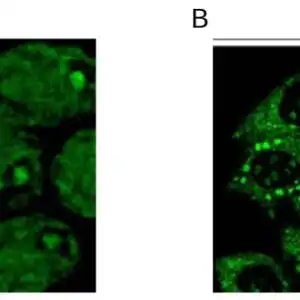
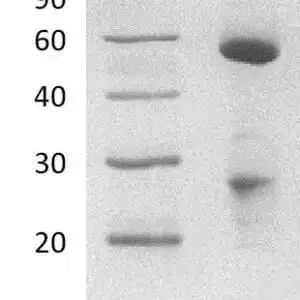
This antibody has been tested and validated for use in ELISA, immunohistochemistry (IHC), immunocytochemistry/immunofluorescence (ICC/IF), and Western blot (WB) applications.
How should the mouse anti-Laminin monoclonal antibody (LN82-13) be stored to maintain stability?
The stock solution at 2.0 mg/mL can be stored in aliquots at -20°C for up to one year. Once diluted with 0.1% sodium azide, it can be stored at 4°C for up to six months. Dilutions of the stock solution should not be frozen.
What is the immunogen used to generate the mouse anti-Laminin monoclonal antibody (LN82-13)?
The antibody was raised against human laminin as the immunogen.
Publications
| pmid | title | authors | citation |
|---|---|---|---|
| We haven't added any publications to our database yet. | |||
Published literature highly relevant to the biological target of this product and referencing this antibody or clone are retrieved from the PubMed database provided by the United States National Library of Medicine at the National Institutes of Health.
Protocols
| relevant to this product |
|---|
| Western blot IHC ICC |
Documents
| Batch Number | QC File | SDS |
|---|---|---|
| To view batch-specific Safety Datasheets and Quality Certificates associated with your account, please Log In. | ||
Only logged in customers who have purchased this product may leave a review.


Reviews
There are no reviews yet.