| Weight | 1 lbs |
|---|---|
| Dimensions | 9 × 5 × 2 in |
| host | mouse |
| isotype | IgG1 |
| clonality | monoclonal |
| concentration | 1 mg/mL |
| applications | ICC/IF, WB |
| reactivity | Epidiymis Protein 4 (HE4) |
| available sizes | 200 µg |

mouse anti-Epididymis Protein 4 (HE4) monoclonal antibody (2B13) 7192
$231.00
Antibody summary
- Mouse monoclonal to Epididymis Protein 4 (HE4)
- Suitable for: ELISA
- Isotype: IgG1
- 200 µg
mouse anti-Epididymis Protein 4 (HE4) monoclonal antibody (2B13) 7192
| antibody |
|---|
| Tested applications ELISA |
| Recommended dilutions ELISA: for sandwich ELISA use #34085 as capture antibody and #34084 or #34086 as detection antibody. End users should determine optimal antibody concentrations relative to their samples. |
| Immunogen Native human epididymis protein 4 (HE4) |
| Size and concentration 200µg and lot specific |
| Form liquid |
| Storage Instructions Store product at 4°C. |
| Storage buffer PBS, pH 7.2, 0.09% NaN3. |
| Purity protein affinity purification |
| Clonality monoclonal |
| Isotype IgG1 |
| Compatible secondaries goat anti-mouse IgG, H&L chain specific, peroxidase conjugated polyclonal antibody 5486 goat anti-mouse IgG, H&L chain specific, biotin conjugated, Conjugate polyclonal antibody 2685 goat anti-mouse IgG, H&L chain specific, FITC conjugated polyclonal antibody 7854 goat anti-mouse IgG, H&L chain specific, peroxidase conjugated polyclonal antibody, crossabsorbed 1706 goat anti-mouse IgG, H&L chain specific, biotin conjugated polyclonal antibody, crossabsorbed 1716 goat anti-mouse IgG, H&L chain specific, FITC conjugated polyclonal antibody, crossabsorbed 1721 |
| Isotype control Mouse monocolonal IgG1 - Isotype Control |
| target relevance |
|---|
| Homo sapiens WFDC2 WAP four-disulfide core domain protein 2 |
| Protein names WAP four-disulfide core domain protein 2 |
| Alternative names Epididymal secretory protein E4, Major epididymis-specific protein E4, Putative protease inhibitor WAP5 |
| Gene names WFDC2 |
| Function Broad range protease inhibitor |
| Subcellular location Secreted |
| Structure Homotrimer; disulfide-linked |
| Involvement in disease Bronchiectasis and nasal polyposis An autosomal recessive destructive airway disease characterized by persistent abnormal dilatation of the bronchi, and severe chronic rhinosinusitis with nasal polyposis. Affected individuals suffer from sub-normal lung function, chronic productive cough, excessive sputum production, and recurrent sinopulmonary infections. |
| Keywords Alternative splicing, Aspartic protease inhibitor, Disease variant, Disulfide bond, Glycoprotein, Protease inhibitor, Proteomics identification, Reference proteome, Repeat, Secreted, Serine protease inhibitor, Signal, Thiol protease inhibitor |
| Sequence MPACRLGPLAAALLLSLLLFGFTLVSGTGAEKTGVCPELQADQNCTQECVSDSECADNLK CCSAGCATFCSLPNDKEGSCPQVNINFPQLGLCRDQCQVDSQCPGQMKCCRNGCGKVSCV TPNF |
| UniProt accession: Q14508 |
Data
| No results found |
FAQ & Publications
Frequently Asked Questions
What applications is the mouse anti-Epididymis Protein 4 (HE4) monoclonal antibody (2B13) validated for?
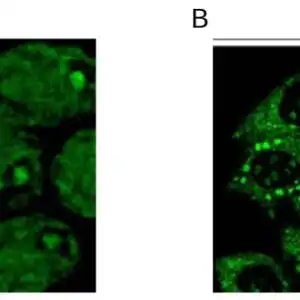
This antibody has been tested and is suitable for ELISA applications. It is also applicable for immunocytochemistry/immunofluorescence (ICC/IF) and Western blot (WB) procedures.
What is the recommended storage condition for this antibody?
The mouse anti-Epididymis Protein 4 (HE4) monoclonal antibody (2B13) should be stored at 4°C to maintain stability and activity.
What is the immunogen used to generate this monoclonal antibody?
The antibody was raised against native human Epididymis Protein 4 (HE4).
Can you describe the antibody’s host species and clonality?
This antibody is a mouse monoclonal antibody of the IgG1 isotype.
What is the concentration and form in which this antibody is supplied?
The antibody is supplied as a liquid at a concentration of 1 mg/mL, with a total amount of 200 µg.
Publications
| pmid | title | authors | citation |
|---|---|---|---|
| We haven't added any publications to our database yet. | |||
Published literature highly relevant to the biological target of this product and referencing this antibody or clone are retrieved from the PubMed database provided by the United States National Library of Medicine at the National Institutes of Health.
Protocols
| relevant to this product |
|---|
| ELISA |
Documents
| Batch Number | QC File | SDS |
|---|---|---|
| To view batch-specific Safety Datasheets and Quality Certificates associated with your account, please Log In. | ||
Only logged in customers who have purchased this product may leave a review.


Reviews
There are no reviews yet.