| Weight | 1 lbs |
|---|---|
| Dimensions | 9 × 5 × 2 in |
| host | mouse |
| isotype | IgG1 |
| clonality | monoclonal |
| concentration | 1 mg/mL |
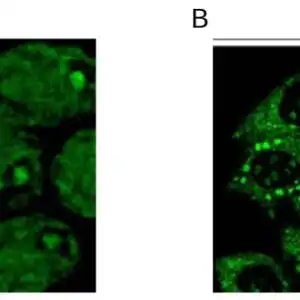
| applications | ICC/IF, WB |
| reactivity | CD73/5'Nucleotidase |
| available sizes | 100 µg |

mouse anti-CD73/5′-Nucleotidase monoclonal antibody (10f1) 2858
$520.00
Antibody summary
- Mouse monoclonal to CD73/5′-Nucleotidase
- Suitable for: WB,IHC,ELISA
- Isotype: IgG1
- 100 µg
mouse anti-CD73/5′-Nucleotidase monoclonal antibody (10f1) 2858
| antibody |
|---|
| Tested applications WB,IHC,IHC,ELISA |
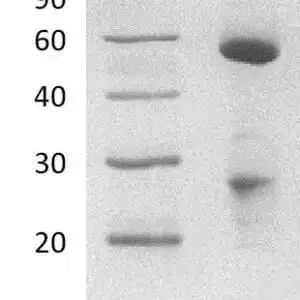
| Recommended dilutions ELISA: use at 1-10ug/ml Immunoblotting: User should use at 1-5ug/ml. A band of ~63kDa is detected. Immunohistochemistry: use at 1-5ug/ml. These are recommended concentrations. End user should determine optimal concentrations for their applications. |
| Immunogen Recombinant 5'-nucleotidase (5'-NT). Accession no. P21589. |
| Size and concentration 100µg and |
| Form lyophilized |
| Storage Instructions This product is stable for at least one (1) year at -20°C to -70°C. Reconstituted product should be stored in appropriate aliquots to avoid repeated freeze-thaw cycles. |
| Storage buffer Lyophilized, 0.1M Tris, 0.1M glycine, 2% sucrose |
| Purity protein affinity purification |
| Clonality monoclonal |
| Isotype IgG1 |
| Compatible secondaries goat anti-mouse IgG, H&L chain specific, peroxidase conjugated polyclonal antibody 5486 goat anti-mouse IgG, H&L chain specific, biotin conjugated, Conjugate polyclonal antibody 2685 goat anti-mouse IgG, H&L chain specific, FITC conjugated polyclonal antibody 7854 goat anti-mouse IgG, H&L chain specific, peroxidase conjugated polyclonal antibody, crossabsorbed 1706 goat anti-mouse IgG, H&L chain specific, biotin conjugated polyclonal antibody, crossabsorbed 1716 goat anti-mouse IgG, H&L chain specific, FITC conjugated polyclonal antibody, crossabsorbed 1721 |
| Isotype control Mouse monocolonal IgG1 - Isotype Control |
| target relevance |
|---|
| Homo sapiens NT5E 5'-nucleotidase |
| Protein names 5'-nucleotidase |
| Alternative names 5'-deoxynucleotidase, Ecto-5'-nucleotidase, IMP-specific 5'-nucleotidase, Thymidylate 5'-phosphatase |
| Gene names NT5E |
| Protein family Belongs to the 5'-nucleotidase family |
| Function Catalyzes the hydrolysis of nucleotide monophosphates, releasing inorganic phosphate and the corresponding nucleoside, with AMP being the preferred substrate (PubMed:21933152, PubMed:22997138, PubMed:23142347, PubMed:24887587, PubMed:34403084). Shows a preference for ribonucleotide monophosphates over their equivalent deoxyribose forms (PubMed:34403084). Other substrates include IMP, UMP, GMP, CMP, dAMP, dCMP, dTMP, NAD and NMN (PubMed:21933152, PubMed:22997138, PubMed:23142347, PubMed:24887587, PubMed:34403084) |
| Catalytic activity a ribonucleoside 5'-phosphate + H2O = a ribonucleoside + phosphate a 2'-deoxyribonucleoside 5'-phosphate + H2O = a 2'-deoxyribonucleoside + phosphate dTMP + H2O = thymidine + phosphate CMP + H2O = cytidine + phosphate IMP + H2O = inosine + phosphate AMP + H2O = adenosine + phosphate GMP + H2O = guanosine + phosphate UMP + H2O = uridine + phosphate dAMP + H2O = 2'-deoxyadenosine + phosphate dCMP + H2O = 2'-deoxycytidine + phosphate |
| Subcellular location Cell membrane |
| Structure Homodimer |
| Involvement in disease Calcification of joints and arteries A condition characterized by adult-onset calcification of the lower extremity arteries, including the iliac, femoral and tibial arteries, and hand and foot capsule joints. Age of onset has been reported as early as the second decade of life, usually involving intense joint pain or calcification in the hands. |
| Keywords 3D-structure, Alternative splicing, Cell membrane, Direct protein sequencing, Disease variant, Disulfide bond, Glycoprotein, GPI-anchor, Hydrolase, Lipoprotein, Membrane, Metal-binding, Nucleotide-binding, Proteomics identification, Reference proteome, Signal, Zinc |
| Sequence MCPRAARAPATLLLALGAVLWPAAGAWELTILHTNDVHSRLEQTSEDSSKCVNASRCMGG VARLFTKVQQIRRAEPNVLLLDAGDQYQGTIWFTVYKGAEVAHFMNALRYDAMALGNHEF DNGVEGLIEPLLKEAKFPILSANIKAKGPLASQISGLYLPYKVLPVGDEVVGIVGYTSKE TPFLSNPGTNLVFEDEITALQPEVDKLKTLNVNKIIALGHSGFEMDKLIAQKVRGVDVVV GGHSNTFLYTGNPPSKEVPAGKYPFIVTSDDGRKVPVVQAYAFGKYLGYLKIEFDERGNV ISSHGNPILLNSSIPEDPSIKADINKWRIKLDNYSTQELGKTIVYLDGSSQSCRFRECNM GNLICDAMINNNLRHTDEMFWNHVSMCILNGGGIRSPIDERNNGTITWENLAAVLPFGGT FDLVQLKGSTLKKAFEHSVHRYGQSTGEFLQVGGIHVVYDLSRKPGDRVVKLDVLCTKCR VPSYDPLKMDEVYKVILPNFLANGGDGFQMIKDELLRHDSGDQDINVVSTYISKMKVIYP AVEGRIKFSTGSHCHGSFSLIFLSLWAVIFVLYQ |
| UniProt accession: P21589 |
Data
| No results found |
FAQ & Publications
Frequently Asked Questions
What applications is the mouse anti-CD73/5′-Nucleotidase monoclonal antibody (10f1) validated for?
This monoclonal antibody is suitable for Western blotting (WB), immunohistochemistry (IHC), and ELISA applications. Recommended dilutions are 1-10 µg/mL for ELISA, and 1-5 µg/mL for WB and IHC.
How should the mouse anti-CD73 antibody be stored to maintain stability?
The lyophilized antibody is stable for at least one year when stored at -20°C to -70°C. After reconstitution, it should be aliquoted appropriately and stored to avoid repeated freeze-thaw cycles.
What is the host species and clonality of this anti-CD73 monoclonal antibody?
The antibody is a mouse monoclonal antibody with an IgG1 isotype.
What immunogen was used to generate the mouse anti-CD73 antibody (clone 10f1)?
The antibody was raised against recombinant 5'-nucleotidase (5'-NT), with UniProt accession number P21589.
Publications
| pmid | title | authors | citation |
|---|---|---|---|
| We haven't added any publications to our database yet. | |||
Published literature highly relevant to the biological target of this product and referencing this antibody or clone are retrieved from the PubMed database provided by the United States National Library of Medicine at the National Institutes of Health.
Protocols
| relevant to this product |
|---|
| Western blot IHC |
Documents
| Batch Number | QC File | SDS |
|---|---|---|
| To view batch-specific Safety Datasheets and Quality Certificates associated with your account, please Log In. | ||
Only logged in customers who have purchased this product may leave a review.


Reviews
There are no reviews yet.