| Weight | 1 lbs |
|---|---|
| Dimensions | 9 × 5 × 2 in |
| host | mouse |
| isotype | IgG |
| clonality | monoclonal |
| concentration | 1 mg/mL |
| applications | ICC/IF, WB |
| reactivity | Ago2 |
| available sizes | 200 µg |

mouse anti-Ago2 monoclonal antibody (1B1) 1524
$497.00
Antibody summary
- Mouse monoclonal to Ago2
- Suitable for: WB
- Isotype: Whole IgG
- 200 µg
mouse anti-Ago2 monoclonal antibody (1B1) 1524
| antibody |
|---|
| Tested applications WB |
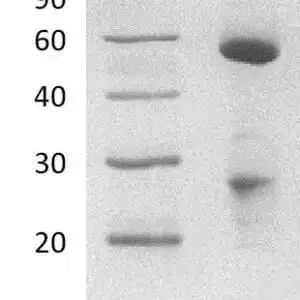
| Recommended dilutions Immunoblotting: use at 1-5ug/ml under reducing conditions. A band of ~100kDa is detected. These are recommended concentrations. End users should determine optimal concentrations for their applications. |
| Immunogen Recombinant protein corresponding to the N-terminal aa 1-148 of human Ago2. |
| Size and concentration 200µg and |
| Form lyophilized |
| Storage Instructions Store the stock solution at a minimum concentration of 2. 0mg/ml. A lower concentration may result in decreased stability. Store stock solution at -20°C for at least one (1) year; avoid mult |
| Storage buffer PBS, pH 7.4, 1.0% BSA, Lyophilized |
| Purity immunogen affinity purification |
| Clonality monoclonal |
| Isotype IgG2a |
| Compatible secondaries goat anti-mouse IgG, H&L chain specific, peroxidase conjugated polyclonal antibody 5486 goat anti-mouse IgG, H&L chain specific, biotin conjugated, Conjugate polyclonal antibody 2685 goat anti-mouse IgG, H&L chain specific, FITC conjugated polyclonal antibody 7854 goat anti-mouse IgG, H&L chain specific, peroxidase conjugated polyclonal antibody, crossabsorbed 1706 goat anti-mouse IgG, H&L chain specific, biotin conjugated polyclonal antibody, crossabsorbed 1716 goat anti-mouse IgG, H&L chain specific, FITC conjugated polyclonal antibody, crossabsorbed 1721 |
| Isotype control Mouse monocolonal IgG2a - Isotype Control |
| target relevance |
|---|
| Homo sapiens AGO2 Protein argonaute-2 |
| Protein names Protein argonaute-2 |
| Alternative names Argonaute RISC catalytic component 2, Eukaryotic translation initiation factor 2C 2, PAZ Piwi domain protein, Protein slicer |
| Gene names AGO2 |
| Protein family Belongs to the argonaute family. Ago subfamily |
| Function Required for RNA-mediated gene silencing (RNAi) by the RNA-induced silencing complex (RISC). The 'minimal RISC' appears to include AGO2 bound to a short guide RNA such as a microRNA (miRNA) or short interfering RNA (siRNA). These guide RNAs direct RISC to complementary mRNAs that are targets for RISC-mediated gene silencing. The precise mechanism of gene silencing depends on the degree of complementarity between the miRNA or siRNA and its target. Binding of RISC to a perfectly complementary mRNA generally results in silencing due to endonucleolytic cleavage of the mRNA specifically by AGO2. Binding of RISC to a partially complementary mRNA results in silencing through inhibition of translation, and this is independent of endonuclease activity. May inhibit translation initiation by binding to the 7-methylguanosine cap, thereby preventing the recruitment of the translation initiation factor eIF4-E. May also inhibit translation initiation via interaction with EIF6, which itself binds to the 60S ribosomal subunit and prevents its association with the 40S ribosomal subunit. The inhibition of translational initiation leads to the accumulation of the affected mRNA in cytoplasmic processing bodies (P-bodies), where mRNA degradation may subsequently occur. In some cases RISC-mediated translational repression is also observed for miRNAs that perfectly match the 3' untranslated region (3'-UTR). Can also up-regulate the translation of specific mRNAs under certain growth conditions. Binds to the AU element of the 3'-UTR of the TNF mRNA and up-regulates translation under conditions of serum starvation. Also required for transcriptional gene silencing (TGS), in which short RNAs known as antigene RNAs or agRNAs direct the transcriptional repression of complementary promoter regions |
| Catalytic activity Endonucleolytic cleavage to 5'-phosphomonoester. |
| Subcellular location Cytoplasm, P-body, Nucleus |
| Structure (Microbial infection) Interacts with human herpesvirus 8 protein MTA/ORF57; this interaction inhibits P-body formation |
| Post-translational modification Hydroxylated. 4-hydroxylation appears to enhance protein stability but is not required for miRNA-binding or endonuclease activity Ubiquitinated on surface-exposed lysines by a SCF-like E3 ubiquitin-protein ligase complex containing ZSWIM8 during target-directed microRNA degradation (TDMD), a process that mediates degradation of microRNAs (miRNAs) (PubMed:33184234, PubMed:33184237). Ubiquitination by the SCF-like E3 ubiquitin-protein ligase complex containing ZSWIM8 leads to its subsequent degradation, thereby exposing miRNAs for degradation (PubMed:33184234, PubMed:33184237). ZSWIM8 recognizes and binds AGO2 when it is engaged with a TDMD target (PubMed:33184237) Phosphorylated. A phosphorylation cycle of C-terminal serine cluster (Ser-824-Ser-834) regulates the release of target mRNAs. Target-binding leads to phosphorylation of these residues by CSNK1A1, which reduces the affinity of AGO2 for mRNA and enables target release. The ANKRD52-PPP6C phosphatase complex dephosphorylates the residues, which primes AGO2 for binding a new target Phosphorylation at Ser-387 by AKT3; leads to up-regulate translational repression of microRNA target and down-regulate endonucleolytic cleavage |
| Involvement in disease Lessel-Kreienkamp syndrome An autosomal dominant disorder characterized by global developmental delay, intellectual disability of variable degree, and speech and language delay apparent from infancy or early childhood. Behavioral disorders are observed in most patients. Additional variable features include seizures, hypotonia, gait abnormalities, visual and cardiac defects, and non-specific facial dysmorphism. |
| Keywords 3D-structure, Alternative splicing, Cytoplasm, Disease variant, Endonuclease, Host-virus interaction, Hydrolase, Hydroxylation, Intellectual disability, Magnesium, Manganese, Metal-binding, Nitration, Nuclease, Nucleus, Phosphoprotein, Proteomics identification, Reference proteome, Repressor, Ribonucleoprotein, RNA-binding, RNA-mediated gene silencing, Transcription, Transcription regulation, Translation regulation, Ubl conjugation |
| Sequence MYSGAGPALAPPAPPPPIQGYAFKPPPRPDFGTSGRTIKLQANFFEMDIPKIDIYHYELD IKPEKCPRRVNREIVEHMVQHFKTQIFGDRKPVFDGRKNLYTAMPLPIGRDKVELEVTLP GEGKDRIFKVSIKWVSCVSLQALHDALSGRLPSVPFETIQALDVVMRHLPSMRYTPVGRS FFTASEGCSNPLGGGREVWFGFHQSVRPSLWKMMLNIDVSATAFYKAQPVIEFVCEVLDF KSIEEQQKPLTDSQRVKFTKEIKGLKVEITHCGQMKRKYRVCNVTRRPASHQTFPLQQES GQTVECTVAQYFKDRHKLVLRYPHLPCLQVGQEQKHTYLPLEVCNIVAGQRCIKKLTDNQ TSTMIRATARSAPDRQEEISKLMRSASFNTDPYVREFGIMVKDEMTDVTGRVLQPPSILY GGRNKAIATPVQGVWDMRNKQFHTGIEIKVWAIACFAPQRQCTEVHLKSFTEQLRKISRD AGMPIQGQPCFCKYAQGADSVEPMFRHLKNTYAGLQLVVVILPGKTPVYAEVKRVGDTVL GMATQCVQMKNVQRTTPQTLSNLCLKINVKLGGVNNILLPQGRPPVFQQPVIFLGADVTH PPAGDGKKPSIAAVVGSMDAHPNRYCATVRVQQHRQEIIQDLAAMVRELLIQFYKSTRFK PTRIIFYRDGVSEGQFQQVLHHELLAIREACIKLEKDYQPGITFIVVQKRHHTRLFCTDK NERVGKSGNIPAGTTVDTKITHPTEFDFYLCSHAGIQGTSRPSHYHVLWDDNRFSSDELQ ILTYQLCHTYVRCTRSVSIPAPAYYAHLVAFRARYHLVDKEHDSAEGSHTSGQSNGRDHQ ALAKAVQVHQDTLRTMYFA |
| UniProt accession: Q9UKV8 |
Data
| No results found |
FAQ & Publications
Frequently Asked Questions
What applications is the mouse anti-Ago2 monoclonal antibody (1B1) validated for?
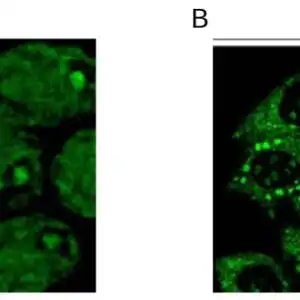
This antibody is validated for western blotting (WB) and immunocytochemistry/immunofluorescence (ICC/IF) applications.
How should the mouse anti-Ago2 monoclonal antibody (1B1) be stored to maintain stability?
Store the stock solution at a minimum concentration of 2.0 mg/mL at -20°C for at least one year. Avoid multiple freeze-thaw cycles to maintain antibody stability.
What is the immunogen used to generate the mouse anti-Ago2 monoclonal antibody (1B1)?
The immunogen is a recombinant protein corresponding to the N-terminal amino acids 1-148 of human Ago2.
Which secondary antibodies are compatible with the mouse anti-Ago2 monoclonal antibody (1B1)?
Compatible secondary antibodies include goat anti-mouse IgG H&L chain specific antibodies conjugated to peroxidase, biotin, or FITC, including cross-absorbed versions for enhanced specificity.
Publications
| pmid | title | authors | citation |
|---|---|---|---|
| We haven't added any publications to our database yet. | |||
Published literature highly relevant to the biological target of this product and referencing this antibody or clone are retrieved from the PubMed database provided by the United States National Library of Medicine at the National Institutes of Health.
Protocols
| relevant to this product |
|---|
| Western blot IHC ICC |
Documents
| Batch Number | QC File | SDS |
|---|---|---|
| To view batch-specific Safety Datasheets and Quality Certificates associated with your account, please Log In. | ||
Only logged in customers who have purchased this product may leave a review.


Reviews
There are no reviews yet.