| Weight | 1 lbs |
|---|---|
| Dimensions | 9 × 5 × 2 in |
| host | mouse |
| isotype | IgG1 |
| clonality | monoclonal |
| concentration | 1 mg/mL |
| applications | ICC/IF, WB |
| reactivity | Laminin |
| available sizes | 100 µg |
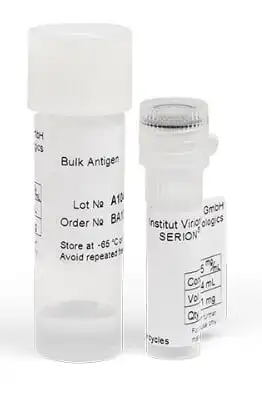
mouse anti-Laminin monoclonal antibody (LN82-13) 9637
$509.00
Antibody summary
- Mouse monoclonal to Laminin
- Suitable for: ELISA,IHC
- Isotype: IgG1
- 100 µg
mouse anti-Laminin monoclonal antibody (LN82-13) 9637
| target relevance |
|---|
| Protein names Laminin subunit alpha-1 (Laminin A chain) (Laminin-1 subunit alpha) (Laminin-3 subunit alpha) (S-laminin subunit alpha) (S-LAM alpha) |
| Gene names LAMA1,LAMA1 LAMA |
| Mass 337084Da |
| Function FUNCTION: Binding to cells via a high affinity receptor, laminin is thought to mediate the attachment, migration and organization of cells into tissues during embryonic development by interacting with other extracellular matrix components. |
| Subellular location SUBCELLULAR LOCATION: Secreted, extracellular space, extracellular matrix, basement membrane. Note=Major component. |
| Structure SUBUNIT: Laminin is a complex glycoprotein, consisting of three different polypeptide chains (alpha, beta, gamma), which are bound to each other by disulfide bonds into a cross-shaped molecule comprising one long and three short arms with globules at each end. Alpha-1 is a subunit of laminin-1 (laminin-111 or EHS laminin) and laminin-3 (laminin-121 or S-laminin). |
| Post-translational modification PTM: Tyrosine phosphorylated by PKDCC/VLK. {ECO:0000269|PubMed:25171405}. |
| Domain DOMAIN: The alpha-helical domains I and II are thought to interact with other laminin chains to form a coiled coil structure.; DOMAIN: Domains VI, IV and G are globular. |
| Involvement in disease DISEASE: Poretti-Boltshauser syndrome (PTBHS) [MIM:615960]: An autosomal recessive disorder characterized by cerebellar dysplasia, cerebellar vermis atrophy, cerebellar cysts in most patients, high myopia, variable retinal dystrophy, and eye movement abnormalities including strabismus, ocular apraxia, nystagmus. Affected individuals have ataxia, delayed motor development, language impairment, and intellectual disability with variable severity. {ECO:0000269|PubMed:25105227}. Note=The disease is caused by variants affecting the gene represented in this entry. |
| Target Relevance information above includes information from UniProt accession: P25391 |
| The UniProt Consortium |
Data
| No results found |
FAQ & Publications
Frequently Asked Questions
What applications has the mouse anti-Laminin monoclonal antibody (LN82-13) been validated for?
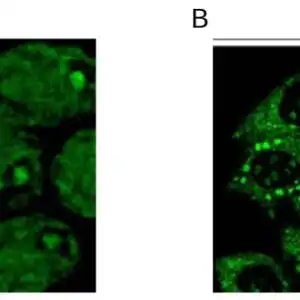
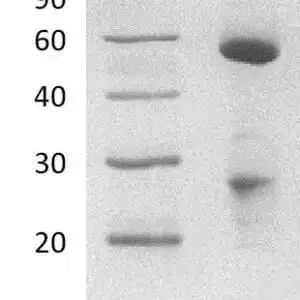
This antibody has been tested and validated for use in ELISA, immunohistochemistry (IHC), immunocytochemistry/immunofluorescence (ICC/IF), and Western blot (WB) applications.
How should the mouse anti-Laminin monoclonal antibody (LN82-13) be stored to maintain stability?
The stock solution at 2.0 mg/mL can be stored in aliquots at -20°C for up to one year. Once diluted with 0.1% sodium azide, it can be stored at 4°C for up to six months. Dilutions of the stock solution should not be frozen.
What is the immunogen used to generate the mouse anti-Laminin monoclonal antibody (LN82-13)?
The antibody was raised against human laminin as the immunogen.
Publications
| pmid | title | authors | citation |
|---|---|---|---|
| We haven't added any publications to our database yet. | |||
Published literature highly relevant to the biological target of this product and referencing this antibody or clone are retrieved from the PubMed database provided by the United States National Library of Medicine at the National Institutes of Health.
Protocols
| relevant to this product |
|---|
| Western blot IHC ICC |
Documents
| Batch Number | QC File | SDS |
|---|---|---|
| To view batch-specific Safety Datasheets and Quality Certificates associated with your account, please Log In. | ||
Only logged in customers who have purchased this product may leave a review.


Reviews
There are no reviews yet.