| Weight | 1 lbs |
|---|---|
| Dimensions | 9 × 5 × 2 in |
| host | mouse |
| isotype | IgG1/κ |
| clonality | monoclonal |
| concentration | concentrate, predilute |
| applications | IHC |
| reactivity | human |
| available size | 0.1 mL, 0.5 mL, 1 mL concentrated, 7 mL prediluted |

mouse anti-Thyroid Stimulating Hormone monoclonal antibody (ZM294) 6384
Price range: $160.00 through $528.00
Antibody summary
- Mouse monoclonal to Thyroid Stimulating Hormone
- Suitable for: Immunohistochemistry (formalin-fixed, paraffin-embedded tissues)
- Reacts with: Human
- Isotype:IgG1/κ
- Control: Pituitary
- Visualization: Cytoplasmic
- 0.1, 0.5, 1.0 mL concentrated, 7 mL prediluted
mouse anti-Thyroid Stimulating Hormone monoclonal antibody ZM294 6384
| target relevance |
|---|
| Homo sapiens TSHB Thyrotropin subunit beta |
| Protein names Thyrotropin subunit beta |
| Alternative names Thyroid-stimulating hormone subunit beta, Thyrotropin beta chain |
| Gene names TSHB |
| Protein family Belongs to the glycoprotein hormones subunit beta family |
| Function Indispensable for the control of thyroid structure and metabolism |
| Subcellular location Secreted |
| Structure Heterodimer of a common alpha chain and a unique beta chain which confers biological specificity to thyrotropin, lutropin, follitropin and gonadotropin |
| Involvement in disease Hypothyroidism, congenital, non-goitrous, 4 A form of central hypothyroidism, a disorder characterized by insufficient stimulation by thyroid stimulating hormone of an otherwise normal thyroid gland. CHNG4 is an autosomal recessive form characterized by isolated thyrotropin deficiency that, if untreated, results in severe growth retardation and intellectual disability. |
| Keywords 3D-structure, Alternative splicing, Congenital hypothyroidism, Direct protein sequencing, Disease variant, Disulfide bond, Glycoprotein, Hormone, Pharmaceutical, Proteomics identification, Reference proteome, Secreted, Signal |
| Sequence MTALFLMSMLFGLTCGQAMSFCIPTEYTMHIERRECAYCLTINTTICAGYCMTRDINGKL FLPKYALSQDVCTYRDFIYRTVEIPGCPLHVAPYFSYPVALSCKCGKCNTDYSDCIHEAI KTNYCTKPQKSYLVGFSV |
| UniProt accession: P01222 |
Data
 |
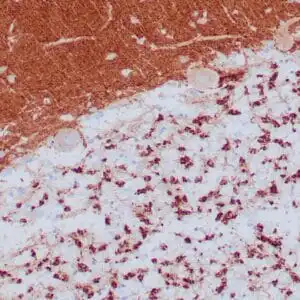
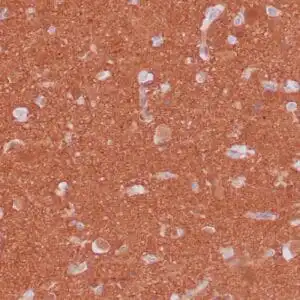
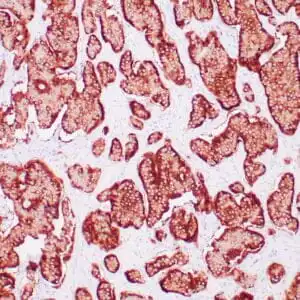
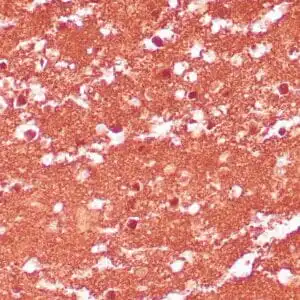
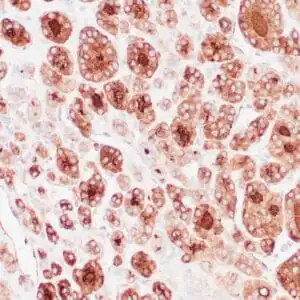
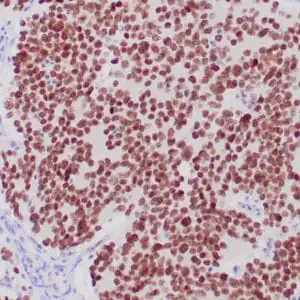
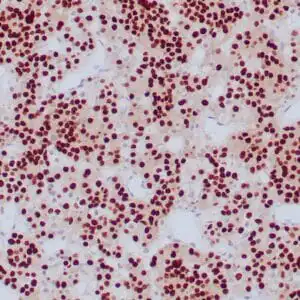
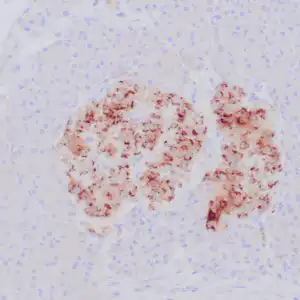
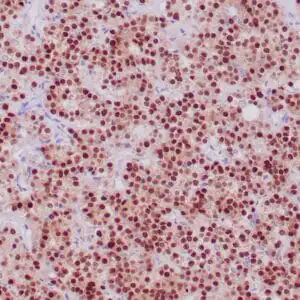
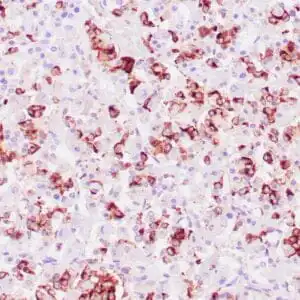
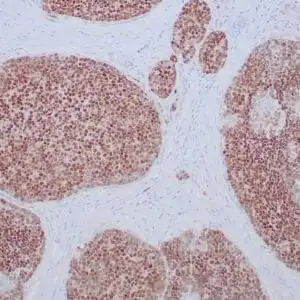
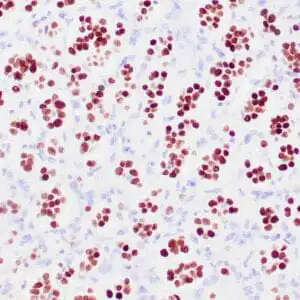
| Formalin-fixed, paraffin-embedded human pituitary adenoma stained with anti-TSH antibody using peroxidase-conjugate and DAB chromogen. Note the cytoplasmic staining of tumor cells |
FAQ & Publications
Frequently Asked Questions
What species does the mouse anti-Thyroid Stimulating Hormone monoclonal antibody (ZM294) react with?
This antibody specifically reacts with human Thyroid Stimulating Hormone (TSH).
For which applications is the mouse anti-TSH monoclonal antibody validated?
The antibody is validated for immunohistochemistry (IHC) on formalin-fixed, paraffin-embedded tissues.
How should the mouse anti-Thyroid Stimulating Hormone antibody be stored to maintain stability?
Store the antibody at 2-8°C for short-term use and at -20°C for longer-term storage, while avoiding repeated freeze/thaw cycles.
What is the recommended dilution for using the concentrated mouse anti-TSH antibody in IHC?
The recommended dilution range for the concentrated antibody is 1:100 to 1:200 for immunohistochemistry applications.
What is the host species and clonality of this anti-Thyroid Stimulating Hormone antibody?
This antibody is a mouse monoclonal antibody of the IgG1/κ isotype.
Publications
| pmid | title | authors | citation |
|---|---|---|---|
| We haven't added any publications to our database yet. | |||
Published literature highly relevant to the biological target of this product and referencing this antibody or clone are retrieved from the PubMed database provided by the United States National Library of Medicine at the National Institutes of Health.
Protocols
| relevant to this product |
|---|
| IHC |
Documents
| Batch Number | QC File | SDS |
|---|---|---|
| To view batch-specific Safety Datasheets and Quality Certificates associated with your account, please Log In. | ||
Only logged in customers who have purchased this product may leave a review.

Reviews
There are no reviews yet.