| Weight | 1 lbs |
|---|---|
| Dimensions | 9 × 5 × 2 in |
| host | mouse |
| isotype | IgG1 + IgG1 |
| clonality | monoclonal |
| concentration | concentrate, predilute |
| applications | IHC |
| reactivity | human |
| available size | 0.1 mL, 0.5 mL, 1 mL concentrated, 7 mL prediluted |

mouse anti-Thyroglobulin monoclonal antibody (2H11+6E1) 6383
Price range: $160.00 through $528.00
Antibody summary
- Mouse monoclonal to Thyroglobulin
- Suitable for: Immunohistochemistry (formalin-fixed, paraffin-embedded tissues)
- Reacts with: Human
- Isotype:IgG1 + IgG1
- Control: Thyroid
- Visualization: Cytoplasmic
- 0.1, 0.5, 1.0 mL concentrated, 7 mL prediluted
mouse anti-Thyroglobulin monoclonal antibody 2H11+6E1 6383
| target relevance |
|---|
| Homo sapiens TG Thyroglobulin |
| Protein names Thyroglobulin |
| Gene names TG |
| Protein family Belongs to the type-B carboxylesterase/lipase family |
| Function Acts as a substrate for the production of iodinated thyroid hormones thyroxine (T4) and triiodothyronine (T3) (PubMed:17532758, PubMed:32025030). The synthesis of T3 and T4 involves iodination of selected tyrosine residues of TG/thyroglobulin followed by their oxidative coupling in the thyroid follicle lumen (PubMed:32025030). Following TG re-internalization and lysosomal-mediated proteolysis, T3 and T4 are released from the polypeptide backbone leading to their secretion into the bloodstream (PubMed:32025030). One dimer produces 7 thyroid hormone molecules (PubMed:32025030) |
| Subcellular location Secreted |
| Structure Monomer (PubMed:32025030). Homodimer (via ChEL region); occurs in the endoplasmic reticulum and is required for export to the Golgi apparatus (PubMed:32025030). Homooligomer; disulfide-linked; stored in this form in the thyroid follicle lumen (PubMed:8626858) |
| Post-translational modification Iodinated on tyrosine residues by TPO (PubMed:2760035, PubMed:32025030). There are 4 pairs of iodinated tyrosines used for coupling: acceptor Tyr-24 is coupled to donor Tyr-149 or Tyr-234, acceptor Tyr-2573 is coupled to donor Tyr-2540, acceptor Tyr-2766 in monomer 1 is coupled to donor Tyr-2766 in monomer 2 and acceptor Tyr-1310 in monomer 1 is coupled to donor Tyr-108 in monomer 2 (PubMed:32025030) Sulfated tyrosines are desulfated during iodination Undergoes sequential proteolysis by cathepsins to release thyroxine (T4) and triiodothyronine (T3) hormones. In the thyroid follicle lumen, cross-linked TG (storage form) is solubilized by limited proteolysis mediated by cathepsins CTSB and/or CTSL. Partially cleaved TG is further processed by CTSK/cathepsin K and/or CTSL resulting in the release of T4. Following endocytosis, further processing occurs leading to the release of T3 and more T4 hormones |
| Involvement in disease Thyroid dyshormonogenesis 3 A disorder due to thyroid dyshormonogenesis, causing large goiters of elastic and soft consistency in the majority of patients. Although the degree of thyroid dysfunction varies considerably among patients with defective thyroglobulin synthesis, patients usually have a relatively high serum free triiodothyronine (T3) concentration with disproportionately low free tetraiodothyronine (T4) level. The maintenance of relatively high free T3 levels prevents profound tissue hypothyroidism except in brain and pituitary, which are dependent on T4 supply, resulting in neurologic and intellectual defects in some cases. Autoimmune thyroid disease 3 A complex autoimmune disorder comprising two related diseases affecting the thyroid: Graves disease and Hashimoto thyroiditis. In both disorders, thyroid-reactive T-cells are formed and infiltrate the thyroid gland. In Graves disease, the majority of the T-cells undergo a Th2 differentiation and activate B-cells to produce antibodies against the TSH receptor, which stimulate the thyroid and cause clinical hyperthyroidism. In contrast, Hashimoto thyroiditis is characterized by Th1 switching of the thyroid-infiltrating T-cells, which induces apoptosis of thyroid follicular cells and clinical hypothyroidism. |
| Keywords 3D-structure, Alternative splicing, Congenital hypothyroidism, Direct protein sequencing, Disease variant, Disulfide bond, Glycoprotein, Hormone, Iodination, Proteoglycan, Proteomics identification, Reference proteome, Repeat, Secreted, Signal, Sulfation, Thyroid hormone, Thyroid hormones biosynthesis |
| Sequence MALVLEIFTLLASICWVSANIFEYQVDAQPLRPCELQRETAFLKQADYVPQCAEDGSFQT VQCQNDGRSCWCVGANGSEVLGSRQPGRPVACLSFCQLQKQQILLSGYINSTDTSYLPQC QDSGDYAPVQCDVQQVQCWCVDAEGMEVYGTRQLGRPKRCPRSCEIRNRRLLHGVGDKSP PQCSAEGEFMPVQCKFVNTTDMMIFDLVHSYNRFPDAFVTFSSFQRRFPEVSGYCHCADS QGRELAETGLELLLDEIYDTIFAGLDLPSTFTETTLYRILQRRFLAVQSVISGRFRCPTK CEVERFTATSFGHPYVPSCRRNGDYQAVQCQTEGPCWCVDAQGKEMHGTRQQGEPPSCAE GQSCASERQQALSRLYFGTSGYFSQHDLFSSPEKRWASPRVARFATSCPPTIKELFVDSG LLRPMVEGQSQQFSVSENLLKEAIRAIFPSRGLARLALQFTTNPKRLQQNLFGGKFLVNV GQFNLSGALGTRGTFNFSQFFQQLGLASFLNGGRQEDLAKPLSVGLDSNSSTGTPEAAKK DGTMNKPTVGSFGFEINLQENQNALKFLASLLELPEFLLFLQHAISVPEDVARDLGDVME TVLSSQTCEQTPERLFVPSCTTEGSYEDVQCFSGECWCVNSWGKELPGSRVRGGQPRCPT DCEKQRARMQSLMGSQPAGSTLFVPACTSEGHFLPVQCFNSECYCVDAEGQAIPGTRSAI GKPKKCPTPCQLQSEQAFLRTVQALLSNSSMLPTLSDTYIPQCSTDGQWRQVQCNGPPEQ VFELYQRWEAQNKGQDLTPAKLLVKIMSYREAASGNFSLFIQSLYEAGQQDVFPVLSQYP SLQDVPLAALEGKRPQPRENILLEPYLFWQILNGQLSQYPGSYSDFSTPLAHFDLRNCWC VDEAGQELEGMRSEPSKLPTCPGSCEEAKLRVLQFIRETEEIVSASNSSRFPLGESFLVA KGIRLRNEDLGLPPLFPPREAFAEQFLRGSDYAIRLAAQSTLSFYQRRRFSPDDSAGASA LLRSGPYMPQCDAFGSWEPVQCHAGTGHCWCVDEKGGFIPGSLTARSLQIPQCPTTCEKS RTSGLLSSWKQARSQENPSPKDLFVPACLETGEYARLQASGAGTWCVDPASGEELRPGSS SSAQCPSLCNVLKSGVLSRRVSPGYVPACRAEDGGFSPVQCDQAQGSCWCVMDSGEEVPG TRVTGGQPACESPRCPLPFNASEVVGGTILCETISGPTGSAMQQCQLLCRQGSWSVFPPG PLICSLESGRWESQLPQPRACQRPQLWQTIQTQGHFQLQLPPGKMCSADYADLLQTFQVF ILDELTARGFCQIQVKTFGTLVSIPVCNNSSVQVGCLTRERLGVNVTWKSRLEDIPVASL PDLHDIERALVGKDLLGRFTDLIQSGSFQLHLDSKTFPAETIRFLQGDHFGTSPRTWFGC SEGFYQVLTSEASQDGLGCVKCPEGSYSQDEECIPCPVGFYQEQAGSLACVPCPVGRTTI SAGAFSQTHCVTDCQRNEAGLQCDQNGQYRASQKDRGSGKAFCVDGEGRRLPWWETEAPL EDSQCLMMQKFEKVPESKVIFDANAPVAVRSKVPDSEFPVMQCLTDCTEDEACSFFTVST TEPEISCDFYAWTSDNVACMTSDQKRDALGNSKATSFGSLRCQVKVRSHGQDSPAVYLKK GQGSTTTLQKRFEPTGFQNMLSGLYNPIVFSASGANLTDAHLFCLLACDRDLCCDGFVLT QVQGGAIICGLLSSPSVLLCNVKDWMDPSEAWANATCPGVTYDQESHQVILRLGDQEFIK SLTPLEGTQDTFTNFQQVYLWKDSDMGSRPESMGCRKDTVPRPASPTEAGLTTELFSPVD LNQVIVNGNQSLSSQKHWLFKHLFSAQQANLWCLSRCVQEHSFCQLAEITESASLYFTCT LYPEAQVCDDIMESNAQGCRLILPQMPKALFRKKVILEDKVKNFYTRLPFQKLMGISIRN KVPMSEKSISNGFFECERRCDADPCCTGFGFLNVSQLKGGEVTCLTLNSLGIQMCSEENG GAWRILDCGSPDIEVHTYPFGWYQKPIAQNNAPSFCPLVVLPSLTEKVSLDSWQSLALSS VVVDPSIRHFDVAHVSTAATSNFSAVRDLCLSECSQHEACLITTLQTQPGAVRCMFYADT QSCTHSLQGQNCRLLLREEATHIYRKPGISLLSYEASVPSVPISTHGRLLGRSQAIQVGT SWKQVDQFLGVPYAAPPLAERRFQAPEPLNWTGSWDASKPRASCWQPGTRTSTSPGVSED CLYLNVFIPQNVAPNASVLVFFHNTMDREESEGWPAIDGSFLAAVGNLIVVTASYRVGVF GFLSSGSGEVSGNWGLLDQVAALTWVQTHIRGFGGDPRRVSLAADRGGADVASIHLLTAR ATNSQLFRRAVLMGGSALSPAAVISHERAQQQAIALAKEVSCPMSSSQEVVSCLRQKPAN VLNDAQTKLLAVSGPFHYWGPVIDGHFLREPPARALKRSLWVEVDLLIGSSQDDGLINRA KAVKQFEESRGRTSSKTAFYQALQNSLGGEDSDARVEAAATWYYSLEHSTDDYASFSRAL ENATRDYFIICPIIDMASAWAKRARGNVFMYHAPENYGHGSLELLADVQFALGLPFYPAY EGQFSLEEKSLSLKIMQYFSHFIRSGNPNYPYEFSRKVPTFATPWPDFVPRAGGENYKEF SELLPNRQGLKKADCSFWSKYISSLKTSADGAKGGQSAESEEEELTAGSGLREDLLSLQE PGSKTYSK |
| UniProt accession: P01266 |
Data
 |
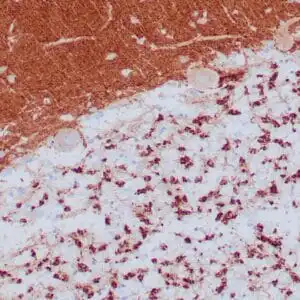
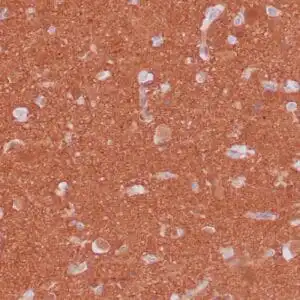
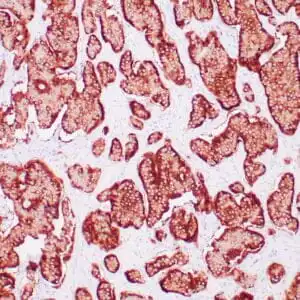
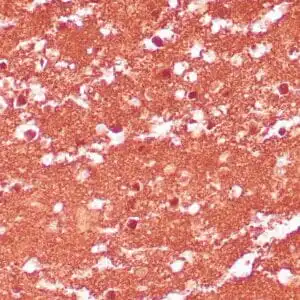
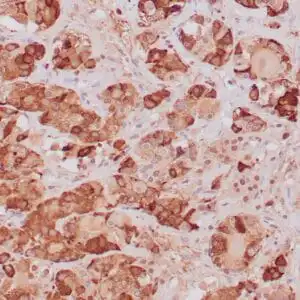
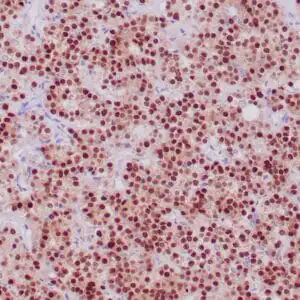
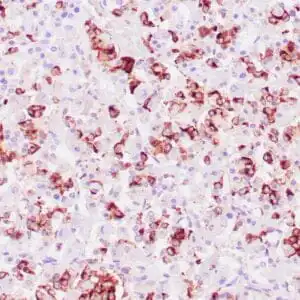
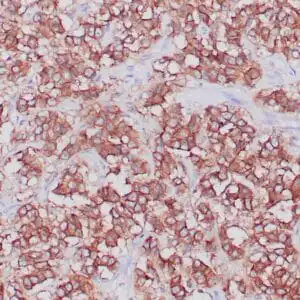
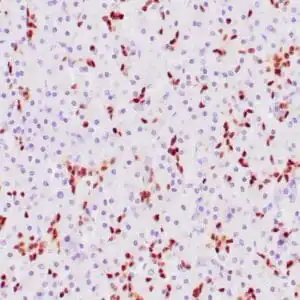
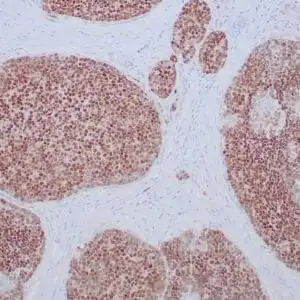
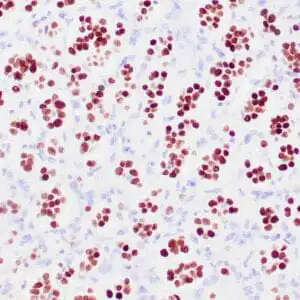
| Human thyroid gland stained with anti-thyroglobulin antibody using peroxidase-conjugate and DAB chromogen. Note the cytoplasmic of follicular cells. |
FAQ & Publications
Frequently Asked Questions
What applications is the mouse anti-Thyroglobulin monoclonal antibody (2H11+6E1) validated for?
This antibody is validated for use in Immunohistochemistry (IHC) on formalin-fixed, paraffin-embedded human tissue samples.
What species does this anti-Thyroglobulin antibody react with?
The antibody reacts specifically with human Thyroglobulin.
How should the mouse anti-Thyroglobulin monoclonal antibody be stored to maintain its stability?
For short-term storage, keep the antibody at 2-8°C. For longer-term storage, it should be stored at -20°C, and freeze/thaw cycles should be avoided to preserve antibody integrity.
What are the available sizes and concentrations for this antibody product?
The antibody is available in concentrated forms of 0.1 mL, 0.5 mL, and 1.0 mL, as well as a 7 mL prediluted format.
What is the host species and clonality of this Thyroglobulin antibody?
This is a mouse monoclonal antibody with isotype IgG1 + IgG1.
Publications
| pmid | title | authors | citation |
|---|---|---|---|
| We haven't added any publications to our database yet. | |||
Published literature highly relevant to the biological target of this product and referencing this antibody or clone are retrieved from the PubMed database provided by the United States National Library of Medicine at the National Institutes of Health.
Protocols
| relevant to this product |
|---|
| IHC |
Documents
| Batch Number | QC File | SDS |
|---|---|---|
| To view batch-specific Safety Datasheets and Quality Certificates associated with your account, please Log In. | ||
Only logged in customers who have purchased this product may leave a review.

Reviews
There are no reviews yet.