| Weight | 1 lbs |
|---|---|
| Dimensions | 9 × 5 × 2 in |
| host | mouse |
| isotype | IgG1 /λ |
| clonality | monoclonal |
| concentration | concentrate, predilute |
| applications | IHC |
| reactivity | human |
| available size | 0.1 mL, 0.5 mL, 1 mL concentrated, 7 mL prediluted |

mouse anti-p16INK4a monoclonal antibody (G175-405) 6303
Price range: $160.00 through $528.00
Antibody summary
- Mouse monoclonal to p16INK4a
- Suitable for: Immunohistochemistry (formalin-fixed, paraffin-embedded tissues)
- Reacts with: Human
- Isotype:IgG1 /λ
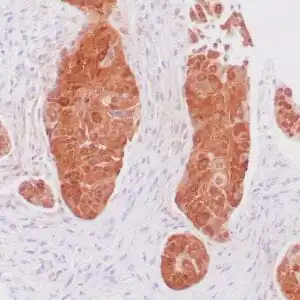
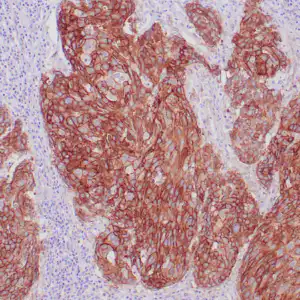
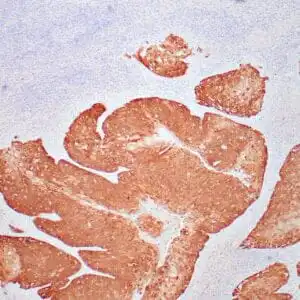
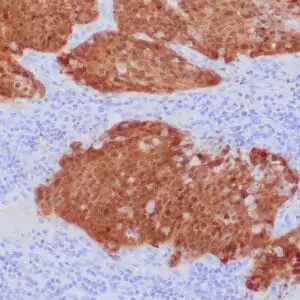
- Control: Cervical squamous cell carcinoma
- Visualization: Cytoplasmic and nuclear
- 0.1, 0.5, 1.0 mL concentrated, 7 mL prediluted
mouse anti-p16INK4a monoclonal antibody G175-405 6303
| target relevance |
|---|
| Homo sapiens CDKN2A Cyclin-dependent kinase inhibitor 2A |
| Protein names Cyclin-dependent kinase inhibitor 2A |
| Alternative names Cyclin-dependent kinase 4 inhibitor A, Multiple tumor suppressor 1, p16-INK4a |
| Gene names CDKN2A |
| Protein family Belongs to the CDKN2 cyclin-dependent kinase inhibitor family |
| Function Acts as a negative regulator of the proliferation of normal cells by interacting strongly with CDK4 and CDK6. This inhibits their ability to interact with cyclins D and to phosphorylate the retinoblastoma protein |
| Subcellular location Cytoplasm, Nucleus |
| Structure Heterodimer with CDK4 or CDK6. Predominant p16 complexes contained CDK6. Interacts with CDK4 (both 'T-172'-phosphorylated and non-phosphorylated forms); the interaction inhibits cyclin D-CDK4 kinase activity. Interacts with ISCO2 |
| Post-translational modification Phosphorylation seems to increase interaction with CDK4 |
| Involvement in disease Melanoma, cutaneous malignant 2 A malignant neoplasm of melanocytes, arising de novo or from a pre-existing benign nevus, which occurs most often in the skin but may also involve other sites. Familial atypical multiple mole melanoma-pancreatic carcinoma syndrome An inherited cancer predisposition syndrome characterized by an increased risk of developing malignant melanoma and/or pancreatic cancer. Mutation carriers within families may develop either or both types of cancer. Melanoma-astrocytoma syndrome Characterized by a dual predisposition to melanoma and neural system tumors, commonly astrocytoma. |
| Keywords 3D-structure, Acetylation, Alternative splicing, ANK repeat, Cell cycle, Cytoplasm, Disease variant, Li-Fraumeni syndrome, Nucleus, Phosphoprotein, Proteomics identification, Reference proteome, Repeat, Tumor suppressor |
| Sequence MEPAAGSSMEPSADWLATAAARGRVEEVRALLEAGALPNAPNSYGRRPIQVMMMGSARVA ELLLLHGAEPNCADPATLTRPVHDAAREGFLDTLVVLHRAGARLDVRDAWGRLPVDLAEE LGHRDVARYLRAAAGGTRGSNHARIDAAEGPSDIPD |
| UniProt accession: P42771 |
Data
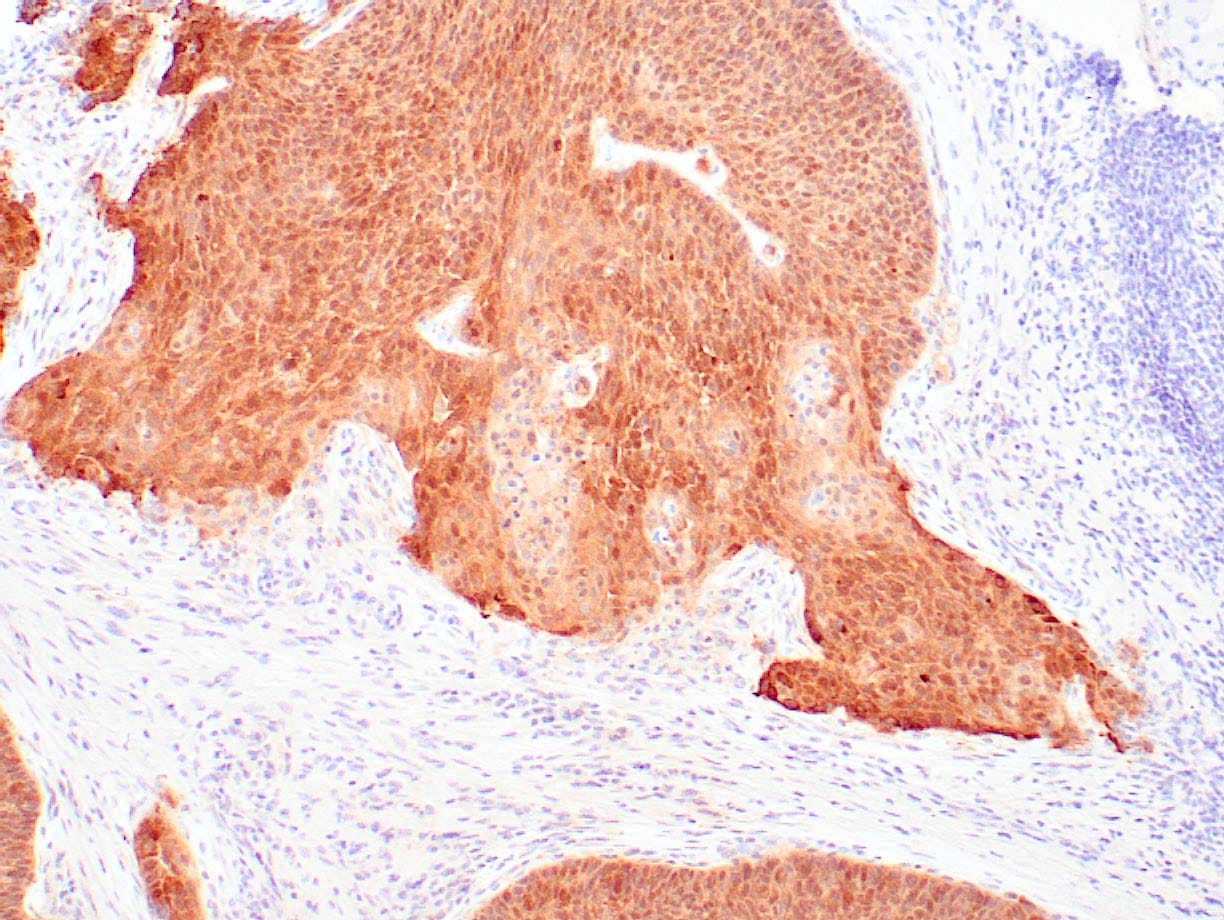 |
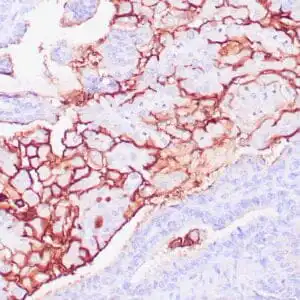
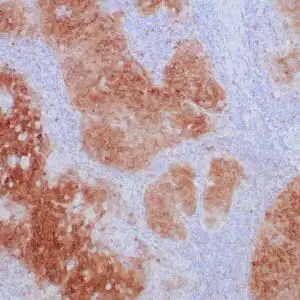
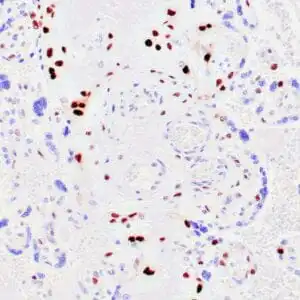
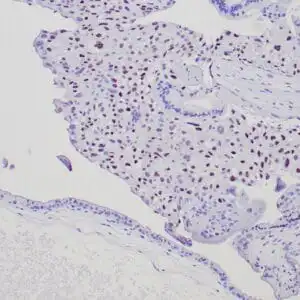
| High grade cervical intraepithelial neoplasia (CINIII) stained with anti-p16 antibody using peroxidase-conjugate and DAB chromogen. Note the nuclear and cytoplasmic staining of dysplastic cells, whereas the normal squamoujs mucosa is negative. |
FAQ & Publications
Frequently Asked Questions
What species does the mouse anti-p16INK4a monoclonal antibody (G175-405) specifically react with?
This antibody specifically reacts with human p16INK4a protein, making it suitable for studies involving human tissues.
What are the recommended storage conditions for maintaining the stability of this p16INK4a antibody?
For short-term storage, keep the antibody at 2-8°C. For long-term preservation, store it at -20°C and avoid repeated freeze/thaw cycles to maintain antibody integrity.
Which applications is the mouse anti-p16INK4a monoclonal antibody (G175-405) validated for, and what is a suggested positive control?
This antibody is validated for immunohistochemistry (IHC) on formalin-fixed, paraffin-embedded tissues. A recommended positive control tissue is cervical squamous cell carcinoma.
Publications
| pmid | title | authors | citation |
|---|---|---|---|
| We haven't added any publications to our database yet. | |||
Published literature highly relevant to the biological target of this product and referencing this antibody or clone are retrieved from the PubMed database provided by the United States National Library of Medicine at the National Institutes of Health.
Protocols
| relevant to this product |
|---|
| IHC |
Documents
| Batch Number | QC File | SDS |
|---|---|---|
| To view batch-specific Safety Datasheets and Quality Certificates associated with your account, please Log In. | ||
Only logged in customers who have purchased this product may leave a review.
Reviews
There are no reviews yet.