| Weight | 1 lbs |
|---|---|
| Dimensions | 9 × 5 × 2 in |
| host | mouse |
| isotype | IgG1 + IgG1 |
| clonality | monoclonal |
| concentration | concentrate, predilute |
| applications | IHC |
| reactivity | human |
| available size | 0.1 mL, 0.5 mL, 1 mL concentrated, 7 mL prediluted |

mouse anti-Insulin monoclonal antibody (ZM83A & ZM83B) 6234
Price range: $160.00 through $528.00
Antibody summary
- Mouse monoclonal to Insulin
- Suitable for: Immunohistochemistry (formalin-fixed, paraffin-embedded tissues)
- Reacts with: Human
- Isotype:IgG1 + IgG1
- Control: Normal pancreas
- Visualization: Cytoplasmic
- 0.1, 0.5, 1.0 mL concentrated, 7 mL prediluted
mouse anti-Insulin monoclonal antibody ZM83A & ZM83B 6234
| target relevance |
|---|
| Protein names Insulin [Cleaved into: Insulin B chain; Insulin A chain] |
| Gene names INS,INS |
| Protein family Insulin family |
| Mass 11981Da |
| Function FUNCTION: Insulin decreases blood glucose concentration. It increases cell permeability to monosaccharides, amino acids and fatty acids. It accelerates glycolysis, the pentose phosphate cycle, and glycogen synthesis in liver. |
| Subellular location SUBCELLULAR LOCATION: Secreted. |
| Structure SUBUNIT: Heterodimer of a B chain and an A chain linked by two disulfide bonds (PubMed:25423173). {ECO:0000269|PubMed:25423173}. |
| Involvement in disease DISEASE: Hyperproinsulinemia (HPRI) [MIM:616214]: An autosomal dominant condition characterized by elevated levels of serum proinsulin-like material. {ECO:0000269|PubMed:1601997, ECO:0000269|PubMed:2196279, ECO:0000269|PubMed:3470784, ECO:0000269|PubMed:4019786, ECO:0000269|PubMed:6312455, ECO:0000269|PubMed:6424111, ECO:0000269|PubMed:8421693}. Note=The disease is caused by variants affecting the gene represented in this entry.; DISEASE: Type 1 diabetes mellitus 2 (T1D2) [MIM:125852]: A multifactorial disorder of glucose homeostasis that is characterized by susceptibility to ketoacidosis in the absence of insulin therapy. Clinical features are polydipsia, polyphagia and polyuria which result from hyperglycemia-induced osmotic diuresis and secondary thirst. These derangements result in long-term complications that affect the eyes, kidneys, nerves, and blood vessels. {ECO:0000269|PubMed:18192540}. Note=The disease is caused by variants affecting the gene represented in this entry.; DISEASE: Diabetes mellitus, permanent neonatal, 4 (PNDM4) [MIM:618858]: A form of permanent neonatal diabetes mellitus, a type of diabetes characterized by onset of persistent hyperglycemia within the first six months of life. Initial clinical manifestations include intrauterine growth retardation, hyperglycemia, glycosuria, osmotic polyuria, severe dehydration, and failure to thrive. PNDM4 transmission pattern is consistent with autosomal dominant or autosomal recessive inheritance. {ECO:0000269|PubMed:17855560, ECO:0000269|PubMed:18162506}. Note=The disease is caused by variants affecting the gene represented in this entry.; DISEASE: Maturity-onset diabetes of the young 10 (MODY10) [MIM:613370]: A form of diabetes that is characterized by an autosomal dominant mode of inheritance, onset in childhood or early adulthood (usually before 25 years of age), a primary defect in insulin secretion and frequent insulin-independence at the beginning of the disease. {ECO:0000269|PubMed:18162506, ECO:0000269|PubMed:18192540, ECO:0000269|PubMed:20226046, ECO:0000269|PubMed:25423173}. Note=The disease is caused by variants affecting the gene represented in this entry. |
| Target Relevance information above includes information from UniProt accession: P01308 |
| The UniProt Consortium |
Data
 |
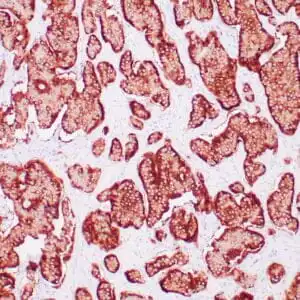
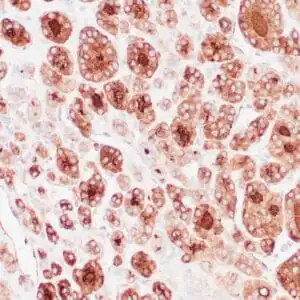
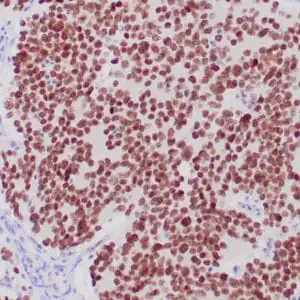
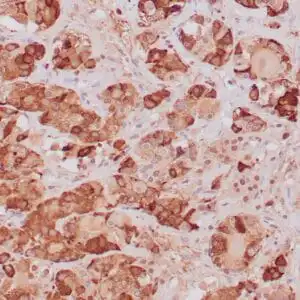
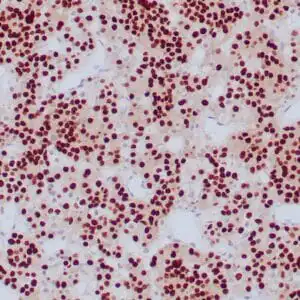
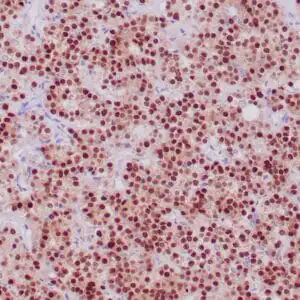
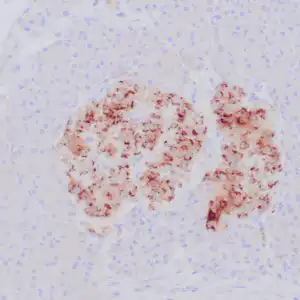
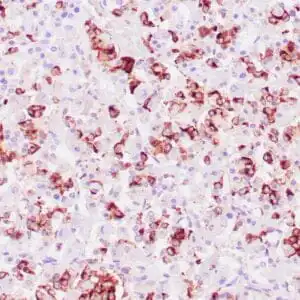
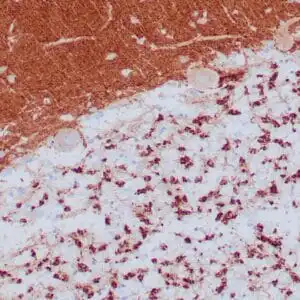
| Human pancreas stained with anti-Insulin antibody using peroxidase-conjugate and DAB chromogen. Note the cytoplasmic staining of islet cells. |
FAQ & Publications
Frequently Asked Questions
What species does the mouse anti-Insulin monoclonal antibody (ZM83A & ZM83B) 6234 specifically react with?
This antibody specifically reacts with human insulin, making it suitable for studies involving human tissues.
What are the recommended storage conditions for the mouse anti-Insulin monoclonal antibody (ZM83A & ZM83B) 6234?
For short-term storage, keep the antibody at 2-8°C. For longer-term preservation, store it at -20°C and avoid repeated freeze/thaw cycles to maintain antibody integrity.
Which applications is the mouse anti-Insulin monoclonal antibody (ZM83A & ZM83B) 6234 validated for, and what is the suggested dilution for immunohistochemistry?
This antibody is validated for immunohistochemistry on formalin-fixed, paraffin-embedded human tissues. The recommended dilution for the concentrated form is between 1:100 and 1:200.
Publications
| pmid | title | authors | citation |
|---|---|---|---|
| We haven't added any publications to our database yet. | |||
Published literature highly relevant to the biological target of this product and referencing this antibody or clone are retrieved from the PubMed database provided by the United States National Library of Medicine at the National Institutes of Health.
Protocols
| relevant to this product |
|---|
| IHC |
Documents
| Batch Number | QC File | SDS |
|---|---|---|
| To view batch-specific Safety Datasheets and Quality Certificates associated with your account, please Log In. | ||
Only logged in customers who have purchased this product may leave a review.


Reviews
There are no reviews yet.