| Weight | 1 lbs |
|---|---|
| Dimensions | 9 × 5 × 2 in |
| host | mouse |
| isotype | IgG2b |
| clonality | monoclonal |
| concentration | concentrate, predilute |
| applications | IHC |
| reactivity | human |
| available size | 0.1 mL, 0.5 mL, 1 mL concentrated, 7 mL prediluted |

mouse anti-Growth Hormone monoclonal antibody (ZM140) 6205
Price range: $160.00 through $528.00
Antibody summary
- Mouse monoclonal to Growth Hormone
- Suitable for: Immunohistochemistry (formalin-fixed, paraffin-embedded tissues)
- Reacts with: Human
- Isotype:IgG2b
- Control: Pituitary
- Visualization: Cytoplasmic
- 0.1, 0.5, 1.0 mL concentrated, 7 mL prediluted
mouse anti-Growth Hormone monoclonal antibody ZM140 6205
| target relevance |
|---|
| Protein names Somatotropin (Growth hormone) (GH) (GH-N) (Growth hormone 1) (Pituitary growth hormone) |
| Gene names GH1,GH1 |
| Protein family Somatotropin/prolactin family |
| Mass 24847Da |
| Function FUNCTION: Plays an important role in growth control. Its major role in stimulating body growth is to stimulate the liver and other tissues to secrete IGF1. It stimulates both the differentiation and proliferation of myoblasts. It also stimulates amino acid uptake and protein synthesis in muscle and other tissues. |
| Subellular location SUBCELLULAR LOCATION: Secreted {ECO:0000269|PubMed:5279046, ECO:0000269|PubMed:5810834}. |
| Structure SUBUNIT: Monomer, dimer, trimer, tetramer and pentamer, disulfide-linked or non-covalently associated, in homomeric and heteromeric combinations. Can also form a complex either with GHBP or with the alpha2-macroglobulin complex. |
| Involvement in disease DISEASE: Growth hormone deficiency, isolated, 1A (IGHD1A) [MIM:262400]: An autosomal recessive, severe deficiency of growth hormone leading to dwarfism. Patients often develop antibodies to administered growth hormone. {ECO:0000269|PubMed:8364549}. Note=The disease is caused by variants affecting the gene represented in this entry.; DISEASE: Growth hormone deficiency, isolated, 1B (IGHD1B) [MIM:612781]: An autosomal recessive deficiency of growth hormone leading to short stature. Patients have low but detectable levels of growth hormone, significantly retarded bone age, and a positive response and immunologic tolerance to growth hormone therapy. {ECO:0000269|PubMed:12655557}. Note=The disease is caused by variants affecting the gene represented in this entry.; DISEASE: Kowarski syndrome (KWKS) [MIM:262650]: A syndrome clinically characterized by short stature associated with bioinactive growth hormone, normal or slightly increased growth hormone secretion, pathologically low insulin-like growth factor 1 levels, and normal catch-up growth on growth hormone replacement therapy. {ECO:0000269|PubMed:17519310, ECO:0000269|PubMed:8552145, ECO:0000269|PubMed:9276733}. Note=The disease is caused by variants affecting the gene represented in this entry.; DISEASE: Growth hormone deficiency, isolated, 2 (IGHD2) [MIM:173100]: An autosomal dominant deficiency of growth hormone leading to short stature. Clinical severity is variable. Patients have a positive response and immunologic tolerance to growth hormone therapy. {ECO:0000269|PubMed:11502836, ECO:0000269|PubMed:9152628}. Note=The disease is caused by variants affecting the gene represented in this entry. |
| Target Relevance information above includes information from UniProt accession: P01241 |
| The UniProt Consortium |
Data
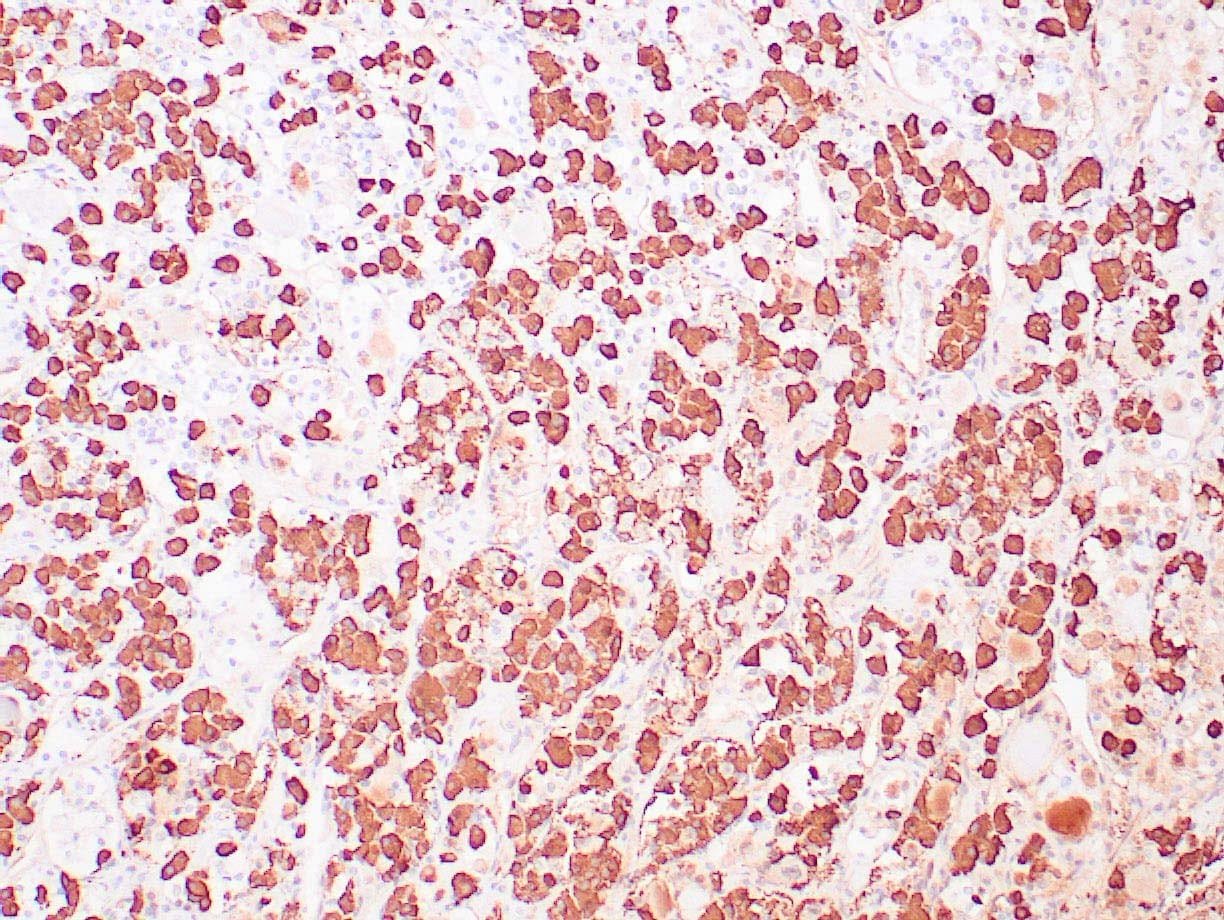 |
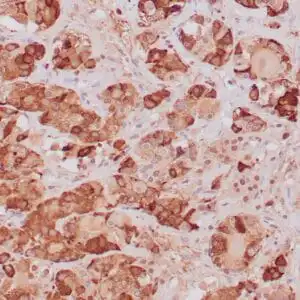
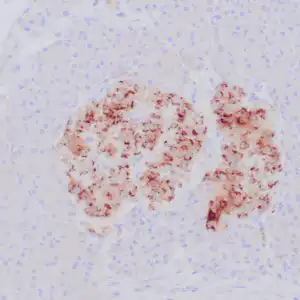
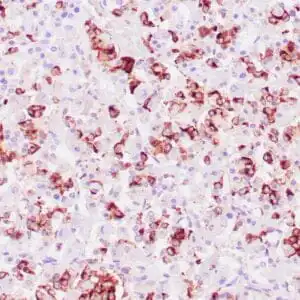
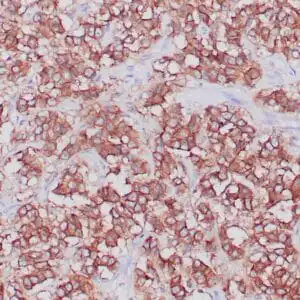
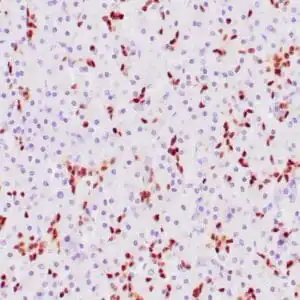
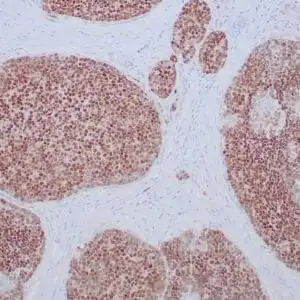
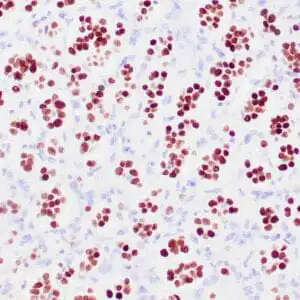
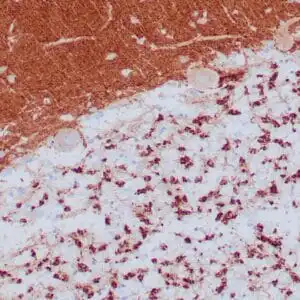
| Human pituitary stained with anti-GH antibody using peroxidase-conjugate and DAB chromogen. Note the cytoplasmic staining of glandular cells. |
FAQ & Publications
Frequently Asked Questions
What sample types are compatible with the Campylobacter jejuni IgA ELISA Kit MD-6205?
The kit is suitable for use with serum, plasma, and whole blood samples for detection of Campylobacter jejuni reactive IgA.
How should the Campylobacter jejuni IgA ELISA Kit MD-6205 be stored to maintain its stability?
The kit components should be stored at 2-8°C to ensure proper stability and performance.
What is the assay format and detection method used in the Campylobacter jejuni IgA ELISA Kit MD-6205?
This kit utilizes an indirect and quantitative ELISA format to detect IgA antibodies reactive to Campylobacter jejuni.
What species does the mouse anti-Growth Hormone monoclonal antibody (ZM140) react with?
This antibody specifically reacts with human Growth Hormone.
Which applications is the mouse anti-Growth Hormone monoclonal antibody (ZM140) validated for?
It is validated for immunohistochemistry (IHC) on formalin-fixed, paraffin-embedded tissues.
How should the mouse anti-Growth Hormone monoclonal antibody (ZM140) be stored to maintain stability?
For short-term storage, keep the antibody at 2-8°C, and for long-term storage, freeze at -20°C while avoiding freeze-thaw cycles.
What is the recommended dilution for using the concentrated mouse anti-Growth Hormone monoclonal antibody (ZM140) in IHC?
The recommended dilution range for the concentrated antibody in IHC is between 1:100 and 1:200.
Publications
| pmid | title | authors | citation |
|---|---|---|---|
| We haven't added any publications to our database yet. | |||
Published literature highly relevant to the biological target of this product and referencing this antibody or clone are retrieved from the PubMed database provided by the United States National Library of Medicine at the National Institutes of Health.
Protocols
| relevant to this product |
|---|
| IHC |
Documents
| Batch Number | QC File | SDS |
|---|---|---|
| To view batch-specific Safety Datasheets and Quality Certificates associated with your account, please Log In. | ||
Only logged in customers who have purchased this product may leave a review.

Reviews
There are no reviews yet.