| Weight | 1 lbs |
|---|---|
| Dimensions | 9 × 5 × 2 in |
| host | mouse |
| isotype | IgG1 |
| clonality | monoclonal |
| concentration | concentrate, predilute |
| applications | IHC |
| reactivity | human |
| available size | 0.1 mL, 0.5 mL, 1 mL concentrated, 7 mL prediluted |

mouse anti-ACTH monoclonal antibody (ZM98) 6010
Price range: $160.00 through $528.00
Antibody summary
- Mouse monoclonal to ACTH (Corticotropin)
- Suitable for: Immunohistochemistry (formalin-fixed, paraffin-embedded tissues)
- Reacts with: Human
- Isotype:IgG1
- Control: Pituitary
- Visualization: Cytoplasmic
- 0.1, 0.5, 1.0 mL concentrated, 7 mL prediluted
mouse anti-ACTH moclonal antibody ZM98 6010
| target relevance |
|---|
| Homo sapiens POMC Pro-opiomelanocortin |
| Protein names Pro-opiomelanocortin |
| Alternative names Corticotropin-lipotropin |
| Gene names POMC |
| Protein family Belongs to the POMC family |
| Function Precursor protein of pituitary hormones that are involved in diverse physiological processes, including the regulation of energy balance, stress response, immune function and skin pigmentation |
| Subcellular location Secreted |
| Post-translational modification Specific enzymatic cleavages at paired basic residues yield the different active peptides O-glycosylated; reducing sugar is probably N-acetylgalactosamine |
| Involvement in disease Obesity A condition characterized by an increase of body weight beyond the limitation of skeletal and physical requirements, as the result of excessive accumulation of body fat. Obesity, early-onset, with adrenal insufficiency and red hair An autosomal recessive disorder characterized by early-onset obesity due to severe hyperphagia, pigmentary abnormalities, mainly pale skin and red hair, and secondary hypocortisolism. |
| Keywords 3D-structure, Acetylation, Amidation, Cleavage on pair of basic residues, Direct protein sequencing, Disulfide bond, Endorphin, Glycoprotein, Hormone, Obesity, Phosphoprotein, Proteomics identification, Reference proteome, Secreted, Signal |
| Sequence MPRSCCSRSGALLLALLLQASMEVRGWCLESSQCQDLTTESNLLECIRACKPDLSAETPM FPGNGDEQPLTENPRKYVMGHFRWDRFGRRNSSSSGSSGAGQKREDVSAGEDCGPLPEGG PEPRSDGAKPGPREGKRSYSMEHFRWGKPVGKKRRPVKVYPNGAEDESAEAFPLEFKREL TGQRLREGDGPDGPADDGAGAQADLEHSLLVAAEKKDEGPYRMEHFRWGSPPKDKRYGGF MTSEKSQTPLVTLFKNAIIKNAYKKGE |
| UniProt accession: P01189 |
Data
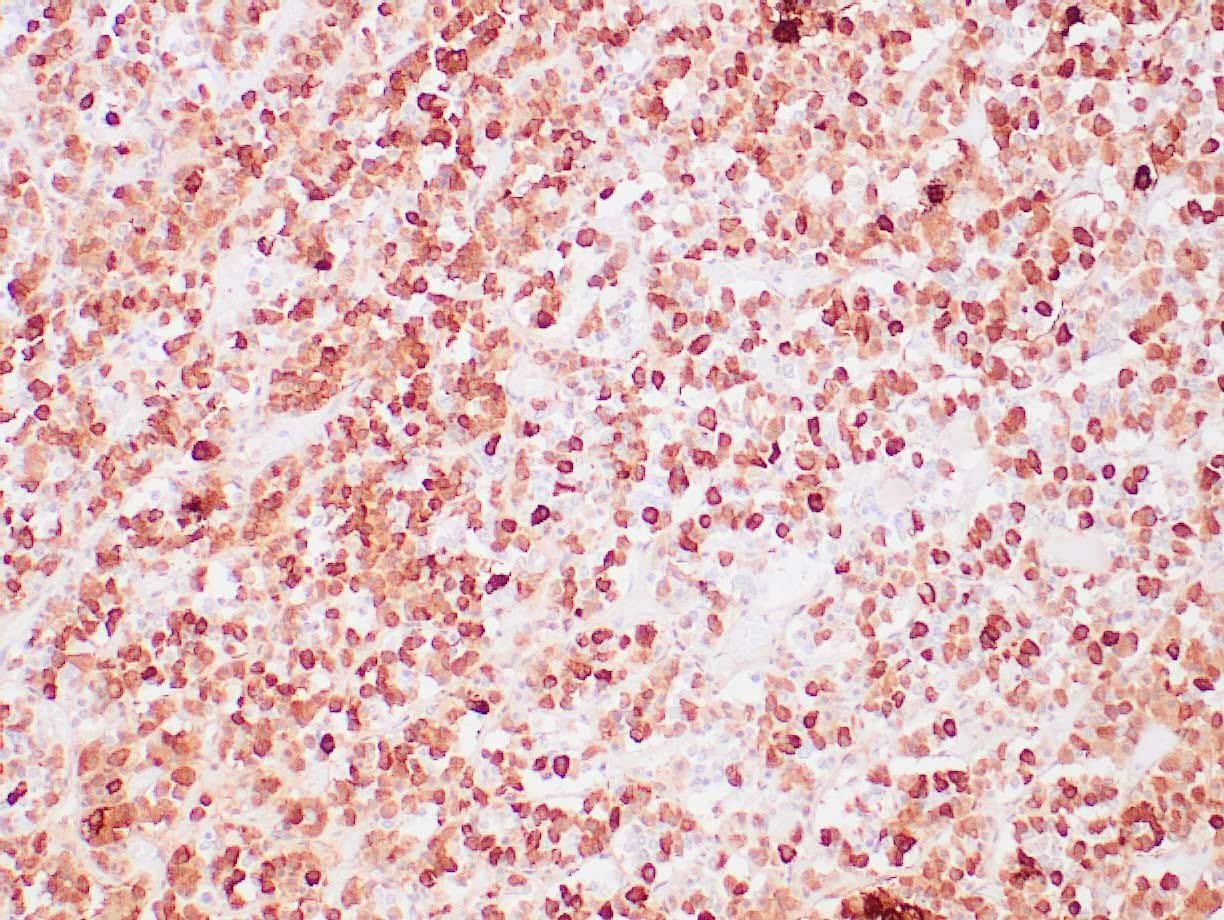 |
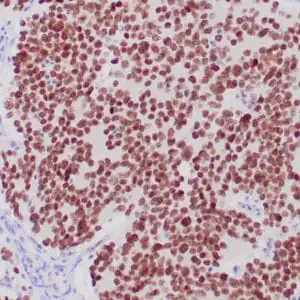
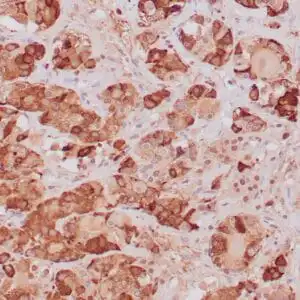
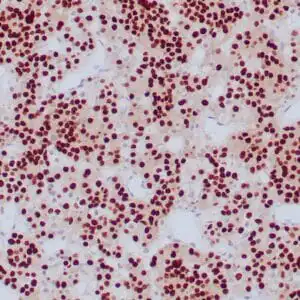
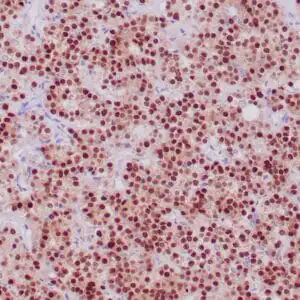
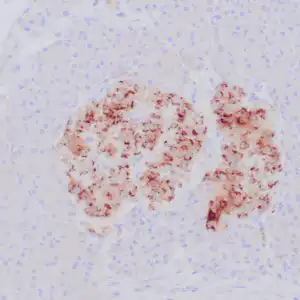
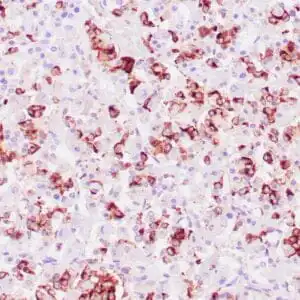
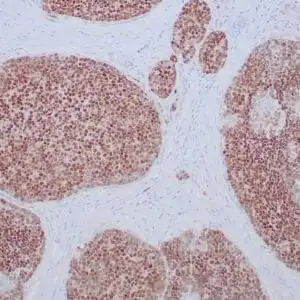
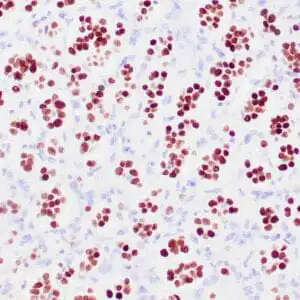
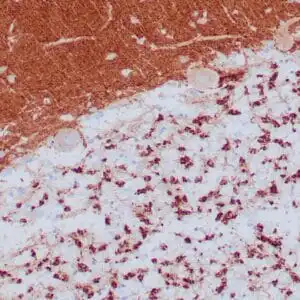
| Human pituitary stained with anti-ACTH monoclonal antibody using peroxidase-conjugate and DAB chromogen. Note the cytoplasmic/nuclear staining of ACTH secreting cells. |
FAQ & Publications
Frequently Asked Questions
What species does the mouse anti-ACTH monoclonal antibody (ZM98) 6010 specifically react with?
This antibody specifically reacts with human samples, making it suitable for detecting ACTH in human tissues.
What are the recommended storage conditions for maintaining the stability of the mouse anti-ACTH monoclonal antibody (ZM98) 6010?
For short-term storage, keep the antibody at 2-8°C, and for longer-term storage, it should be kept at -20°C. Avoid repeated freeze/thaw cycles to preserve antibody integrity.
Publications
| pmid | title | authors | citation |
|---|---|---|---|
| We haven't added any publications to our database yet. | |||
Published literature highly relevant to the biological target of this product and referencing this antibody or clone are retrieved from the PubMed database provided by the United States National Library of Medicine at the National Institutes of Health.
Protocols
| relevant to this product |
|---|
| IHC |
Documents
| Batch Number | QC File | SDS |
|---|---|---|
| To view batch-specific Safety Datasheets and Quality Certificates associated with your account, please Log In. | ||
Only logged in customers who have purchased this product may leave a review.

Reviews
There are no reviews yet.