| Weight | 1 lbs |
|---|---|
| Dimensions | 9 × 5 × 2 in |
| target | Human Measles Virus Antigen |
| species reactivity | Measles Virus |
| applications | ELISA |
| assay type | Indirect & quantitative |
| available size | 1 mg |

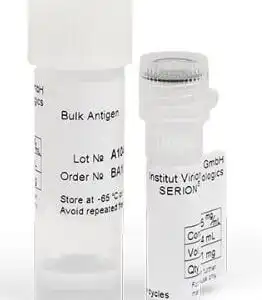
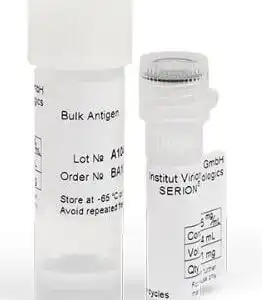
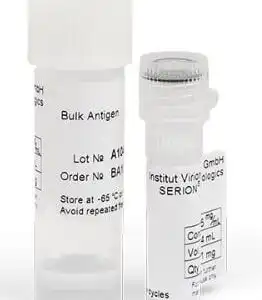
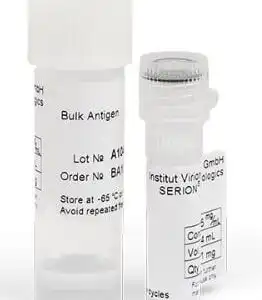
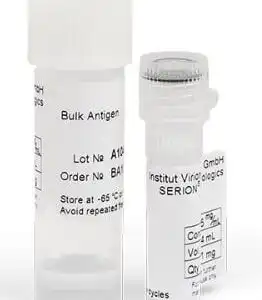
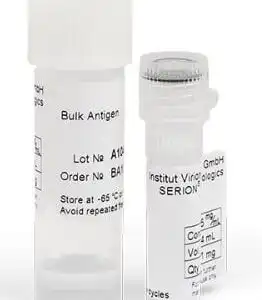
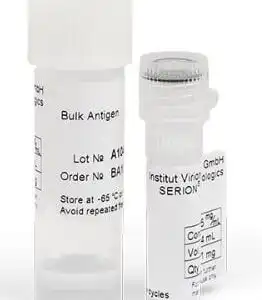
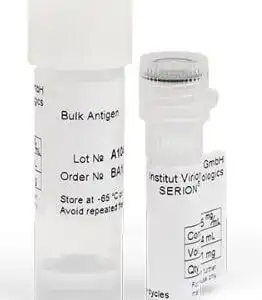
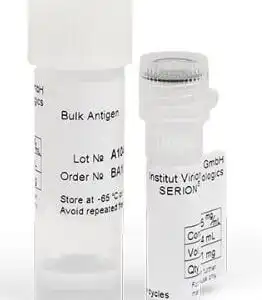
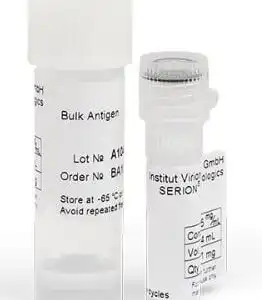
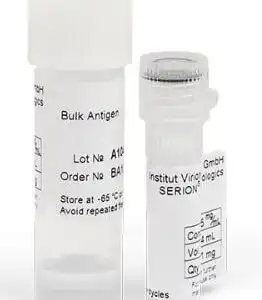
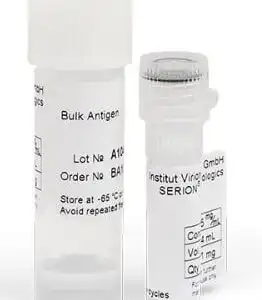
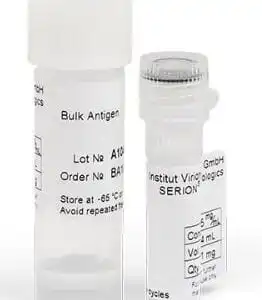
Measles Virus Antigen BA102VS
$943.00
Summary
- Virion/Serion Immunologics Antigen for research use (RUO)
- Measles Virus Antigen, recombinant
- Suitable for detection of IgA, IgG & IgM antibodies in ELISA
- Lot specific concentration, specified in mg/mL
- 1 mg
Measles Virus Antigen BA102VS
| kit |
|---|
| Overview Culture supernatant of measles virus infected cells is concentrated by ultrafiltration and ultracentrifugation. The resulting antigen preparation consists of a high concentration of virus and viral components and contains residual host cell material. The antigen is presented in 100 mM glycine buffer, pH 9.5. |
| Research area Infectious Disease |
| Storage Store at -65°C or lower. Avoid repeated freeze-thaw cycles. Sonicate before use. 10 years from date of manufacture (under recommended storage conditions). |
| Form liquid |
| Associated products Measles Virus IgG Control Serum (BC102G) Measles Virus IgG ELISA Kit (ESR102G) Measles Virus IgM ELISA Kit (ESR102M) Measles Virus IgM Control Serum (BC102M) Measles Antigen [premium] (BA102VS-S) |
| Additional information Additional Serion Kit Information |
| target relevance |
|---|
| Measles Virus |
| Description Virus that causes measles (rubeola) |
| Structure Measles virus is an enveloped, negative-sense, single-stranded RNA virus belonging to the genus Morbillivirus within the family Paramyxoviridae. Humans are the only known natural reservoir of the virus. The viral particle contains a lipid envelope with fusion (F) and hemagglutinin (H) glycoproteins that mediate attachment to and entry into host cells. Measles virus is one of the most contagious human pathogens known and is transmitted primarily through respiratory droplets and airborne aerosols. Following infection, the virus initially replicates in the respiratory tract and regional lymphoid tissues before disseminating systemically. Measles virus can induce transient but profound immune suppression, increasing susceptibility to secondary infections for weeks to months after recovery. Widespread vaccination has dramatically reduced disease incidence in many regions, although outbreaks continue to occur where vaccination coverage is insufficient. |
| Diagnosis The diagnosis of measles virus infection is performed through serological and molecular methods. Detection of measles-specific IgM antibodies by ELISA is commonly used to confirm recent infection, while IgG antibody testing may be used to assess immune status or evidence of prior exposure. Reverse transcription polymerase chain reaction (RT-PCR) provides highly sensitive detection of viral RNA in respiratory specimens, throat swabs, nasopharyngeal samples, urine, and blood and is particularly useful during the early phase of infection. Viral genotyping may be performed for epidemiological investigations and outbreak surveillance. Laboratory confirmation is important because clinical symptoms can resemble those of other viral exanthematous illnesses. |
| Symptoms Measles virus infection typically develops following an incubation period of approximately seven to fourteen days. Early symptoms include high fever, cough, coryza (runny nose), conjunctivitis, malaise, and characteristic Koplik spots on the oral mucosa. Several days later, a maculopapular rash appears, beginning on the face and spreading downward to the trunk and extremities. Additional symptoms may include headache, fatigue, loss of appetite, and lymphadenopathy. Although most individuals recover completely, severe complications can occur, particularly in young children, malnourished individuals, pregnant women, and immunocompromised patients. Complications include otitis media, pneumonia, diarrhea, encephalitis, and the rare but fatal neurological disorder subacute sclerosing panencephalitis (SSPE). Measles remains a significant cause of vaccine-preventable morbidity and mortality worldwide. |
Data
FAQ & Publications
Frequently Asked Questions
What is the recommended storage condition for the Measles Virus Antigen BA102VS to maintain its stability?
The Measles Virus Antigen BA102VS should be stored at -65°C or lower. It is important to avoid repeated freeze-thaw cycles to preserve antigen integrity. Under these recommended storage conditions, the antigen is stable for up to 10 years from the date of manufacture.
For which antibody classes is the Measles Virus Antigen BA102VS suitable for detection in ELISA assays?
The Measles Virus Antigen BA102VS is suitable for the detection of IgA, IgG, and IgM antibodies in ELISA applications. This allows for comprehensive analysis of immune responses related to measles virus infection or vaccination.
Publications
| pmid | title | authors | citation |
|---|---|---|---|
| We haven't added any publications to our database yet. | |||
Published literature highly relevant to the biological target of this product and referencing this antibody or clone are retrieved from the PubMed database provided by the United States National Library of Medicine at the National Institutes of Health.
Protocols
| relevant to this product |
|---|
Only logged in customers who have purchased this product may leave a review.

Reviews
There are no reviews yet.