| Weight | 1 lbs |
|---|---|
| Dimensions | 9 × 5 × 2 in |
| target | Enterovirus |
| species reactivity | Enterovirus |
| applications | ELISA |
| assay type | Indirect & quantitative |
| available size | 1 mg |

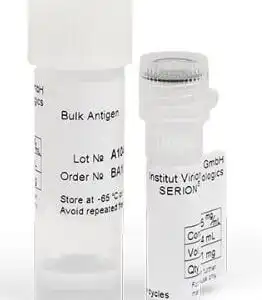
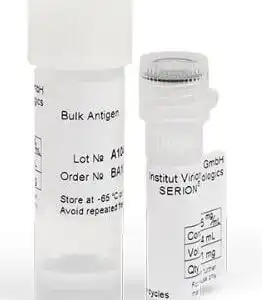
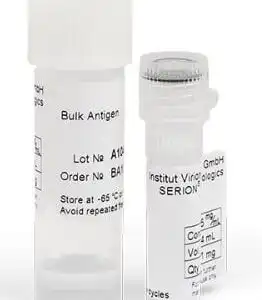
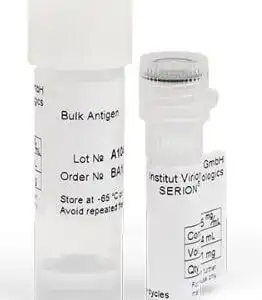
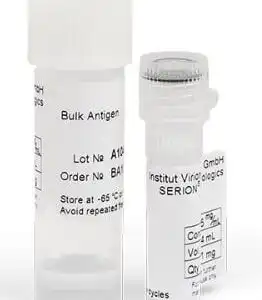
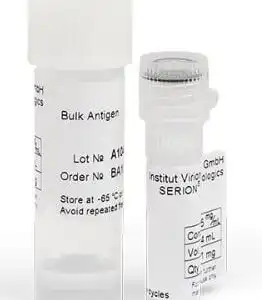
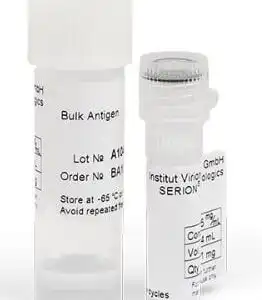
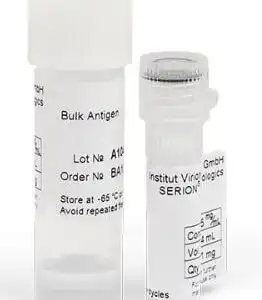
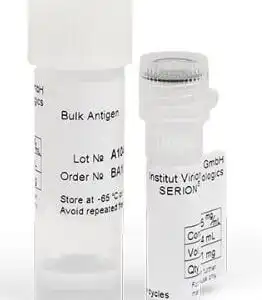
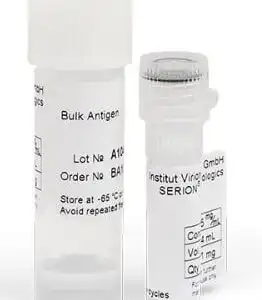
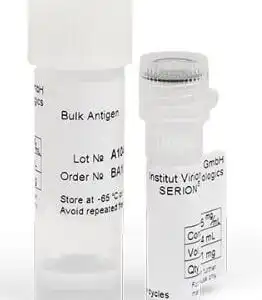
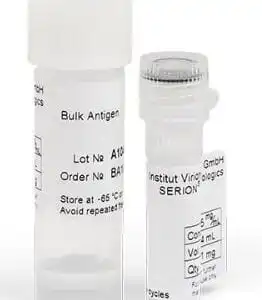
Enterovirus Antigen BA133VS01
$1,054.00
Summary
- Virion/Serion Immunologics Antigen for research use (RUO)
- Enterovirus Antigen, recombinant
- Suitable for detection of IgA, IgG & IgM antibodies in ELISA
- Lot specific concentration, specified in mg/mL
- 1 mg
Enterovirus Antigen BA133VS01
| kit |
|---|
| Research area Infectious Disease |
| Storage Store at -65°C or lower. Avoid repeated freeze-thaw cycles. 10 years from date of manufacture (under recommended storage conditions). |
| Form liquid |
| Associated products Enterovirus Antigen (BA133VS01) Enterovirus IgA Control Serum (BC133A) Enterovirus IgG Control Serum (BC133G) Enterovirus IgM Control Serum (BC133M) Enterovirus IgA ELISA Kit (ESR133A) Enterovirus IgG ELISA Kit (ESR133G) Enterovirus IgM ELISA Kit (ESR133M) |
| target relevance |
|---|
| Enterovirus |
| Description Group of viruses that cause respiratory, neurological, gastrointestinal, and systemic infections |
| Structure Enteroviruses are non-enveloped, positive-sense, single-stranded RNA viruses belonging to the genus Enterovirus within the family Picornaviridae. The genus comprises numerous human pathogens, including polioviruses, coxsackieviruses, echoviruses, rhinoviruses, and enterovirus A71, among others. Enteroviruses possess an icosahedral capsid that protects the viral genome and contributes to remarkable environmental stability and resistance to many disinfectants. Transmission occurs primarily through the fecal-oral route, respiratory secretions, and direct contact with contaminated surfaces. Following infection, the viruses typically replicate in the gastrointestinal tract and upper respiratory tract before disseminating through the bloodstream to other tissues and organs. Enteroviruses are among the most common viral pathogens worldwide and are responsible for a broad spectrum of clinical diseases ranging from mild febrile illness to severe neurological disease. |
| Diagnosis The diagnosis of enterovirus infection is performed through molecular, virological, and serological methods. Reverse transcription polymerase chain reaction (RT-PCR) is the preferred diagnostic technique due to its high sensitivity and specificity and can detect enteroviral RNA in respiratory specimens, stool samples, blood, cerebrospinal fluid, and tissue samples. Viral culture may be used in specialized laboratories but has largely been replaced by molecular testing. Serological assays may assist in epidemiological investigations and retrospective diagnosis but are less commonly used in routine clinical practice. Laboratory confirmation is particularly important in cases involving meningitis, encephalitis, myocarditis, neonatal sepsis-like illness, or outbreak investigations. |
| Symptoms Enterovirus infections produce a wide range of clinical manifestations depending on the infecting strain and affected organ systems. Many infections are asymptomatic or result in mild febrile illness characterized by fever, fatigue, headache, sore throat, and gastrointestinal symptoms. Common clinical syndromes include hand, foot and mouth disease, herpangina, viral meningitis, encephalitis, myocarditis, pericarditis, conjunctivitis, and respiratory tract infections. Certain enteroviruses, such as poliovirus and enterovirus D68, can cause severe neurological disease including acute flaccid paralysis. Neonates, immunocompromised individuals, and patients with cardiac or neurological involvement are at increased risk of severe disease. While most infections are self-limiting, some may result in long-term neurological or cardiac complications. |
Data
FAQ & Publications
Frequently Asked Questions
What is the intended application of Enterovirus Antigen BA133VS01 in research?
Enterovirus Antigen BA133VS01 is suitable for the detection of IgA, IgG, and IgM antibodies using indirect and quantitative ELISA assays.
How should Enterovirus Antigen BA133VS01 be stored to maintain its stability?
The antigen should be stored at -65°C or lower and should be protected from repeated freeze-thaw cycles to ensure stability for up to 10 years from the date of manufacture under recommended storage conditions.
Which species does the Enterovirus Antigen BA133VS01 react with?
This antigen is reactive with Enterovirus species.
What is the form and available size of Enterovirus Antigen BA133VS01 provided for research use?
The product is supplied as a liquid recombinant antigen in a 1 mg size suitable for research use only.
Publications
| pmid | title | authors | citation |
|---|---|---|---|
| We haven't added any publications to our database yet. | |||
Published literature highly relevant to the biological target of this product and referencing this antibody or clone are retrieved from the PubMed database provided by the United States National Library of Medicine at the National Institutes of Health.
Protocols
| relevant to this product |
|---|
Only logged in customers who have purchased this product may leave a review.

Reviews
There are no reviews yet.