| Weight | 1 lbs |
|---|---|
| Dimensions | 9 × 5 × 2 in |
| target | Bordetella pertussis Toxin |
| species reactivity | Bordetella pertussis (whooping cough) |
| applications | ELISA |
| assay type | Indirect & quantitative |
| available size | 1 mg |

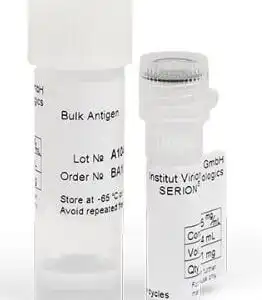
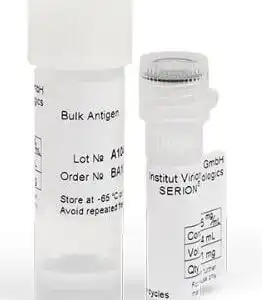
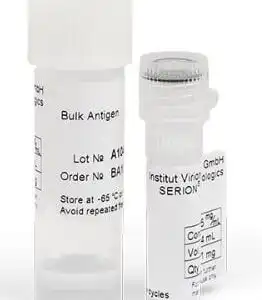
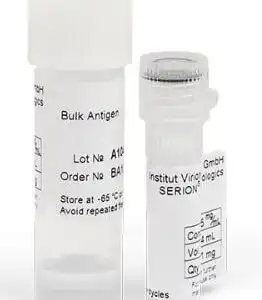
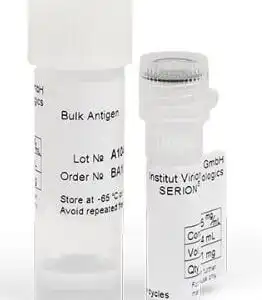
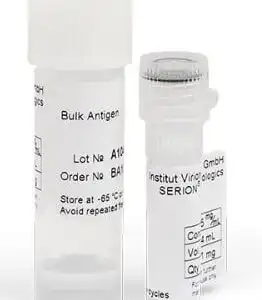
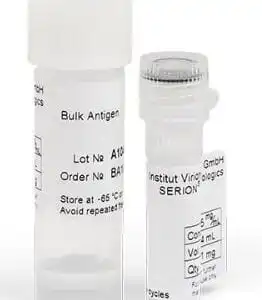
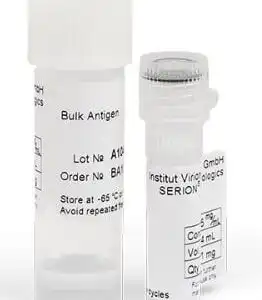
Bordetella pertussis Toxin Antigen BA120VS4
$1,335.00
Summary
- Virion/Serion Immunologics Antigen for research use (RUO)
- Bordetella pertussis Toxin Antigen, recombinant
- Suitable for detection of IgA, IgG & IgM antibodies in ELISA
- Lot specific concentration, specified in mg/mL
- 1 mg
Bordetella pertussis Toxin Antigen BA120VS4
| kit |
|---|
| Research area Infectious Disease |
| Storage Store at -65°C or lower. Avoid repeated freeze-thaw cycles. Sonicate before use. 10 years from date of manufacture (under recommended storage conditions). |
| Form liquid |
| Associated products Bordetella pertussis Filamentous Hemagglutinin (FHA) Antigen (BA120VS3) Bordetella pertussis Toxin Antigen (BA120VS4) Bordetella pertussis whole cell Antigen (BA120VS8) Bordetella pertussis Toxin Human IgA Assay Control (BC1201A) Bordetella pertussis IgA Control Serum (BC120A) Bordetella pertussis IgG Control Serum (BC120G) Bordetella pertussis Toxin IgA ELISA Kit (ESR1201A) Bordetella pertussis Toxin IgG ELISA Kit (ESR1201G) Bordetella pertussis IgA ELISA Kit (ESR120A) Bordetella pertussis IgG ELISA Kit (ESR120G) Bordetella pertussis IgM ELISA Kit (ESR120M) |
| target relevance |
|---|
| Bordetella pertussis |
| Description Bacterium that causes whooping cough (pertussis) |
| Structure Bordetella pertussis is a small, Gram-negative, aerobic coccobacillus belonging to the family Alcaligenaceae. The bacterium is a strictly human pathogen and the primary causative agent of pertussis, commonly known as whooping cough. B. pertussis colonizes the ciliated epithelium of the upper respiratory tract through the action of multiple adhesins, including filamentous hemagglutinin, pertactin, and fimbriae. The organism produces several virulence factors, most notably pertussis toxin, adenylate cyclase toxin, and tracheal cytotoxin, which interfere with host immune responses and contribute to respiratory tract damage. Despite widespread vaccination programs, Bordetella pertussis remains a significant cause of respiratory disease worldwide, particularly among infants and inadequately vaccinated populations. |
| Diagnosis The diagnosis of Bordetella pertussis infection is performed using microbiological, molecular, and serological methods. Polymerase chain reaction (PCR) testing of nasopharyngeal specimens is the preferred laboratory method during the early stages of infection due to its high sensitivity and rapid turnaround time. Culture of B. pertussis from nasopharyngeal swabs remains the definitive diagnostic method but is less sensitive and requires specialized media and prolonged incubation. Serological assays, including ELISA-based tests that detect antibodies against pertussis toxin and other bacterial antigens, are useful in later stages of disease when bacterial shedding has decreased. Laboratory diagnosis is particularly important because clinical presentation may overlap with other respiratory infections. |
| Symptoms Bordetella pertussis infection is highly contagious and spreads through respiratory droplets generated during coughing or sneezing. Following an incubation period of approximately seven to ten days, disease typically progresses through three stages. The catarrhal stage resembles a common upper respiratory infection with symptoms including runny nose, mild fever, sneezing, and occasional cough. This is followed by the paroxysmal stage, characterized by severe repetitive coughing fits that may be followed by the characteristic inspiratory 'whoop,' post-tussive vomiting, and exhaustion. In infants, apnea may occur and can be life-threatening. The final convalescent stage involves gradual recovery over weeks to months, although coughing episodes may persist. Complications include pneumonia, seizures, encephalopathy, rib fractures, and, particularly in young infants, death. |
Data
FAQ & Publications
Frequently Asked Questions
What is the primary application of the Bordetella pertussis Toxin Antigen BA120VS4 in research?
The Bordetella pertussis Toxin Antigen BA120VS4 is primarily used for the detection of IgA, IgG, and IgM antibodies in ELISA assays, supporting indirect and quantitative analyses.
How should the Bordetella pertussis Toxin Antigen BA120VS4 be stored to maintain stability and activity?
This antigen should be stored at -65°C or lower to preserve its stability and is recommended to avoid repeated freeze-thaw cycles. Additionally, sonication before use is advised, and under these conditions, the product is stable for 10 years from the date of manufacture.
Is the Bordetella pertussis Toxin Antigen BA120VS4 specific to any particular bacterial species?
Yes, the antigen specifically targets Bordetella pertussis, the causative agent of whooping cough, and is suitable for research related to this species.
Publications
| pmid | title | authors | citation |
|---|---|---|---|
| We haven't added any publications to our database yet. | |||
Published literature highly relevant to the biological target of this product and referencing this antibody or clone are retrieved from the PubMed database provided by the United States National Library of Medicine at the National Institutes of Health.
Protocols
| relevant to this product |
|---|
Only logged in customers who have purchased this product may leave a review.



Reviews
There are no reviews yet.