| Weight | 1 lbs |
|---|---|
| Dimensions | 9 × 5 × 2 in |
| target | Borrelia afzelii |
| species reactivity | Borrelia afzelii (lyme disease) |
| applications | ELISA |
| assay type | Indirect & quantitative |
| available size | 1 mg |

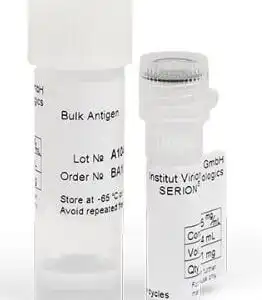
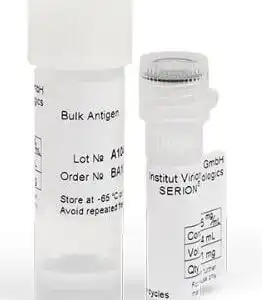
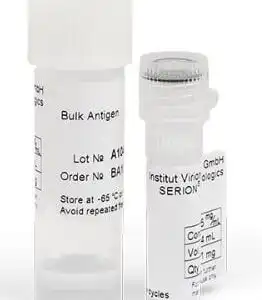
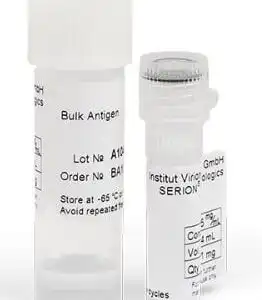
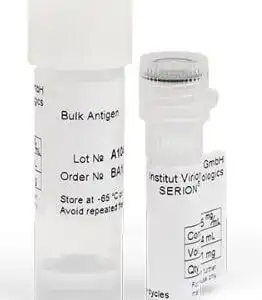
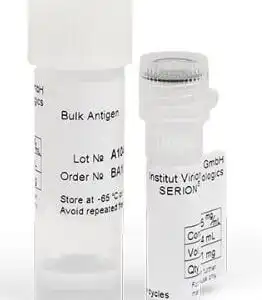
Borrelia afzelii Antigen BA121VS
$877.00
Summary
- Virion/Serion Immunologics Antigen for research use (RUO)
- Borrelia afzelii Antigen, recombinant
- Suitable for detection of IgA, IgG & IgM antibodies in ELISA
- Lot specific concentration, specified in mg/mL
- 1 mg
Borrelia afzelii Antigen BA121VS
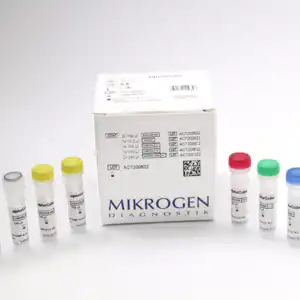
| kit |
|---|
| Research area Infectious Disease |
| Storage Store at -65°C or lower. Avoid repeated freeze-thaw cycles. Sonicate before use. 10 years from date of manufacture (under recommended storage conditions). |
| Form liquid |
| Associated products Borrelia garninii Antigen (BA121GVS) Borrelia afzelii Pko DbpA Antigen (BA121R01) Borrelia afzelii Pko OspC Antigen (BA121R02) Borrelia afzelii Antigen (BA121VS) Borrelia burgdorferi IgG Control Serum (BC121G) Borrelia burgdorferi IgG Control Serum (BC121G) Borrelia burgdorferi IgM Control Serum (BC121M) Borrelia burgdorferi IgG ELISA Kit (ESR121G) Borrelia burgdorferi IgM ELISA Kit (ESR121M) |
| target relevance |
|---|
| Borrelia afzelii |
| Description Spirochete bacterium that causes Lyme borreliosis, particularly cutaneous manifestations |
| Structure Borrelia afzelii is a Gram-negative, highly motile spirochete belonging to the Borrelia burgdorferi sensu lato complex and the family Spirochaetaceae. The bacterium possesses a characteristic helical morphology and periplasmic flagella that facilitate corkscrew-like movement through host tissues. Borrelia afzelii is transmitted primarily through the bite of infected Ixodes ticks and is maintained in natural transmission cycles involving ticks and small mammalian reservoir hosts, particularly rodents. The species is widely distributed throughout Europe and Asia and is one of the most common causes of Lyme borreliosis in these regions. Compared with other Lyme disease-associated Borrelia species, B. afzelii demonstrates a strong affinity for skin tissues and is frequently associated with chronic dermatological manifestations of infection. Following inoculation by an infected tick, the organism can disseminate from the skin to other tissues and persist for extended periods if untreated. |
| Diagnosis The diagnosis of Borrelia afzelii infection is performed through a combination of clinical evaluation, serological testing, and molecular methods. Laboratory diagnosis typically follows a two-tier testing strategy consisting of an initial ELISA or immunoassay followed by confirmatory immunoblot analysis when appropriate. Detection of Borrelia-specific IgM and IgG antibodies provides evidence of infection, although antibodies may not be detectable during the earliest stages of disease. Polymerase chain reaction (PCR) assays may be used to detect Borrelia DNA in skin biopsies, synovial fluid, cerebrospinal fluid, or other clinical specimens. Histopathological examination of affected skin tissue may support the diagnosis in patients with chronic cutaneous manifestations. Clinical findings, laboratory results, and a history of tick exposure are all important components of diagnosis. |
| Symptoms Borrelia afzelii infection commonly presents with manifestations of Lyme borreliosis following the bite of an infected tick. Early symptoms may include erythema migrans, an expanding skin lesion that develops at the site of inoculation and is often accompanied by fatigue, fever, headache, muscle aches, and joint pain. Compared with other Borrelia species, B. afzelii is particularly associated with chronic skin involvement, including acrodermatitis chronica atrophicans (ACA), a progressive skin disorder characterized by discoloration, thinning, and atrophy of the skin, typically affecting the extremities. Additional manifestations may include intermittent arthritis, neuropathic symptoms, and generalized malaise. Although neurological and articular complications can occur, cutaneous disease is a hallmark feature of B. afzelii infection. Early diagnosis and treatment are important to prevent chronic manifestations and long-term complications. |
Data
FAQ & Publications
Frequently Asked Questions
What is the primary application of the Borrelia afzelii Antigen BA121VS?
The Borrelia afzelii Antigen BA121VS is primarily used for the detection of IgA, IgG, and IgM antibodies in ELISA assays, supporting indirect and quantitative assay types.
How should the Borrelia afzelii Antigen BA121VS be stored to maintain its stability?
The antigen should be stored at -65°C or lower to preserve stability. It is recommended to avoid repeated freeze-thaw cycles and to sonicate the product before use. Under these conditions, the antigen has a shelf life of 10 years from the date of manufacture.
Which species does the Borrelia afzelii Antigen BA121VS specifically target?
This recombinant antigen specifically targets Borrelia afzelii, a species of Borrelia bacteria associated with a variant of Lyme disease in humans.
Publications
| pmid | title | authors | citation |
|---|---|---|---|
| We haven't added any publications to our database yet. | |||
Published literature highly relevant to the biological target of this product and referencing this antibody or clone are retrieved from the PubMed database provided by the United States National Library of Medicine at the National Institutes of Health.
Protocols
| relevant to this product |
|---|
Only logged in customers who have purchased this product may leave a review.


Reviews
There are no reviews yet.