| Weight | 1 lbs |
|---|---|
| Dimensions | 9 × 5 × 2 in |
| target | Human Campylobacter IgA |
| species reactivity | Human Campylobacter |
| applications | Lateral flow (dipstick) |
| assay type | Indirect & qualitative |
| available sizes | 20 test kits |
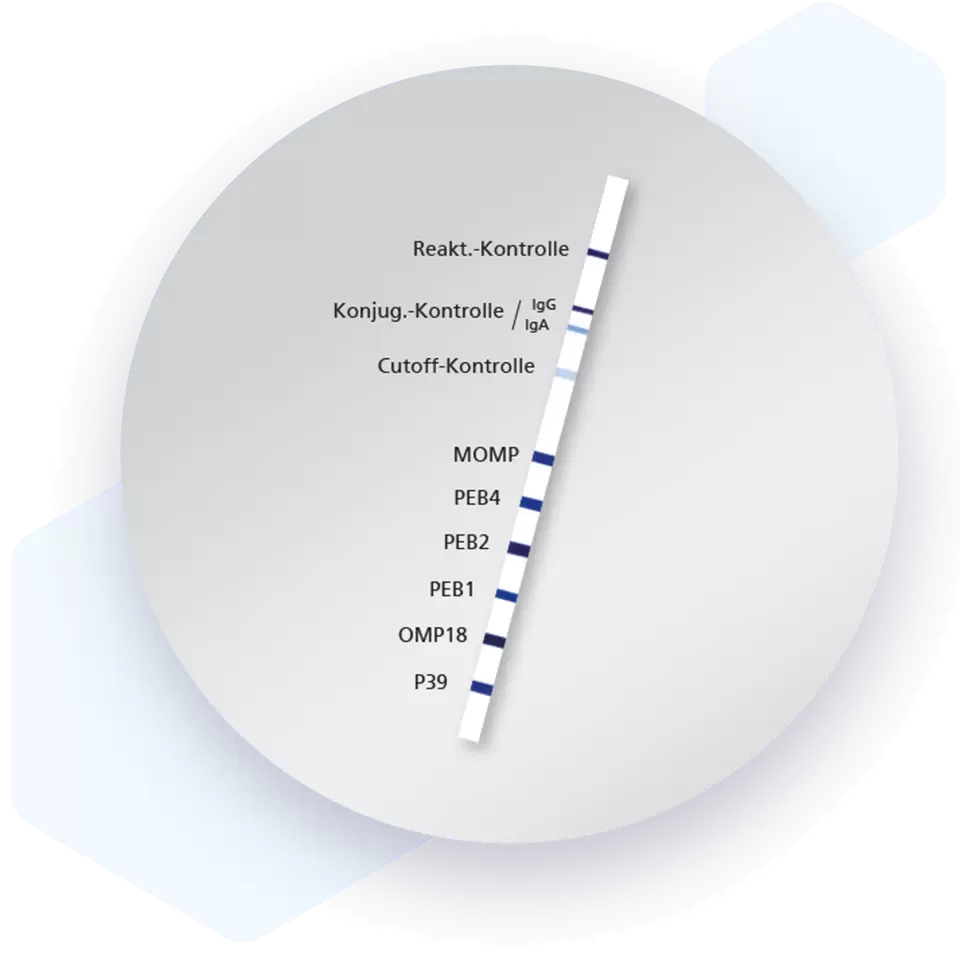
Human Campylobacter IgA Lateral flow dipstick kit 6273
$487.00
Summary
- Mikrogen diagnostik lateral flow device (dipstick) for research use (RUO)
- Human Campylobacter IgA Lateral flow dipstick kit 6273
- Suitable for IgA detection
- Ready-to-use
- 20 tests
Human Campylobacter IgA Lateral flow dipstick kit 6273
| kit | |||||||||||||||||||||
|---|---|---|---|---|---|---|---|---|---|---|---|---|---|---|---|---|---|---|---|---|---|
| Assay type Sandwich assay, lateral flow (dipstick) | |||||||||||||||||||||
| Research area Infectious Disease | |||||||||||||||||||||
| Sample type Serum, plasma, whole blood | |||||||||||||||||||||
Components
| |||||||||||||||||||||
| Storage Store at 2-8°C. | |||||||||||||||||||||
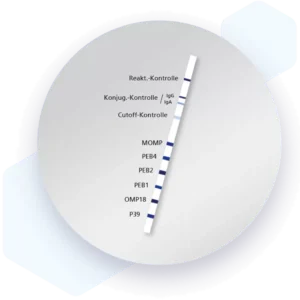
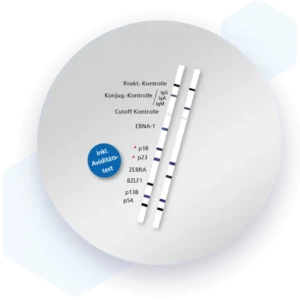
| Additional information Mikrogen recomLine Campylobacter tests are serological, qualitative in vitro tests for the detection of IgG and IgA antibodies against immunodominant antigens of Campylobacter jejuni and Campylobacter coli. After going through a Campylobacter infection or in case of a persistent infection which is primarily detected through stool culture, our recomLine Campylobacter tests with separately lined up recombinantly produced antigens allow the determination of specific antibodies for the clarification of post-infectious complications (e.g., Campylobacter-induced arthritis). Advantages
|
| target relevance |
|---|
| human antibody anti-Campylobacter |
Data
FAQ & Publications
Frequently Asked Questions
What type of antibodies does the Human Campylobacter IgA Lateral Flow Dipstick Kit detect?
The kit specifically detects human IgA antibodies directed against Campylobacter species.
Which sample types are compatible with the Human Campylobacter IgA Lateral Flow Dipstick Kit?
This lateral flow assay can be used with serum, plasma, and whole blood samples for detection of IgA antibodies.
How should the Human Campylobacter IgA Lateral Flow Dipstick Kit be stored to maintain stability?
The kit should be stored refrigerated at 2-8°C to ensure proper preservation of reagents and test strips.
What advantages does this kit offer in terms of assay specificity and sensitivity?
The kit utilizes recombinant immunodominant antigens of Campylobacter jejuni and coli, providing high sensitivity and specificity for IgA antibody detection through a sandwich lateral flow assay format.
Publications
| pmid | title | authors | citation |
|---|---|---|---|
| We haven't added any publications to our database yet. | |||
Published literature highly relevant to the biological target of this product and referencing this antibody or clone are retrieved from the PubMed database provided by the United States National Library of Medicine at the National Institutes of Health.
Protocols
| relevant to this product |
|---|
| This product has moved to a digital protocol. Please use the URL provided on the product packaging to access the electronic Instructions for Use (eIFU). 6273 protocol |
Only logged in customers who have purchased this product may leave a review.





Reviews
There are no reviews yet.