| Weight | 1 lbs |
|---|---|
| Dimensions | 9 × 5 × 2 in |
| target | Tetanus Toxoid |
| species reactivity | Tetanus |
| applications | ELISA |
| assay type | Indirect & quantitative |
| available size | 1 mg |

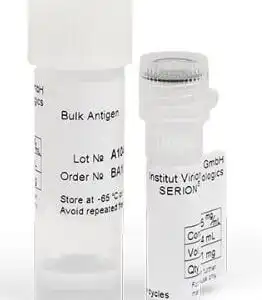
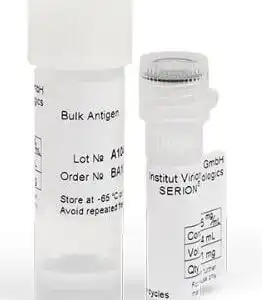
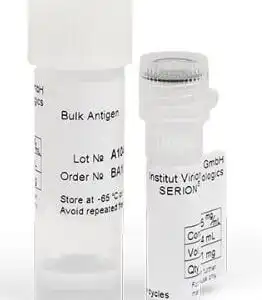
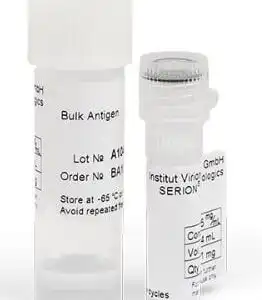
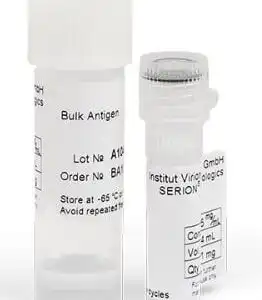
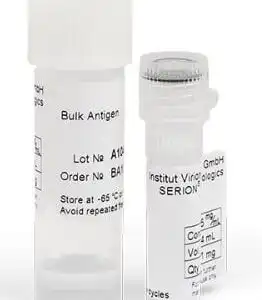
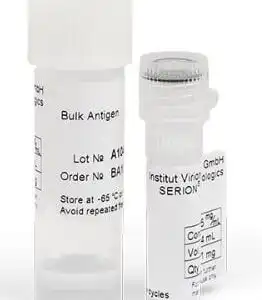
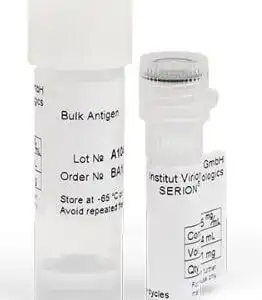
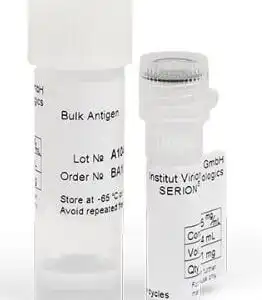
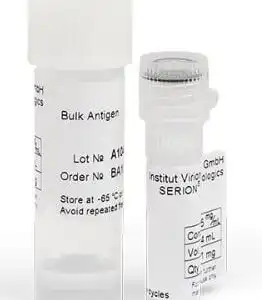
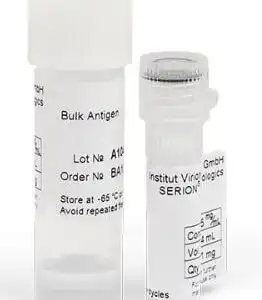
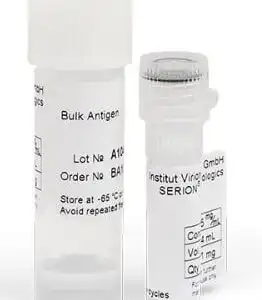
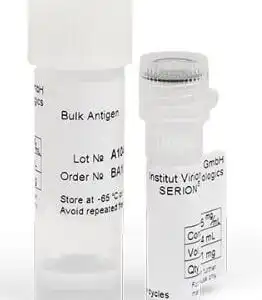
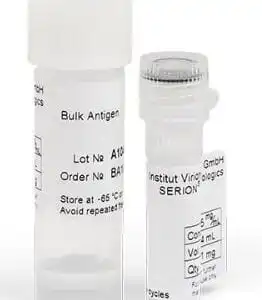
Tetanus Toxoid Control Antigen BA108VS
$858.00
Summary
- Virion/Serion Diagnostic Kit Control for research use (RUO)
- Tetanus Toxoid Control Antigen, recombinant
- Suitable for detection of IgA, IgG & IgM antibodies in ELISA
- Lot specific concentration, specified in mg/mL
- 1 mg
Tetanus Toxoid Control Antigen BA108VS
| kit |
|---|
| Research area Infectious Disease |
| Storage Store at -65°C. Avoid freeze/thaw cycles. Sonicate before use. |
| Form liquid |
| Associated products Tetanus Toxoid Control Antigen (BA108VS) Tetanus IgG Control Serum (BC108G) Tetanus IgG ELISA Kit (ESR108G) |
| target relevance |
|---|
| Tetanus |
| Description Bacterium that causes tetanus (lockjaw) |
| Structure Clostridium tetani is a Gram-positive, obligately anaerobic, spore-forming bacterium belonging to the family Clostridiaceae. The organism is widely distributed in soil, dust, and the gastrointestinal tracts of animals and humans. Under unfavorable environmental conditions, C. tetani produces highly resistant endospores that can survive for prolonged periods in the environment. Following contamination of a wound, spores germinate under anaerobic conditions and produce tetanospasmin, a potent neurotoxin responsible for the clinical manifestations of tetanus. The toxin binds to peripheral nerves and travels to the central nervous system, where it blocks inhibitory neurotransmitter release, resulting in uncontrolled muscle contraction and spasm. Although infection does not typically spread beyond the site of entry, the toxin can cause severe systemic disease. |
| Diagnosis The diagnosis of tetanus is primarily based on clinical evaluation because laboratory confirmation is often difficult and may not be necessary for treatment decisions. Characteristic symptoms such as muscle rigidity, trismus (lockjaw), and painful muscle spasms in the presence of a compatible wound history strongly support the diagnosis. Isolation of Clostridium tetani from wound specimens is possible but insensitive and not routinely relied upon because the organism may not be recovered even in confirmed cases. Serological testing is generally not useful for diagnosing active disease, although measurement of antitoxin levels may be used to assess immunity. Early recognition is critical because prompt treatment significantly improves outcomes. |
| Symptoms Tetanus typically develops following contamination of a wound with Clostridium tetani spores, with an incubation period ranging from several days to several weeks. Early symptoms commonly include jaw stiffness (lockjaw), difficulty swallowing, neck stiffness, irritability, and muscle rigidity. As the disease progresses, painful generalized muscle spasms develop and may be triggered by minor stimuli such as light, sound, or touch. Characteristic manifestations include risus sardonicus (a fixed grimace-like facial expression) and opisthotonos (severe arching of the back). Severe cases may result in respiratory muscle involvement, autonomic nervous system dysfunction, cardiac arrhythmias, respiratory failure, and death. Despite the availability of highly effective vaccines, tetanus remains a significant cause of morbidity and mortality in areas with inadequate immunization coverage. |
Data
FAQ & Publications
Frequently Asked Questions
What is the recommended storage condition for the Tetanus Toxoid Control Antigen BA108VS?
The Tetanus Toxoid Control Antigen BA108VS should be stored at -65°C and freeze/thaw cycles should be avoided. It is also advised to sonicate the product before use.
For which antibody isotypes is the Tetanus Toxoid Control Antigen BA108VS suitable for detection in ELISA assays?
This control antigen is suitable for the detection of IgA, IgG, and IgM antibodies in ELISA applications.
Publications
| pmid | title | authors | citation |
|---|---|---|---|
| We haven't added any publications to our database yet. | |||
Published literature highly relevant to the biological target of this product and referencing this antibody or clone are retrieved from the PubMed database provided by the United States National Library of Medicine at the National Institutes of Health.
Protocols
| relevant to this product |
|---|
Only logged in customers who have purchased this product may leave a review.

Reviews
There are no reviews yet.