| Weight | 1 lbs |
|---|---|
| Dimensions | 9 × 5 × 2 in |
| target | Parvovirus B19 VP2 |
| species reactivity | Parvovirus |
| applications | ELISA |
| assay type | Indirect & quantitative |
| available size | 1 mg |

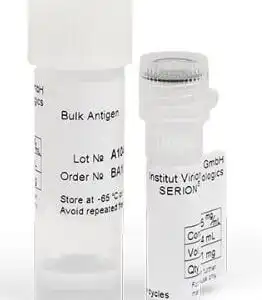
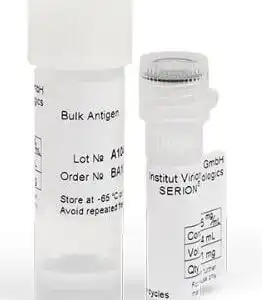
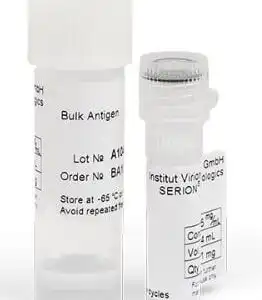
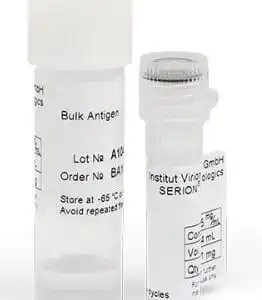
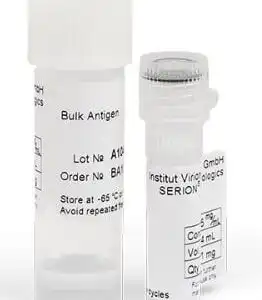
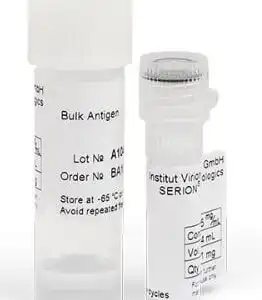
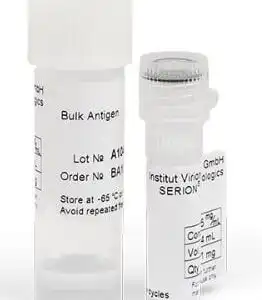
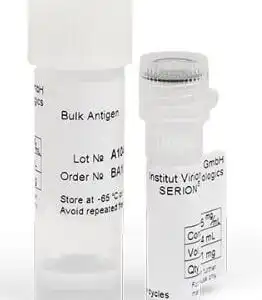
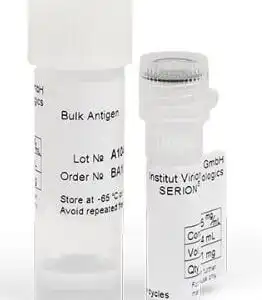
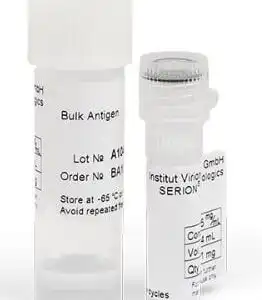
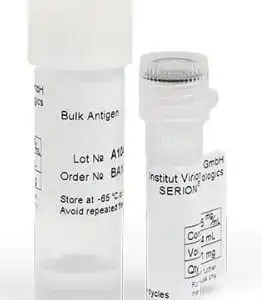
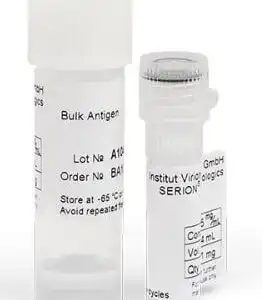
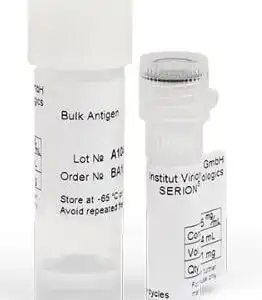
Parvovirus B19 VP2 Antigen BA122VSVP1E
$1,243.00
Summary
- Virion/Serion Immunologics avidity reagent for research use (RUO)
- Parvovirus, recombinant
- Suitable for detection of IgA, IgG & IgM antibodies in ELISA
- Lot specific concentration, specified in mg/mL
- 1 mg
Parvovirus B19 VP2 Antigen BA122VSVP1E
| kit |
|---|
| Research area Infectious Disease |
| Storage Store at -65°C or lower. Avoid repeated freeze-thaw cycles. 10 years from date of manufacture (under recommended storage conditions). |
| Form liquid |
| Associated products Parvovirus B19 NS1 Antigen (BA122VSNS1) Parvovirus B19 VP1 Antigen (BA122VSVP1) Parvovirus B19 PepA (VP1 unique) Antigen (BA122VSVP1A) Parvovirus B19 PepB (VP2 C-term) Antigen (BA122VSVP1B) Parvovirus B19 PepC (VP1 N-term) Antigen (BA122VSVP1C) Parvovirus B19 PepD (VP1 C-term) Antigen (BA122VSVP1D) Parvovirus B19 VP2 Antigen (BA122VSVP1E) Parvovirus B19 VLP Antigen (BA122VSVP2) Parvovirus B19 IgG Control Serum (BC122G) Parvovirus B19 IgM Control Serum (BC122M) Parvovirus IgG ELISA Kit (ESR122G) Parvovirus IgM ELISA Kit (ESR122M) |
| target relevance |
|---|
| Parvovirus |
| Description Group of viruses that cause gastrointestinal, respiratory, and systemic infections in humans and animals |
| Structure Parvoviruses are small, non-enveloped viruses containing a linear single-stranded DNA genome and belonging to the family Parvoviridae. The viral capsid possesses an icosahedral structure and lacks a lipid envelope, contributing to exceptional environmental stability and resistance to many common disinfectants. Members of the Parvoviridae family infect a wide range of vertebrate and invertebrate hosts and include important human and veterinary pathogens. Human Parvovirus B19 is the best-known human pathogen of the group and is the causative agent of erythema infectiosum (fifth disease). Other parvoviruses, such as canine parvovirus and feline panleukopenia virus, cause severe disease in animals. Parvoviruses preferentially infect rapidly dividing cells because they rely on host cellular machinery for viral DNA replication. |
| Diagnosis The diagnosis of parvovirus infection depends on the specific virus involved and may include serological, molecular, and antigen detection methods. Human Parvovirus B19 infection is commonly diagnosed through the detection of virus-specific IgM and IgG antibodies or by polymerase chain reaction (PCR) assays that identify viral DNA in blood or tissue samples. In veterinary medicine, infections such as canine parvovirus are frequently diagnosed using ELISA-based antigen detection tests on fecal samples, while PCR provides highly sensitive confirmation and strain identification. Laboratory findings and clinical presentation are often used in conjunction with specific diagnostic tests to establish the diagnosis. |
| Symptoms Parvovirus infections produce a broad spectrum of clinical manifestations depending on the host species and the specific virus involved. Human Parvovirus B19 infection commonly causes erythema infectiosum, characterized by a distinctive 'slapped-cheek' rash, mild fever, headache, and malaise. In adults, joint pain and arthritis-like symptoms may occur. In immunocompromised individuals or patients with underlying hematological disorders, severe anemia may develop due to infection of erythroid precursor cells. During pregnancy, fetal infection may result in hydrops fetalis or fetal loss. Animal parvoviruses, particularly canine parvovirus, commonly cause severe gastrointestinal disease characterized by vomiting, hemorrhagic diarrhea, dehydration, lethargy, and potentially fatal secondary infections. |
Data
FAQ & Publications
Frequently Asked Questions
What is the recommended storage condition for the Parvovirus B19 VP2 Antigen BA122VSVP1E?
The Parvovirus B19 VP2 Antigen BA122VSVP1E should be stored at -65°C or lower. It is important to avoid repeated freeze-thaw cycles to maintain its stability. Under these recommended conditions, the antigen has a shelf-life of 10 years from the date of manufacture.
For which immunoglobulin classes is the Parvovirus B19 VP2 Antigen BA122VSVP1E suitable for detection in ELISA assays?
The Parvovirus B19 VP2 Antigen BA122VSVP1E is suitable for the detection of IgA, IgG, and IgM antibodies in ELISA applications. It is intended for use as an avidity reagent in indirect and quantitative ELISA assays targeting Parvovirus B19 antibodies.
Publications
| pmid | title | authors | citation |
|---|---|---|---|
| We haven't added any publications to our database yet. | |||
Published literature highly relevant to the biological target of this product and referencing this antibody or clone are retrieved from the PubMed database provided by the United States National Library of Medicine at the National Institutes of Health.
Protocols
| relevant to this product |
|---|
Only logged in customers who have purchased this product may leave a review.
Reviews
There are no reviews yet.