| Weight | 1 lbs |
|---|---|
| Dimensions | 9 × 5 × 2 in |
| host | mouse |
| isotype | IgG1 |
| clonality | monoclonal |
| concentration | concentrate, predilute |
| applications | IHC |
| reactivity | human |
| available size | 0.1 mL, 0.5 mL, 1 mL concentrated, 7 mL prediluted |

mouse anti-Glypican 3 monoclonal antibody (1G12) 6201
Price range: $160.00 through $528.00
Antibody summary
- Mouse monoclonal to Glypican 3
- Suitable for: Immunohistochemistry (formalin-fixed, paraffin-embedded tissues)
- Reacts with: Human
- Isotype:IgG1
- Control: Hepatocellular carcinoma
- Visualization: Cytoplasmic and membranous
- 0.1, 0.5, 1.0 mL concentrated, 7 mL prediluted
mouse anti-Glypican 3 monoclonal antibody 1G12 6201
| target relevance |
|---|
| Homo sapiens GPC3 Glypican-3 |
| Protein names Glypican-3 |
| Alternative names GTR2-2, Intestinal protein OCI-5, MXR7 |
| Gene names GPC3 |
| Protein family Belongs to the glypican family |
| Function Cell surface proteoglycan (PubMed:14610063). Negatively regulates the hedgehog signaling pathway when attached via the GPI-anchor to the cell surface by competing with the hedgehog receptor PTC1 for binding to hedgehog proteins (By similarity). Binding to the hedgehog protein SHH triggers internalization of the complex by endocytosis and its subsequent lysosomal degradation (By similarity). Positively regulates the canonical Wnt signaling pathway by binding to the Wnt receptor Frizzled and stimulating the binding of the Frizzled receptor to Wnt ligands (PubMed:16227623, PubMed:24496449). Positively regulates the non-canonical Wnt signaling pathway (By similarity). Binds to CD81 which decreases the availability of free CD81 for binding to the transcriptional repressor HHEX, resulting in nuclear translocation of HHEX and transcriptional repression (By similarity). Inhibits the dipeptidyl peptidase activity of DPP4 (PubMed:17549790). Plays a role in limb patterning and skeletal development by controlling the cellular response to BMP4 (By similarity). Modulates the effects of growth factors BMP2, BMP7 and FGF7 on renal branching morphogenesis (By similarity). Required for coronary vascular development (By similarity). Plays a role in regulating cell movements during gastrulation (By similarity) |
| Subcellular location Cell membrane |
| Structure Heterodimer; disulfide-linked (PubMed:14610063). Cleavage by a furin-like convertase results in production of alpha and beta chains which form a disulfide-linked heterodimer (PubMed:14610063). Interacts with DPP4 (PubMed:17549790). Interacts with FGF2 (By similarity). Interacts with WNT5A (PubMed:14610063). Also interacts with WNT3A and WNT7B (PubMed:16227623). Interacts with hedgehog protein SHH; the heparan sulfate chains are not required for the interaction (By similarity). Also interacts with hedgehog protein IHH (By similarity). Interacts with CD81 (By similarity). Interacts with Wnt receptors FZD4, FZD7 and FZD8; the heparan sulfate chains are required for the interaction (PubMed:24496449) |
| Post-translational modification O-glycosylated; contains heparan sulfate and/or chondroitin sulfate Cleaved intracellularly by a furin-like convertase to generate 2 subunits, alpha and beta, which remain associated through disulfide bonds and are associated with the cell surface via the GPI-anchor (PubMed:14610063). This processing is essential for its role in inhibition of hedgehog signaling (PubMed:25653284). A second proteolytic event may result in cleavage of the protein on the cell surface, separating it from the GPI-anchor and leading to its shedding from the cell surface (PubMed:14610063) |
| Involvement in disease Simpson-Golabi-Behmel syndrome 1 A condition characterized by pre- and postnatal overgrowth (gigantism), facial dysmorphism and a variety of inconstant visceral and skeletal malformations. Characteristic dysmorphic features include macrocephaly with coarse, distinctive facies with a large protruding jaw, broad nasal bridge and cleft palate. Cardiac defects are frequent. |
| Keywords 3D-structure, Alternative splicing, Cell membrane, Direct protein sequencing, Disease variant, Disulfide bond, Glycoprotein, GPI-anchor, Heparan sulfate, Lipoprotein, Membrane, Phosphoprotein, Protease inhibitor, Proteoglycan, Proteomics identification, Pyrrolidone carboxylic acid, Reference proteome, Signal |
| Sequence MAGTVRTACLVVAMLLSLDFPGQAQPPPPPPDATCHQVRSFFQRLQPGLKWVPETPVPGS DLQVCLPKGPTCCSRKMEEKYQLTARLNMEQLLQSASMELKFLIIQNAAVFQEAFEIVVR HAKNYTNAMFKNNYPSLTPQAFEFVGEFFTDVSLYILGSDINVDDMVNELFDSLFPVIYT QLMNPGLPDSALDINECLRGARRDLKVFGNFPKLIMTQVSKSLQVTRIFLQALNLGIEVI NTTDHLKFSKDCGRMLTRMWYCSYCQGLMMVKPCGGYCNVVMQGCMAGVVEIDKYWREYI LSLEELVNGMYRIYDMENVLLGLFSTIHDSIQYVQKNAGKLTTTIGKLCAHSQQRQYRSA YYPEDLFIDKKVLKVAHVEHEETLSSRRRELIQKLKSFISFYSALPGYICSHSPVAENDT LCWNGQELVERYSQKAARNGMKNQFNLHELKMKGPEPVVSQIIDKLKHINQLLRTMSMPK GRVLDKNLDEEGFESGDCGDDEDECIGGSGDGMIKVKNQLRFLAELAYDLDVDDAPGNSQ QATPKDNEISTFHNLGNVHSPLKLLTSMAISVVCFFFLVH |
| UniProt accession: P51654 |
Data
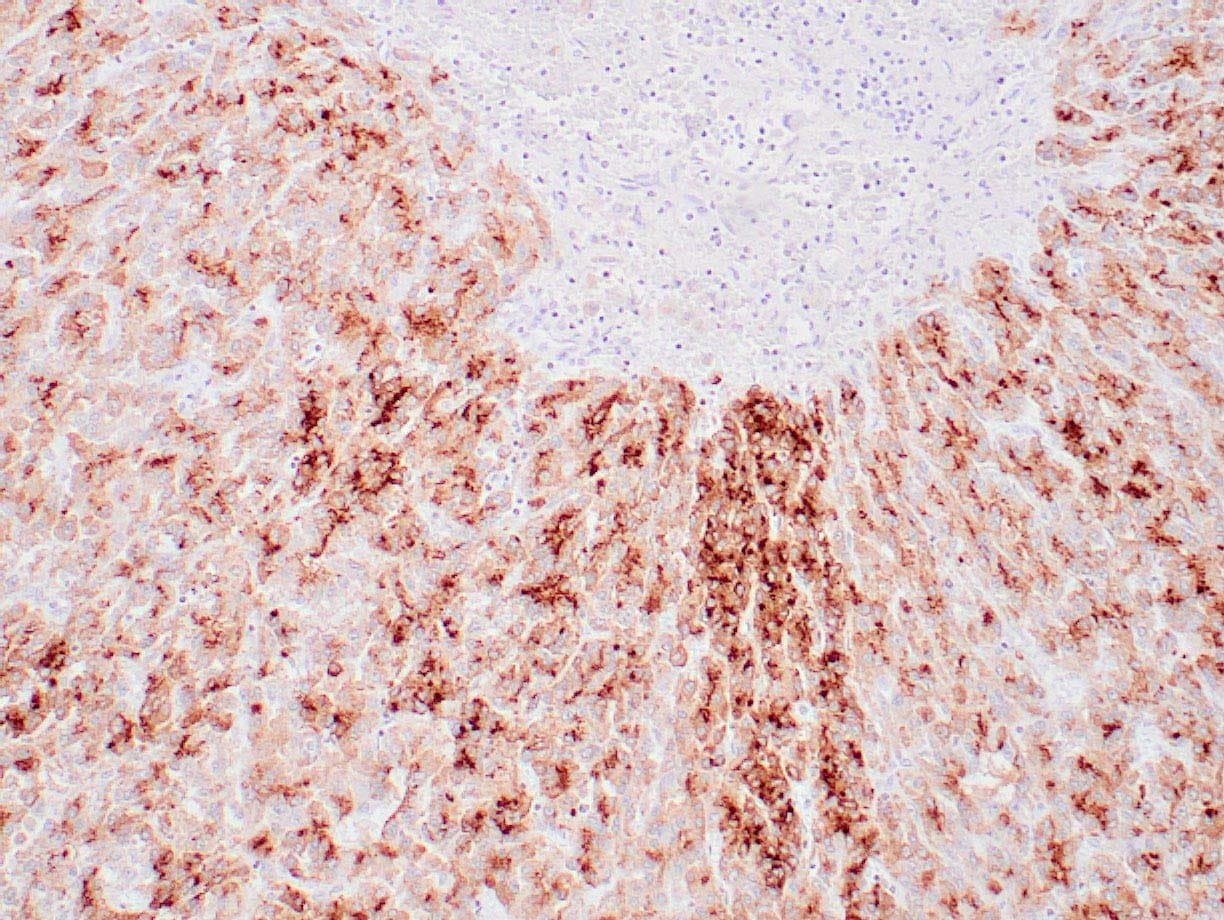 |
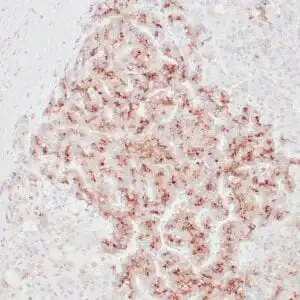
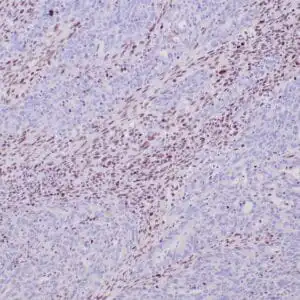
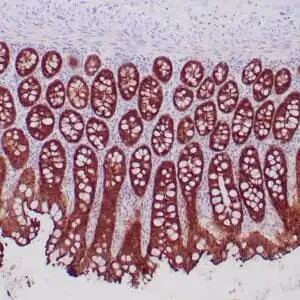
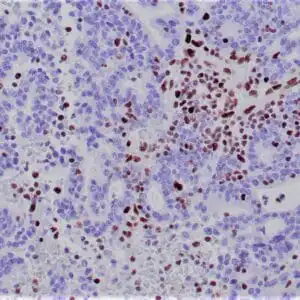
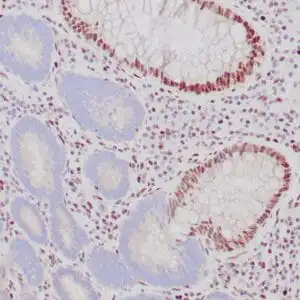
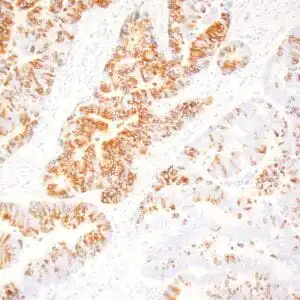
| Human hepatocellular carcinoma stained with anti-GPC3 antibody using peroxidase-conjugate and DAB chromogen. Note membranous and granular cytoplasmic staining of tumor cells. |
FAQ & Publications
Frequently Asked Questions
What applications is the mouse anti-Glypican 3 monoclonal antibody (1G12) 6201 validated for?
This antibody is validated for immunohistochemistry (IHC) on formalin-fixed, paraffin-embedded human tissues, with hepatocellular carcinoma serving as a positive control.
How should the mouse anti-Glypican 3 monoclonal antibody (1G12) 6201 be stored to maintain stability?
For short-term storage, keep the antibody at 2-8°C. For longer-term preservation, store at -20°C and avoid repeated freeze-thaw cycles to maintain antibody integrity.
Publications
| pmid | title | authors | citation |
|---|---|---|---|
| We haven't added any publications to our database yet. | |||
Published literature highly relevant to the biological target of this product and referencing this antibody or clone are retrieved from the PubMed database provided by the United States National Library of Medicine at the National Institutes of Health.
Protocols
| relevant to this product |
|---|
| IHC |
Documents
| Batch Number | QC File | SDS |
|---|---|---|
| To view batch-specific Safety Datasheets and Quality Certificates associated with your account, please Log In. | ||
Only logged in customers who have purchased this product may leave a review.
Reviews
There are no reviews yet.