| Weight | 1 lbs |
|---|---|
| Dimensions | 9 × 5 × 2 in |
| host | mouse |
| isotype | IgG2a |
| clonality | monoclonal |
| concentration | concentrate, predilute |
| applications | IHC |
| reactivity | human |
| available size | 0.1 mL, 0.5 mL, 1 mL concentrated, 7 mL prediluted |

mouse anti-AFP monoclonal antibody (C3) 6014
Price range: $160.00 through $528.00
Antibody summary
- Mouse monoclonal to AFP
- Suitable for: Immunohistochemistry (formalin-fixed, paraffin-embedded tissues)
- Reacts with: Human
- Isotype:IgG2a
- Control: Fetal liver or hepatocellular carcinoma
- Visualization: Cytoplasmic
- 0.1, 0.5, 1.0 mL concentrated, 7 mL prediluted
mouse anti-AFP monoclonal antibody C3 6014
| target relevance |
|---|
| Homo sapiens AFP Alpha-fetoprotein |
| Protein names Alpha-fetoprotein |
| Alternative names Alpha-1-fetoprotein, Alpha-fetoglobulin |
| Gene names AFP |
| Protein family Belongs to the ALB/AFP/VDB family |
| Function Binds copper, nickel, and fatty acids as well as, and bilirubin less well than, serum albumin. Only a small percentage (less than 2%) of the human AFP shows estrogen-binding properties |
| Subcellular location Secreted |
| Structure Dimeric and trimeric forms have been found in addition to the monomeric form |
| Post-translational modification Independent studies suggest heterogeneity of the N-terminal sequence of the mature protein and of the cleavage site of the signal sequence Sulfated |
| Involvement in disease Alpha-fetoprotein deficiency A benign condition characterized by undetectable AFP levels in the amniotic fluid. Affected individuals are asymptomatic and present normal development. Alpha-fetoprotein, hereditary persistence A benign autosomal dominant condition characterized by continued expression of alpha-fetoprotein in adult life. |
| Keywords 3D-structure, Copper, Direct protein sequencing, Disulfide bond, Glycoprotein, Metal-binding, Nickel, Phosphoprotein, Proteomics identification, Reference proteome, Repeat, Secreted, Signal, Sulfation |
| Sequence MKWVESIFLIFLLNFTESRTLHRNEYGIASILDSYQCTAEISLADLATIFFAQFVQEATY KEVSKMVKDALTAIEKPTGDEQSSGCLENQLPAFLEELCHEKEILEKYGHSDCCSQSEEG RHNCFLAHKKPTPASIPLFQVPEPVTSCEAYEEDRETFMNKFIYEIARRHPFLYAPTILL WAARYDKIIPSCCKAENAVECFQTKAATVTKELRESSLLNQHACAVMKNFGTRTFQAITV TKLSQKFTKVNFTEIQKLVLDVAHVHEHCCRGDVLDCLQDGEKIMSYICSQQDTLSNKIT ECCKLTTLERGQCIIHAENDEKPEGLSPNLNRFLGDRDFNQFSSGEKNIFLASFVHEYSR RHPQLAVSVILRVAKGYQELLEKCFQTENPLECQDKGEEELQKYIQESQALAKRSCGLFQ KLGEYYLQNAFLVAYTKKAPQLTSSELMAITRKMAATAATCCQLSEDKLLACGEGAADII IGHLCIRHEMTPVNPGVGQCCTSSYANRRPCFSSLVVDETYVPPAFSDDKFIFHKDLCQA QGVALQTMKQEFLINLVKQKPQITEEQLEAVIADFSGLLEKCCQGQEQEVCFAEEGQKLI SKTRAALGV |
| UniProt accession: P02771 |
Data
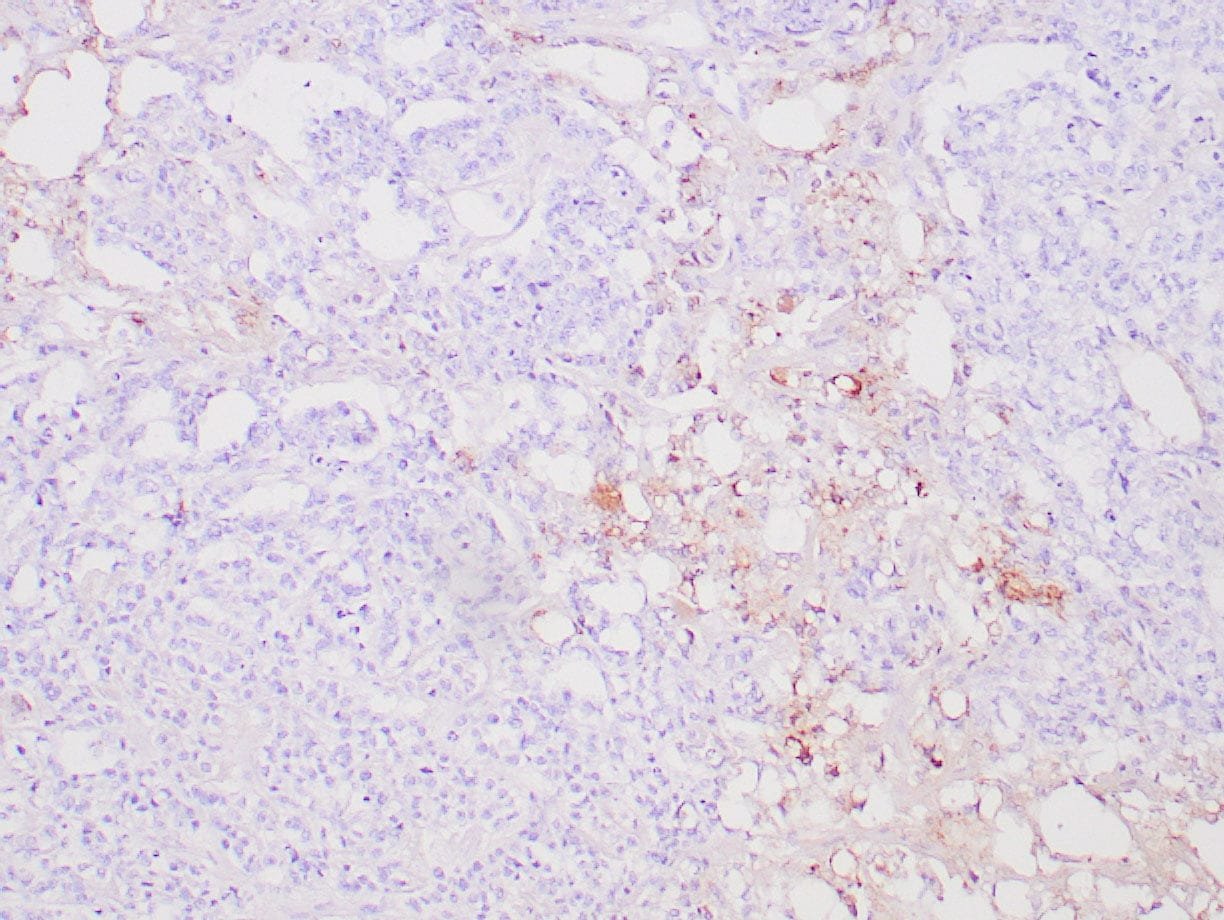 |
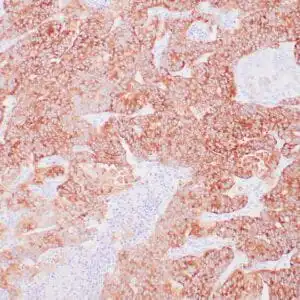
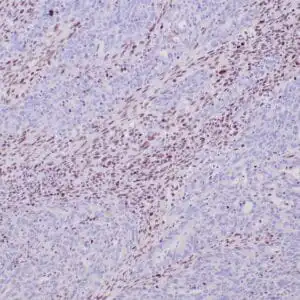
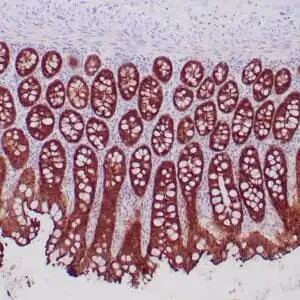
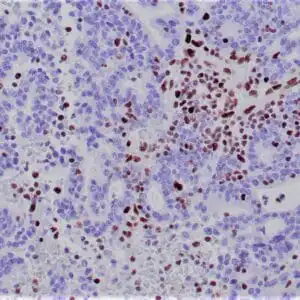
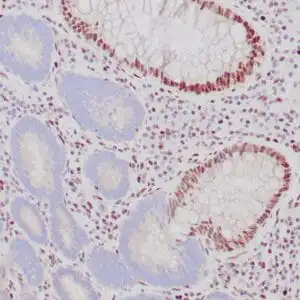
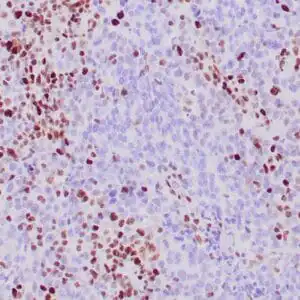
| Human yolk sac tumor stained with anti-AFP polyclonal antibody using peroxidase-conjugate and DAB chromogen. Note cytoplasmic staining of tumor cells.. |
FAQ & Publications
Frequently Asked Questions
What applications is the mouse anti-AFP monoclonal antibody (C3) validated for?
This antibody is validated for immunohistochemistry (IHC) on formalin-fixed, paraffin-embedded human tissues.
What is the recommended dilution for the concentrated form of the mouse anti-AFP monoclonal antibody (C3) for IHC?
The recommended dilution range for the concentrated antibody in immunohistochemistry is 1:100 to 1:200.
How should the mouse anti-AFP monoclonal antibody (C3) be stored to maintain stability?
For short-term storage, keep the antibody at 2-8°C. For long-term storage, it should be kept at -20°C, avoiding repeated freeze/thaw cycles.
Which species does the mouse anti-AFP monoclonal antibody (C3) react with?
This antibody is reactive with human alpha-fetoprotein (AFP).
What is the host species and isotype of the anti-AFP monoclonal antibody (C3)?
The antibody is a mouse monoclonal of the IgG2a isotype.
Publications
| pmid | title | authors | citation |
|---|---|---|---|
| We haven't added any publications to our database yet. | |||
Published literature highly relevant to the biological target of this product and referencing this antibody or clone are retrieved from the PubMed database provided by the United States National Library of Medicine at the National Institutes of Health.
Protocols
| relevant to this product |
|---|
| IHC |
Documents
| Batch Number | QC File | SDS |
|---|---|---|
| To view batch-specific Safety Datasheets and Quality Certificates associated with your account, please Log In. | ||
Only logged in customers who have purchased this product may leave a review.
Reviews
There are no reviews yet.