| Weight | 1 lbs |
|---|---|
| Dimensions | 9 × 5 × 2 in |
| target | Helicobacter pylori |
| species reactivity | Helicobacter pylori |
| applications | ELISA |
| assay type | Indirect & quantitative |
| available size | 1 mg |

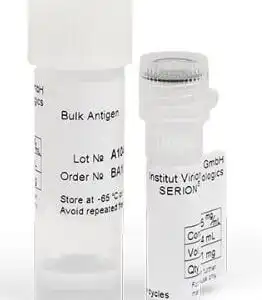
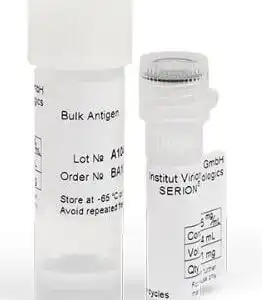
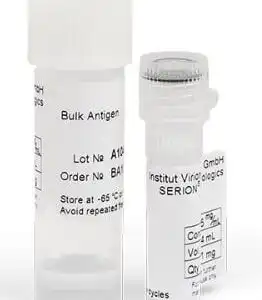
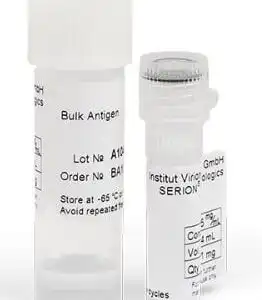
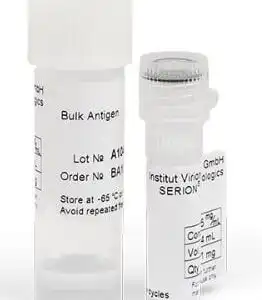
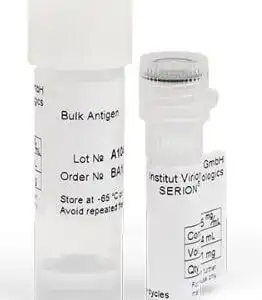
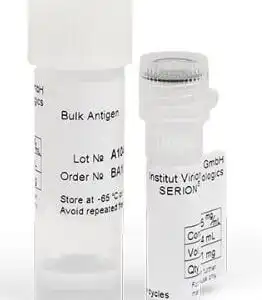
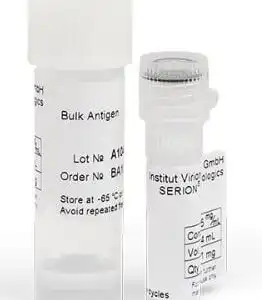
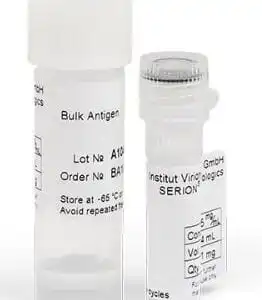
Helicobacter pylori Antigen BA118VS
$741.00
Summary
- Virion/Serion Immunologics Antigen for research use (RUO)
- Helicobacter pylori Antigen, recombinant
- Suitable for detection of IgA, IgG & IgM antibodies in ELISA
- Lot specific concentration, specified in mg/mL
- 1 mg
Helicobacter pylori Antigen BA118VS
| kit |
|---|
| Research area Infectious Disease |
| Storage Store at -65°C or lower. Avoid repeated freeze-thaw cycles. Sonicate before use. 10 years from date of manufacture (under recommended storage conditions). |
| Form liquid |
| Associated products Helicobacter pylori Antigen (BA118VS) Helicobacter pylori IgA Control Serum (BC118A) Helicobacter pylori IgG Control Serum (BC118G) Helicobacter pylori IgM Control Serum (BC118M) Helicobacter pylori IgA ELISA Kit (ESR118A) Helicobacter pylori IgG ELISA Kit (ESR118G) Helicobacter pylori IgM ELISA Kit (ESR118M) |
| target relevance |
|---|
| Helicobacter pylori |
| Description Bacterium that causes gastritis, peptic ulcer disease, and gastric cancer |
| Structure Helicobacter pylori is a Gram-negative, microaerophilic, spiral-shaped bacterium belonging to the family Helicobacteraceae. The organism is uniquely adapted to colonize the human stomach and is capable of surviving the highly acidic gastric environment through the production of urease, an enzyme that converts urea into ammonia and carbon dioxide, creating a protective alkaline microenvironment. H. pylori possesses multiple flagella that enable motility through the gastric mucus layer and adherence to gastric epithelial cells. The bacterium is one of the most common chronic bacterial infections worldwide and is recognized as a major cause of chronic gastritis, peptic ulcer disease, mucosa-associated lymphoid tissue (MALT) lymphoma, and gastric adenocarcinoma. |
| Diagnosis The diagnosis of Helicobacter pylori infection can be performed using invasive and non-invasive methods. Non-invasive tests include urea breath tests, stool antigen assays, and serological detection of H. pylori-specific antibodies. The urea breath test and stool antigen assays are highly sensitive and specific and are commonly used for both diagnosis and confirmation of eradication following treatment. Invasive diagnostic methods involve upper gastrointestinal endoscopy with gastric biopsy for histological examination, rapid urease testing, culture, or molecular detection by polymerase chain reaction (PCR). Serological assays, including ELISA-based methods, are useful for epidemiological studies and assessment of previous exposure but may not reliably distinguish active from past infection. |
| Symptoms Helicobacter pylori infection is often acquired during childhood and may persist for life if untreated. Many infected individuals remain asymptomatic; however, chronic infection can lead to inflammation of the gastric mucosa and the development of gastrointestinal disease. Common symptoms include upper abdominal pain or discomfort, nausea, bloating, early satiety, excessive belching, and indigestion. In patients with peptic ulcer disease, symptoms may include burning epigastric pain, gastrointestinal bleeding, vomiting, or anemia. Long-term infection increases the risk of gastric atrophy, intestinal metaplasia, gastric adenocarcinoma, and MALT lymphoma. Eradication of H. pylori significantly reduces the risk of ulcer recurrence and certain gastric malignancies. |
Data
FAQ & Publications
Frequently Asked Questions
What is the recommended storage condition for the Helicobacter pylori Antigen BA118VS to maintain its stability?
The Helicobacter pylori Antigen BA118VS should be stored at -65°C or lower, and repeated freeze-thaw cycles should be avoided to maintain stability.
For which antibody classes is the Helicobacter pylori Antigen BA118VS suitable for detection in ELISA assays?
This antigen is suitable for the detection of IgA, IgG, and IgM antibodies in ELISA assays.
What is the form and amount of the Helicobacter pylori Antigen BA118VS provided for research use?
The product is supplied as a liquid recombinant antigen with an available size of 1 mg.
Publications
| pmid | title | authors | citation |
|---|---|---|---|
| We haven't added any publications to our database yet. | |||
Published literature highly relevant to the biological target of this product and referencing this antibody or clone are retrieved from the PubMed database provided by the United States National Library of Medicine at the National Institutes of Health.
Protocols
| relevant to this product |
|---|
Only logged in customers who have purchased this product may leave a review.



Reviews
There are no reviews yet.