| Weight | 1 lbs |
|---|---|
| Dimensions | 9 × 5 × 2 in |
| host | goat |
| isotype | IgG |
| clonality | polyclonal |
| concentration | 1 mg/mL |
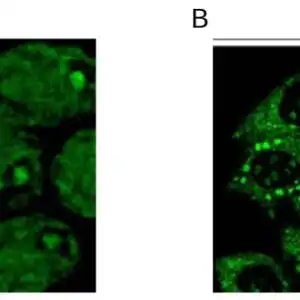
| applications | ICC/IF, WB |
| reactivity | Human IgA |
| available sizes | 1 mg |

goat anti-Human IgA, FITC Conjugated polyclonal antibody 8031
$270.00
Antibody summary
- Goat polyclonal to Human IgA, FITC Conjugated
- Suitable for: IHC,ICC,IF
- Isotype: Whole IgG
- 1 mg
goat anti-Human IgA, FITC Conjugated polyclonal antibody 8031
| antibody |
|---|
| Tested applications IHC,IHC,ICC/IF |
| Recommended dilutions Immunohistochemistry: 1:200-1:2,000 Immunocytochemistry: 1:200-1:2,000 Flow cytometry: Not tested These are recommended dilutions only. End user should determine optimal dilutions for their applications. |
| Immunogen Human IgA |
| Size and concentration 1mg and 1 mg/mL |
| Form liquid |
| Storage Instructions Store at 2-8°C. Expires 1 year from date of receipt. |
| Storage buffer Phosphate Buffered Saline (PBS) containing 0.2% |
| Purity peptide affinity purification |
| Clonality polyclonal |
| Isotype IgG |
| Compatible secondaries donkey anti-goat IgG, H&L chain specific, peroxidase conjugated polyclonal antibody 1689 donkey anti-goat IgG, H&L chain specific, biotin conjugated polyclonal antibody 1699 donkey anti-goat IgG, H&L chain specific, FITC conjugated polyclonal antibody 1704 donkey anti-goat IgG, H&L chain specific, peroxidase conjugated polyclonal antibody, crossabsorbed 1709 donkey anti-goat IgG, H&L chain specific, FITC conjugated polyclonal antibody, crossabsorbed 1705 |
| Isotype control Goat polyclonal - Isotype Control |
| target relevance |
|---|
| human IgA |
| Protein names Immunoglobulin A |
| Alternative names IgA, Alpha immunoglobulin |
| Function IgA protects mucosal surfaces by binding pathogens, toxins, and environmental antigens, thereby preventing their attachment and invasion of host tissues. |
| Subcellular location Secreted; found in blood plasma, saliva, tears, colostrum, breast milk, respiratory secretions, gastrointestinal secretions, and other mucosal fluids. |
| Structure Serum IgA is predominantly monomeric, whereas secretory IgA is typically a dimer composed of two IgA monomers linked by a joining (J) chain and associated with a secretory component. |
| Description Immunoglobulin A (IgA) is the principal antibody isotype found at mucosal surfaces and in secretions. It plays a critical role in mucosal immunity by preventing pathogen attachment, neutralizing toxins, and maintaining host-microbiome homeostasis. |
| Related entities relationship: has_subclass; entity: IgA1 relationship: has_subclass; entity: IgA2 relationship: has_component; entity: J chain relationship: has_component; entity: Secretory component relationship: related_to; entity: Immunoglobulin G relationship: related_to; entity: Immunoglobulin M |
| Keywords Antibody, Immunoglobulin, Mucosal immunity, Adaptive immunity, Host defense |
| Structure Serum IgA is primarily monomeric, while secretory IgA exists mainly as a dimer containing two IgA molecules linked by a J chain and associated with a secretory component. |
| Function IgA protects mucosal surfaces by neutralizing pathogens and toxins, blocking microbial attachment, and contributing to immune exclusion. |
| Subclasses Human IgA consists of two subclasses, IgA1 and IgA2. IgA1 predominates in serum, whereas IgA2 is relatively enriched at mucosal sites. |
| Distribution IgA is abundant in saliva, tears, colostrum, breast milk, respiratory secretions, and gastrointestinal secretions, making it the major antibody of mucosal immunity. |
| Research relevance IgA is widely studied in mucosal immunology, infectious diseases, vaccine responses, gastrointestinal disorders, autoimmune diseases, and allergy research. |
Data
| No results found |
FAQ & Publications
Frequently Asked Questions
What species reactivity does the goat anti-Human IgA FITC conjugated polyclonal antibody 8031 exhibit?
This antibody specifically reacts with human IgA, making it suitable for studies involving human samples.
Which applications has this antibody been tested and recommended for?
The antibody has been tested for immunohistochemistry (IHC), immunocytochemistry/immunofluorescence (ICC/IF), and Western blot (WB) applications, with recommended dilutions ranging from 1:200 to 1:2,000 for IHC and ICC.
How should the antibody be stored to maintain its stability and shelf life?
The antibody should be stored at 2-8°C and is stable for up to one year from the date of receipt.
What type of conjugation does this antibody have and what is its concentration?
The antibody is conjugated with fluorescein isothiocyanate (FITC) and is provided at a concentration of 1 mg/mL in liquid form.
Publications
| pmid | title | authors | citation |
|---|---|---|---|
| We haven't added any publications to our database yet. | |||
Published literature highly relevant to the biological target of this product and referencing this antibody or clone are retrieved from the PubMed database provided by the United States National Library of Medicine at the National Institutes of Health.
Protocols
| relevant to this product |
|---|
| Western blot IHC ICC |
Documents
| Batch Number | QC File | SDS |
|---|---|---|
| To view batch-specific Safety Datasheets and Quality Certificates associated with your account, please Log In. | ||
Only logged in customers who have purchased this product may leave a review.


Reviews
There are no reviews yet.