| Weight | 1 lbs |
|---|---|
| Dimensions | 9 × 5 × 2 in |
| host | goat |
| isotype | IgG |
| clonality | polyclonal |
| concentration | 1 mg/mL |
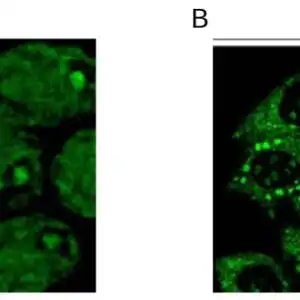
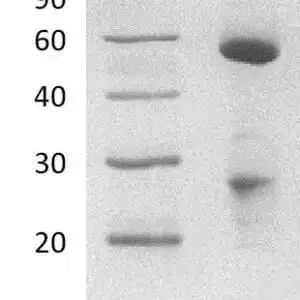
| applications | ICC/IF, WB |
| reactivity | ECS |
| available sizes | 100 µg |

goat anti-ECS (DYKDDDDK) HRP polyclonal antibody 9639
$513.00
Antibody summary
- Goat polyclonal to ECS , HRP conjugate
- Suitable for: WB,IHC,ICC,ELISA
- Isotype: Whole IgG
- 100 µg
goat anti-ECS (DYKDDDDK) HRP polyclonal antibody 9639
| antibody |
|---|
| Tested applications WB,IHC,IHC,ICC/IF,ELISA |
| Recommended dilutions Immunoblotting: use at a dilution of 1:1,000-1:30,000. Immunocytochemistry: use at a dilution of 1:200-1:500 ELISA: use at a dilution of 1:10,000-1:100,000. These are recommended dilutions. End users should determine optimal dilutions for their applications. |
| Immunogen DDDDK conjugated to KLH. |
| Size and concentration 100µg and 1 mg/mL |
| Form liquid |
| Storage Instructions This antibody is stable for at least one (1) year at 2-8°C. |
| Storage buffer Phosphate Buffered Saline (PBS) containing 0.2% |
| Purity peptide affinity purification |
| Clonality polyclonal |
| Isotype IgG |
| Compatible secondaries donkey anti-goat IgG, H&L chain specific, peroxidase conjugated polyclonal antibody 1689 donkey anti-goat IgG, H&L chain specific, biotin conjugated polyclonal antibody 1699 donkey anti-goat IgG, H&L chain specific, FITC conjugated polyclonal antibody 1704 donkey anti-goat IgG, H&L chain specific, peroxidase conjugated polyclonal antibody, crossabsorbed 1709 donkey anti-goat IgG, H&L chain specific, FITC conjugated polyclonal antibody, crossabsorbed 1705 |
| Isotype control Goat polyclonal - Isotype Control |
| target relevance |
|---|
| Protein names Enteropeptidase (EC 3.4.21.9) (Enterokinase) (Serine protease 7) (Transmembrane protease serine 15) [Cleaved into: Enteropeptidase non-catalytic heavy chain; Enteropeptidase catalytic light chain] |
| Gene names TMPRSS15,TMPRSS15 ENTK PRSS7 |
| Protein family Peptidase S1 family |
| Mass 112935Da |
| Function FUNCTION: Responsible for initiating activation of pancreatic proteolytic proenzymes (trypsin, chymotrypsin and carboxypeptidase A). It catalyzes the conversion of trypsinogen to trypsin which in turn activates other proenzymes including chymotrypsinogen, procarboxypeptidases, and proelastases. |
| Catalytic activity CATALYTIC ACTIVITY: Reaction=Activation of trypsinogen by selective cleavage of 6-Lys-|-Ile-7 bond.; EC=3.4.21.9; |
| Subellular location SUBCELLULAR LOCATION: Membrane {ECO:0000305}; Single-pass type II membrane protein {ECO:0000305}. |
| Tissues TISSUE SPECIFICITY: Intestinal brush border. |
| Structure SUBUNIT: Heterodimer of a catalytic (light) chain and a multidomain (heavy) chain linked by a disulfide bond. |
| Post-translational modification PTM: The chains are derived from a single precursor that is cleaved by a trypsin-like protease. |
| Involvement in disease DISEASE: Enterokinase deficiency (ENTKD) [MIM:226200]: Life-threatening intestinal malabsorption disorder characterized by diarrhea and failure to thrive. {ECO:0000269|PubMed:11719902}. Note=The disease is caused by variants affecting the gene represented in this entry. |
| Target Relevance information above includes information from UniProt accession: P98073 |
| The UniProt Consortium |
Data
| No results found |
FAQ & Publications
Frequently Asked Questions
What applications is the goat anti-ECS (DYKDDDDK) HRP polyclonal antibody suitable for?
This antibody is suitable for Western blot (WB), immunohistochemistry (IHC), immunocytochemistry/immunofluorescence (ICC/IF), and ELISA applications.
How should the goat anti-ECS (DYKDDDDK) HRP polyclonal antibody be stored for optimal stability?
The antibody should be stored in phosphate buffered saline (PBS) containing 0.2% preservative at 2-8°C, where it remains stable for at least one year.
What is the recommended dilution range for using this antibody in immunoblotting and ELISA assays?
For immunoblotting, use the antibody at dilutions between 1:1,000 and 1:30,000. For ELISA, recommended dilutions range from 1:10,000 to 1:100,000. End users should optimize dilutions for their specific experimental conditions.
Publications
| pmid | title | authors | citation |
|---|---|---|---|
| We haven't added any publications to our database yet. | |||
Published literature highly relevant to the biological target of this product and referencing this antibody or clone are retrieved from the PubMed database provided by the United States National Library of Medicine at the National Institutes of Health.
Protocols
| relevant to this product |
|---|
| Western blot IHC ICC |
Documents
| Batch Number | QC File | SDS |
|---|---|---|
| To view batch-specific Safety Datasheets and Quality Certificates associated with your account, please Log In. | ||
Only logged in customers who have purchased this product may leave a review.


Reviews
There are no reviews yet.