| Weight | 1 lbs |
|---|---|
| Dimensions | 9 × 5 × 2 in |
| target | Epstein Barr Virus (EBV) Capsid |
| species reactivity | Epstein-Barr Virus (EBV) (mononucleosis, mono, glandular fever) |
| applications | ELISA |
| assay type | Indirect & quantitative |
| available size | 1 mg |

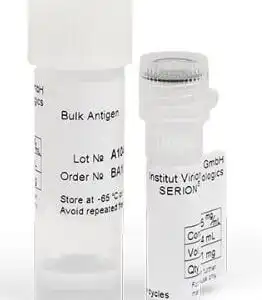
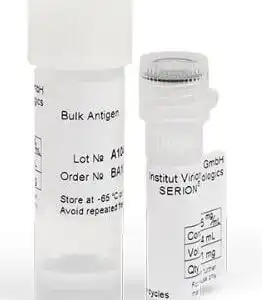
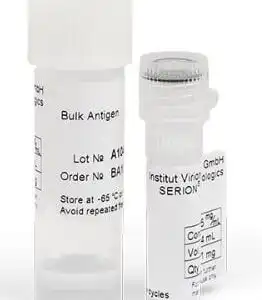
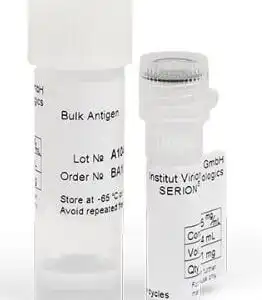
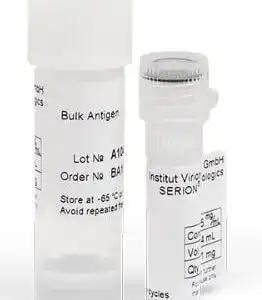
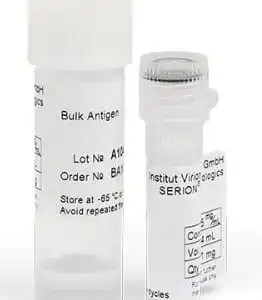
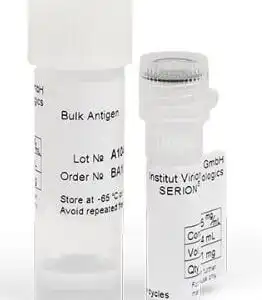
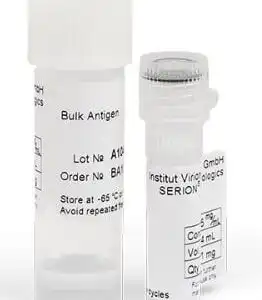
Epstein Barr Virus (EBV) Capsid Antigen BA1361VSR22
$1,054.00
Summary
- Virion/Serion Immunologics Antigen for research use (RUO)
- Epstein-Barr Virus (EBV) Capsid Antigen, recombinant
- Suitable for detection of IgA, IgG & IgM antibodies in ELISA
- Lot specific concentration, specified in mg/mL
- 1 mg
Epstein Barr Virus (EBV) Capsid Antigen BA1361VSR22
| kit |
|---|
| Research area Infectious Disease |
| Storage Store at -65°C or lower. Avoid repeated freeze-thaw cycles. 10 years from date of manufacture (under recommended storage conditions). |
| Form liquid |
| Associated products Epstein-Barr Virus (EBV) Capsid Antigen P18, alternative buffer Control Antigen (BA1361R01) Epstein Barr Virus (EBV) Capsid Antigen (BA1361VSR21) Epstein Barr Virus (EBV) Capsid Antigen (BA1361VSR22) Epstein Barr Virus (EBV) Nuclear Antigen (BA1362VS) Epstein Barr Virus (EBV) Early Antigen (BA1363P54VS) Epstein Barr Virus (EBV) Early Antigen (BA1363VSR6) Epstein-Barr Virus VCA IgG Control Serum (BC1361G) Epstein-Barr Virus VCA IgM Control Serum (BC1361M) Epstein-Barr Virus EBNA-1 IgG Control Serum (BC1362G) Epstein-Barr Virus EA IgG Control Serum (BC1363G) Epstein-Barr Virus/VCA IgG ELISA Kit (ESR1361G) Epstein-Barr Virus/EBNA1 IgG ELISA Kit (ESR1362G) |
| target relevance |
|---|
| Organism Epstein-Barr Virus |
| Protein names Epstein-Barr Virus |
| Structure and strains The Epstein Barr virus (EBV), formally called Human gammaherpesvirus 4, is one of the nine known human herpesvirus types in the herpes family, and is one of the most common viruses in humans. EBV is a double-stranded DNA virus. Epstein-Barr virus (EBV) is the first identified oncogenic virus, which establishes permanent infection in humans. EBV causes infectious mononucleosis and is also tightly linked to many malignant diseases. Various vaccine formulations underwent testing in different animals or in humans. However, none of them was able to prevent EBV infection and no vaccine has been approved to date. The virus causes infectious mononucleosis ("mono" or "glandular fever"). It is also associated with various non-malignant, premalignant, and malignant Epstein Barr virus-associated lymphoproliferative diseases such as Burkitt lymphoma, hemophagocytic lymphohistiocytosis, and Hodgkin's lymphoma; non-lymphoid malignancies such as gastric cancer and nasopharyngeal carcinoma; and conditions associated with human immunodeficiency virus such as hairy leukoplakia and central nervous system lymphomas. The virus is also associated with the childhood disorders of Alice in Wonderland syndrome and acute cerebellar ataxia and, by some evidence, higher risks of developing certain autoimmune diseases, especially dermatomyositis, systemic lupus erythematosus, rheumatoid arthritis, and Sjogren's syndrome. About 200,000 cancer cases globally per year are thought to be attributable to EBV. In 2022, a large study (population of 10 million over 20 years) suggested EBV as the leading cause of multiple sclerosis, with a recent EBV infection causing a 32-fold increase in the risk of developing multiple sclerosis. |
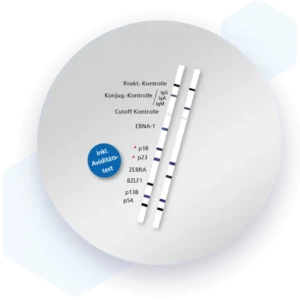
| Detection and diagnosis IgG antibodies directed against early antigen (EA) and/or IgM antibodies against virus capsid antigens (VCA) in combination with negative EBNA1 IgG activity serve as evidence of acute primary infections. High IgG antibody activities against EBNA1 exclude acute primary infections. IgG antibodies directed against VCA can usually be detected life-long and serve as confirmation of contact with the pathogen. In reactivations, high IgG antibody activities directed against VCA and EA can frequently be found. |
Data
FAQ & Publications
Frequently Asked Questions
What is the primary application of the Epstein Barr Virus (EBV) Capsid Antigen BA1361VSR22?
The Epstein Barr Virus (EBV) Capsid Antigen BA1361VSR22 is primarily used for the detection of IgA, IgG, and IgM antibodies in ELISA assays, offering an indirect and quantitative method for research applications.
How should the EBV Capsid Antigen BA1361VSR22 be stored to maintain stability?
This antigen should be stored at -65°C or lower and should be protected from repeated freeze-thaw cycles to ensure stability. Under these recommended storage conditions, it remains stable for up to 10 years from the date of manufacture.
Is the Epstein Barr Virus (EBV) Capsid Antigen BA1361VSR22 specific to any species?
Yes, the antigen is reactive to the Epstein-Barr Virus (EBV), which infects humans and is associated with infectious mononucleosis and various EBV-associated diseases.
What is the concentration and form of the Epstein Barr Virus (EBV) Capsid Antigen BA1361VSR22 provided?
The product is supplied in liquid form with a lot-specific concentration that is specified in mg/mL, and the available size is 1 mg.
Publications
| pmid | title | authors | citation |
|---|---|---|---|
| We haven't added any publications to our database yet. | |||
Published literature highly relevant to the biological target of this product and referencing this antibody or clone are retrieved from the PubMed database provided by the United States National Library of Medicine at the National Institutes of Health.
Protocols
| relevant to this product |
|---|
Only logged in customers who have purchased this product may leave a review.

Reviews
There are no reviews yet.