| Weight | 1 lbs |
|---|---|
| Dimensions | 9 × 5 × 2 in |
| target | Epstein-Barr Virus (EBV) Capsid P18, alternative buffer |
| species reactivity | Epstein-Barr Virus (EBV) (mononucleosis, mono, glandular fever) |
| applications | ELISA |
| assay type | Indirect & quantitative |
| available size | 1 mg |

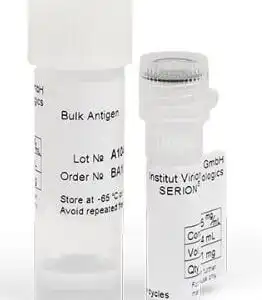
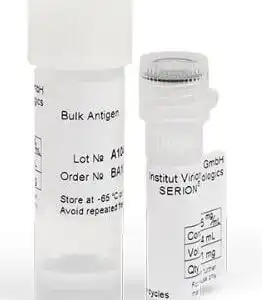
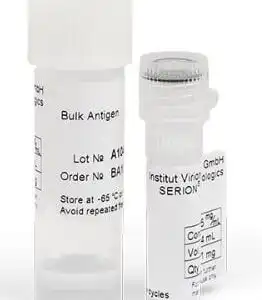
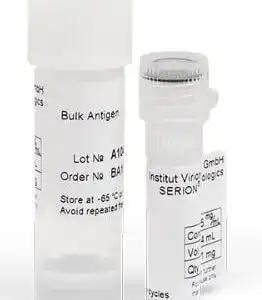
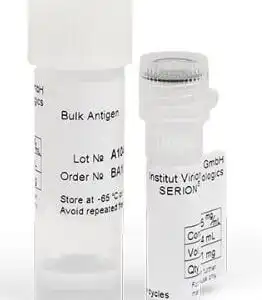
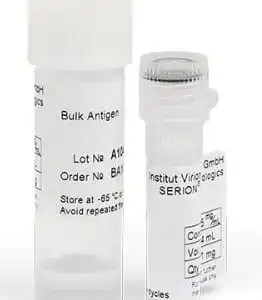
Epstein-Barr Virus (EBV) Capsid Antigen P18, alternative buffer Control Antigen BA1361R01
$750.00
Summary
- Virion/Serion Diagnostic Kit Control for research use (RUO)
- Epstein-Barr Virus (EBV) Capsid Antigen P18, alternative buffer Control Antigen, recombinant
- Suitable for detection of IgA, IgG & IgM antibodies in ELISA
- Lot specific concentration, specified in mg/mL
- 1 mg
Epstein-Barr Virus (EBV) Capsid Antigen P18, alternative buffer Control Antigen BA1361R01
| target relevance |
|---|
| Epstein-Barr Virus |
| Description Virus that causes infectious mononucleosis and is associated with several human cancers |
| Structure Epstein-Barr virus (EBV), also known as Human herpesvirus 4 (HHV-4), is an enveloped, double-stranded DNA virus belonging to the genus Lymphocryptovirus within the family Herpesviridae. The virus possesses an icosahedral nucleocapsid surrounded by a protein tegument and a lipid envelope containing multiple viral glycoproteins involved in host cell attachment and entry. EBV primarily infects B lymphocytes and epithelial cells and establishes lifelong latent infection following primary exposure. More than 90% of the world's adult population carries the virus. During latency, EBV persists within memory B cells and can periodically reactivate, resulting in viral shedding and transmission. EBV is associated with several malignancies, including Burkitt lymphoma, Hodgkin lymphoma, nasopharyngeal carcinoma, gastric carcinoma, and post-transplant lymphoproliferative disorders. |
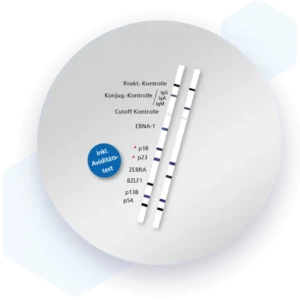
| Diagnosis The diagnosis of Epstein-Barr virus infection is performed through serological, molecular, and hematological methods. Detection of heterophile antibodies using the Monospot test is commonly used for the diagnosis of infectious mononucleosis, although sensitivity may vary depending on age and stage of infection. EBV-specific serological assays measuring antibodies against viral capsid antigen (VCA), early antigen (EA), and Epstein-Barr nuclear antigen (EBNA) provide valuable information regarding acute, past, or reactivated infection. Molecular methods such as quantitative polymerase chain reaction (PCR) are used to detect and monitor viral DNA, particularly in immunocompromised patients and individuals at risk of EBV-associated malignancies. Hematological findings often include atypical lymphocytosis during acute infection. |
| Symptoms Epstein-Barr virus is primarily transmitted through saliva and is often referred to as the cause of the 'kissing disease.' Following an incubation period of approximately four to six weeks, primary infection may result in infectious mononucleosis characterized by fever, fatigue, sore throat, enlarged lymph nodes, headache, and splenomegaly. Many infections in childhood are asymptomatic or cause only mild illness. Fatigue may persist for weeks or months following acute infection. In immunocompromised individuals, EBV can cause severe lymphoproliferative disease and contribute to the development of certain cancers. Although most infections resolve without complications, rare severe manifestations include hepatitis, neurological complications, hemolytic anemia, and splenic rupture. |
Data
FAQ & Publications
Frequently Asked Questions
What applications is the Epstein-Barr Virus (EBV) Capsid Antigen P18, alternative buffer Control Antigen suitable for?
This control antigen is suitable for the detection of IgA, IgG, and IgM antibodies using ELISA assays, specifically indirect and quantitative assay types.
How should the Epstein-Barr Virus Capsid Antigen P18, alternative buffer Control Antigen be stored to maintain stability?
The antigen should be stored at -65°C and freeze/thaw cycles must be avoided. It is recommended to sonicate the antigen before use to ensure proper dispersion.
What is the species reactivity of the Epstein-Barr Virus Capsid Antigen P18, alternative buffer Control Antigen?
This control antigen is reactive with Epstein-Barr Virus (EBV), which is the causative agent of infectious mononucleosis and other EBV-associated diseases.
What is the provided concentration and form of the Epstein-Barr Virus (EBV) Capsid Antigen P18, alternative buffer Control Antigen?
The product is supplied as a liquid with a lot-specific concentration specified in mg/mL, and is available in a 1 mg size.
Publications
| pmid | title | authors | citation |
|---|---|---|---|
| We haven't added any publications to our database yet. | |||
Published literature highly relevant to the biological target of this product and referencing this antibody or clone are retrieved from the PubMed database provided by the United States National Library of Medicine at the National Institutes of Health.
Protocols
| relevant to this product |
|---|
Only logged in customers who have purchased this product may leave a review.

Reviews
There are no reviews yet.