| Weight | 1 lbs |
|---|---|
| Dimensions | 9 × 5 × 2 in |
| target | Brucella abortus |
| species reactivity | Brucella |
| applications | ELISA |
| assay type | Indirect & quantitative |
| available size | 1 mg |

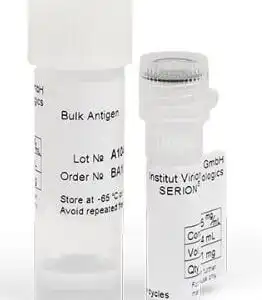
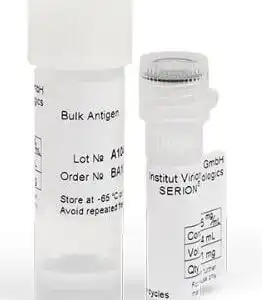
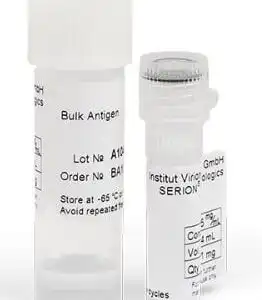
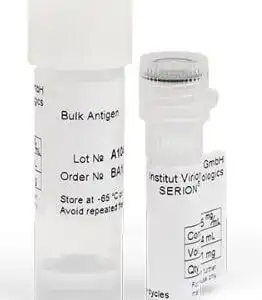
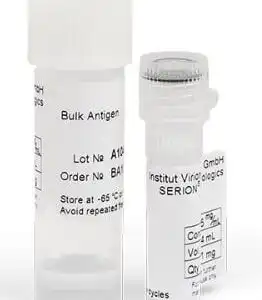
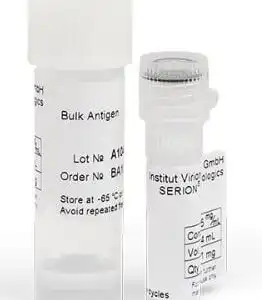
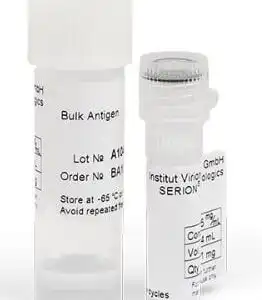
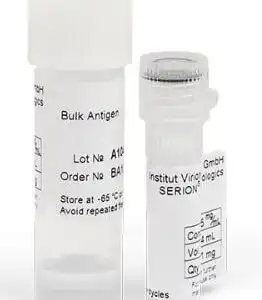
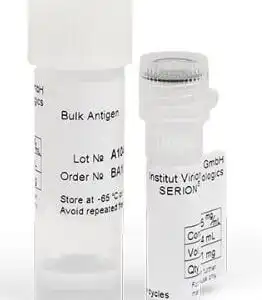
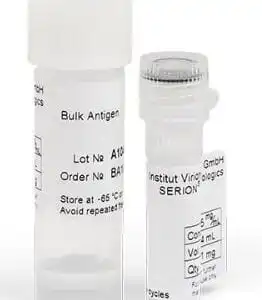
Brucella abortus Antigen BA116VS
$812.00
Summary
- Virion/Serion Immunologics Antigen for research use (RUO)
- Brucella abortus Antigen, recombinant
- Suitable for detection of IgA, IgG & IgM antibodies in ELISA
- Lot specific concentration, specified in mg/mL
- 1 mg
Brucella abortus Antigen BA116VS
| kit |
|---|
| Research area Infectious Disease |
| Storage Store at -65°C or lower. Avoid repeated freeze-thaw cycles. Sonicate before use. 10 years from date of manufacture (under recommended storage conditions). |
| Form liquid |
| Associated products Brucella abortus Antigen (BA116VS) Brucella IgA Control Serum (BC116A) Brucella IgG Control Serum (BC116G) Brucella IgM Control Serum (BC116M) Brucella IgA ELISA Kit (ESR116A) Brucella IgG ELISA Kit (ESR116G) Brucella IgM ELISA Kit (ESR116M) |
| target relevance |
|---|
| Brucella |
| Description Bacterial genus that causes brucellosis (undulant fever) |
| Structure Brucella is a genus of small, Gram-negative, facultative intracellular coccobacilli belonging to the family Brucellaceae. Members of the genus are zoonotic pathogens that infect a wide range of domestic and wild animals, including cattle, sheep, goats, pigs, dogs, and wildlife species. The most important human pathogens include Brucella melitensis, Brucella abortus, Brucella suis, and Brucella canis. Brucella species are highly adapted to survival and replication within macrophages and other phagocytic cells, enabling persistent infection and evasion of host immune responses. Transmission to humans commonly occurs through direct contact with infected animals, inhalation of contaminated aerosols, or consumption of unpasteurized dairy products. Due to their low infectious dose and ability to become aerosolized, Brucella species are considered important laboratory-acquired pathogens. |
| Diagnosis The diagnosis of brucellosis is performed through microbiological, serological, and molecular methods. Isolation of Brucella organisms from blood, bone marrow, or tissue specimens remains the definitive diagnostic method, although culture may require prolonged incubation and specialized laboratory precautions. Serological testing is widely used and includes standard agglutination tests, ELISA, complement fixation tests, and other assays for the detection of Brucella-specific antibodies. Polymerase chain reaction (PCR) provides rapid and sensitive detection of Brucella DNA and may be particularly useful in chronic or complicated cases. Laboratory findings often include anemia, leukopenia, thrombocytopenia, and elevated inflammatory markers. Because symptoms are frequently nonspecific, laboratory confirmation is essential for diagnosis. |
| Symptoms Brucellosis typically develops following an incubation period of one to four weeks but may occur months after exposure. The disease is characterized by fever, chills, profuse night sweats, fatigue, malaise, headache, muscle aches, joint pain, and loss of appetite. Fever may follow a recurrent or undulating pattern, giving rise to the term 'undulant fever.' Chronic infection can involve multiple organ systems and may result in arthritis, spondylitis, osteomyelitis, epididymo-orchitis, hepatitis, endocarditis, and neurological complications. Endocarditis is the most serious complication and is the leading cause of brucellosis-associated mortality. Without appropriate treatment, symptoms may persist for months or years and can cause significant long-term disability. |
Data
FAQ & Publications
Frequently Asked Questions
What is the recommended storage condition for Brucella abortus Antigen BA116VS?
Brucella abortus Antigen BA116VS should be stored at -65°C or lower. It is important to avoid repeated freeze-thaw cycles and to sonicate the antigen before use to maintain its stability.
For which antibody isotypes is the Brucella abortus Antigen BA116VS suitable in ELISA applications?
This antigen is suitable for the detection of IgA, IgG, and IgM antibodies in ELISA assays, enabling indirect and quantitative measurement of these immunoglobulin classes.
What is the target organism specificity of the Brucella abortus Antigen BA116VS?
The antigen is derived from Brucella abortus, a Gram-negative bacterium in the Brucellaceae family, and is specific for detecting antibodies against this infectious agent in research applications.
Publications
| pmid | title | authors | citation |
|---|---|---|---|
| We haven't added any publications to our database yet. | |||
Published literature highly relevant to the biological target of this product and referencing this antibody or clone are retrieved from the PubMed database provided by the United States National Library of Medicine at the National Institutes of Health.
Protocols
| relevant to this product |
|---|
Only logged in customers who have purchased this product may leave a review.

Reviews
There are no reviews yet.