| Weight | 1 lbs |
|---|---|
| Dimensions | 9 × 5 × 2 in |
| target | Rotavirus |
| species reactivity | Rotavirus |
| applications | ELISA |
| assay type | Indirect & quantitative |
| available size | 1 mg |

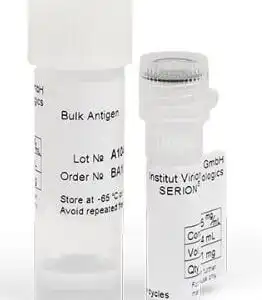
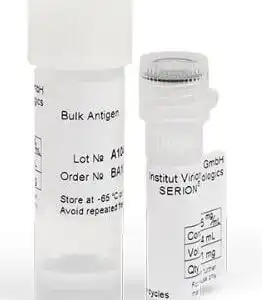
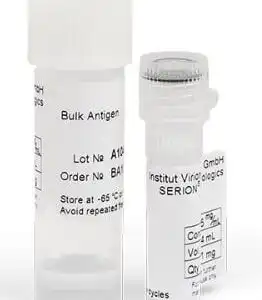
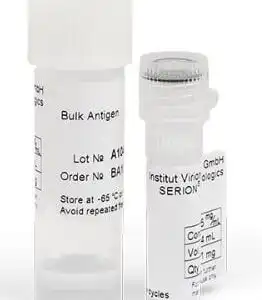
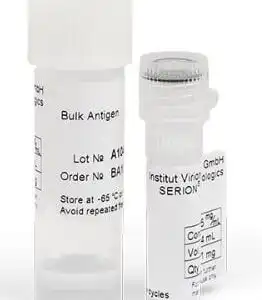
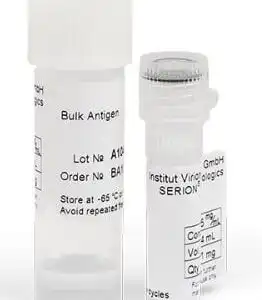
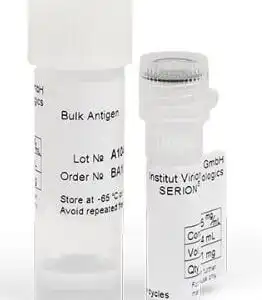
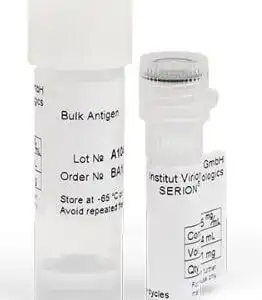
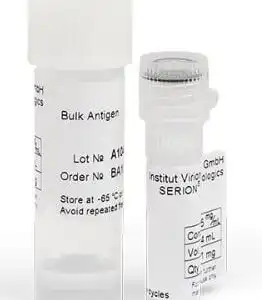
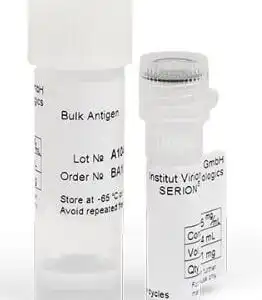
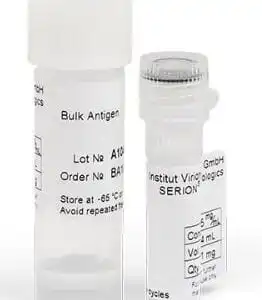
Rotavirus Antigen BA1193VS
$820.00
Summary
- Virion/Serion Immunologics Antigen for research use (RUO)
- Rotavirus Antigen, recombinant
- Suitable for detection of IgA, IgG & IgM antibodies in ELISA
- Lot specific concentration, specified in mg/mL
- 1 mg
Rotavirus Antigen BA1193VS
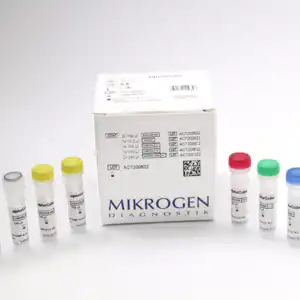
| kit |
|---|
| Research area Infectious Disease |
| Storage Store at -65°C or lower. Avoid repeated freeze-thaw cycles. 10 years from date of manufacture (under recommended storage conditions). |
| Form liquid |
| target relevance |
|---|
| Rotavirus |
| Description Virus that causes rotavirus gastroenteritis |
| Structure Rotaviruses are non-enveloped, double-stranded RNA viruses belonging to the family Reoviridae and the genus Rotavirus. The viral genome consists of 11 segments of double-stranded RNA enclosed within a triple-layered icosahedral capsid. Rotaviruses are highly stable in the environment and resistant to many common disinfectants, allowing efficient transmission through the fecal-oral route. Multiple rotavirus species infect humans and animals, with Rotavirus A being the most common cause of severe gastroenteritis in infants and young children worldwide. The virus primarily infects mature enterocytes lining the small intestine, resulting in impaired nutrient absorption and fluid imbalance. |
| Diagnosis The diagnosis of rotavirus infection is commonly performed through the detection of viral antigens in stool samples using ELISA, latex agglutination assays, or rapid immunochromatographic tests. Molecular techniques such as reverse transcription polymerase chain reaction (RT-PCR) provide highly sensitive detection and genotyping of viral strains and are frequently used in epidemiological investigations. Electron microscopy and viral culture may be employed in specialized laboratories but are less commonly used in routine diagnostics. Serological methods can detect antibodies generated following infection or vaccination but are generally not used for the diagnosis of acute disease. |
| Symptoms Rotavirus is a highly contagious enteric pathogen and a leading cause of severe diarrhea in infants and young children worldwide. Following an incubation period of approximately one to three days, infected individuals typically develop vomiting, watery diarrhea, fever, abdominal pain, and dehydration. Symptoms generally persist for three to eight days and can range from mild gastrointestinal discomfort to severe dehydration requiring hospitalization. In young children, severe fluid loss may lead to electrolyte imbalance, shock, and, in resource-limited settings, death if untreated. Adults may become infected but often experience milder symptoms or remain asymptomatic while contributing to transmission. |
Data
FAQ & Publications
Frequently Asked Questions
What is the intended use of the Rotavirus Antigen BA1193VS in research?
The Rotavirus Antigen BA1193VS is designed for research use only (RUO) and is suitable for detecting IgA, IgG, and IgM antibodies in ELISA applications using an indirect and quantitative assay format.
How should the Rotavirus Antigen BA1193VS be stored to maintain its stability?
This product should be stored at -65°C or lower and should be protected from repeated freeze-thaw cycles to ensure stability. Under these recommended storage conditions, it has a shelf life of 10 years from the date of manufacture.
Which rotavirus species does the Rotavirus Antigen BA1193VS target and what is its relevance?
The antigen targets Rotavirus, specifically the species Rotavirus A, which is the most common species causing over 90% of rotavirus infections in humans and is a major cause of diarrhoeal disease in infants and young children.
Publications
| pmid | title | authors | citation |
|---|---|---|---|
| We haven't added any publications to our database yet. | |||
Published literature highly relevant to the biological target of this product and referencing this antibody or clone are retrieved from the PubMed database provided by the United States National Library of Medicine at the National Institutes of Health.
Protocols
| relevant to this product |
|---|
Only logged in customers who have purchased this product may leave a review.
Reviews
There are no reviews yet.