| Weight | 1 lbs |
|---|---|
| Dimensions | 9 × 5 × 2 in |
| target | Echinococcus granulosus |
| species reactivity | Echinococcus (hydatid disease) |
| applications | ELISA |
| assay type | Indirect & quantitative |
| available size | 1 mg |

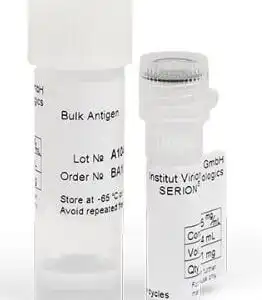
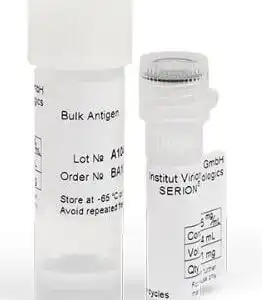
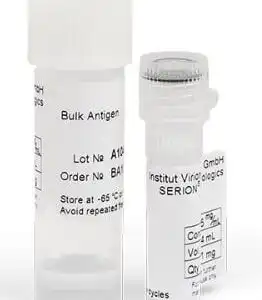
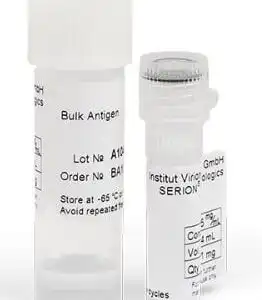
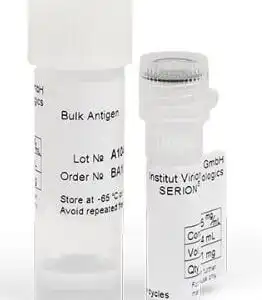
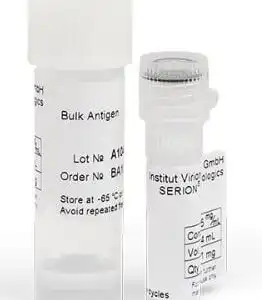
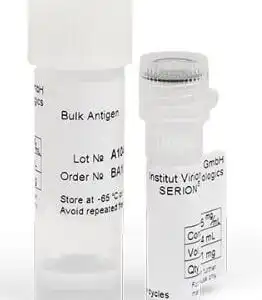
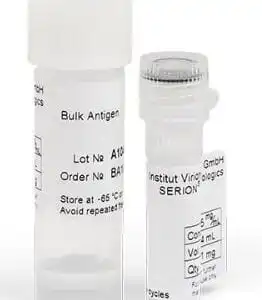
Echinococcus granulosus Antigen BA107VS
$741.00
Summary
- Virion/Serion Immunologics Antigen for research use (RUO)
- Echinococcus granulosus Antigen, recombinant
- Suitable for detection of IgA, IgG & IgM antibodies in ELISA
- Lot specific concentration, specified in mg/mL
- 1 mg
Echinococcus granulosus Antigen BA107VS
| kit |
|---|
| Research area Infectious Disease |
| Storage Store at -65°C or lower. Avoid repeated freeze-thaw cycles. 10 years from date of manufacture (under recommended storage conditions). |
| Form liquid |
| Associated products Echinococcus granulosus Antigen (BA107VS) Echinococcus IgG Control Serum (BC107G) Echinococcus IgG ELISA Kit (ESR107G) |
| target relevance |
|---|
| Echinococcus |
| Description Tapeworm parasite that causes echinococcosis (hydatid disease) |
| Structure Echinococcus is a genus of small cestode (tapeworm) parasites belonging to the family Taeniidae. Several species are medically important, including Echinococcus granulosus, the causative agent of cystic echinococcosis, and Echinococcus multilocularis, which causes alveolar echinococcosis. Adult worms reside in the intestines of definitive hosts, primarily canids such as dogs, wolves, and foxes, while herbivorous animals and humans serve as intermediate hosts. Following ingestion of parasite eggs, larvae penetrate the intestinal wall and migrate through the bloodstream to organs where they develop into fluid-filled cysts. In humans, the liver and lungs are the most commonly affected organs, although virtually any tissue can be involved. Echinococcus species have a complex life cycle involving predator-prey transmission and are distributed worldwide, particularly in regions where livestock husbandry is common. |
| Diagnosis The diagnosis of echinococcosis is performed through imaging studies, serological testing, and molecular methods. Ultrasonography, computed tomography (CT), and magnetic resonance imaging (MRI) are the primary tools used to detect and characterize hydatid cysts or infiltrative lesions. Serological assays, including ELISA, indirect hemagglutination, immunoblot, and other antibody detection methods, are commonly used to support diagnosis and monitor treatment response. Molecular techniques such as polymerase chain reaction (PCR) may be employed for species identification and confirmation in selected cases. Definitive diagnosis may also involve histopathological examination of cyst material obtained during surgical procedures. Accurate diagnosis is essential because treatment strategies vary depending on the species, location, size, and stage of infection. |
| Symptoms Echinococcus infections often remain asymptomatic for years because cysts grow slowly and may not produce symptoms until they become large enough to compress surrounding tissues. Cystic echinococcosis commonly affects the liver and may cause abdominal pain, hepatomegaly, nausea, and discomfort, while pulmonary involvement can result in cough, chest pain, and shortness of breath. Alveolar echinococcosis is more aggressive and behaves similarly to a malignant tumor, progressively invading surrounding tissues and potentially spreading to distant organs. Rupture of hydatid cysts can result in severe allergic reactions, including anaphylaxis, and dissemination of infection. Untreated disease may lead to organ dysfunction, secondary infections, biliary obstruction, respiratory compromise, and, in severe cases, death. |
Data
FAQ & Publications
Frequently Asked Questions
What applications is the Echinococcus granulosus Antigen BA107VS suitable for?
The Echinococcus granulosus Antigen BA107VS is suitable for detecting IgA, IgG, and IgM antibodies in ELISA assays, specifically indirect and quantitative types.
How should the Echinococcus granulosus Antigen BA107VS be stored to maintain its stability?
This antigen should be stored at -65°C or lower, avoiding repeated freeze-thaw cycles. Under these recommended storage conditions, it remains stable for up to 10 years from the date of manufacture.
Is the Echinococcus granulosus Antigen BA107VS reactive with multiple strains of Echinococcus granulosus?
Yes, the antigen targets Echinococcus granulosus, a species with several identified strains, most of which are infective in humans, making it relevant for research on hydatid disease.
Publications
| pmid | title | authors | citation |
|---|---|---|---|
| We haven't added any publications to our database yet. | |||
Published literature highly relevant to the biological target of this product and referencing this antibody or clone are retrieved from the PubMed database provided by the United States National Library of Medicine at the National Institutes of Health.
Protocols
| relevant to this product |
|---|
Only logged in customers who have purchased this product may leave a review.

Reviews
There are no reviews yet.