Anti-Asclepius Technology patent anti-Robo1 CAR Ab
species reactivity
Universal
applications
Double antigen, Sandwich ELISA
assay type
direct & quantitative
available size
96 tests
sensitivity
0.938ng/ml
range
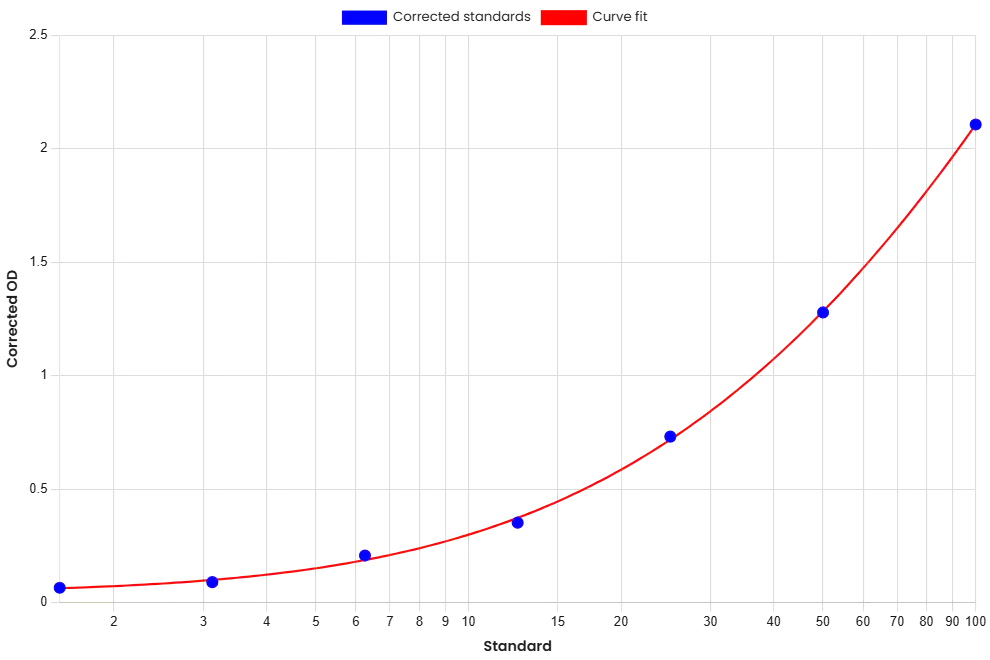
1.563-100ng/ml
Anti-Asclepius Technology patent anti-Robo1 CAR antibody ELISA Kit
kit
Assay type Bridging ELISA
Research area biologic
Sample type Serum, Plasma, Cell Culture Supernatant, Other liquid samples
Components
Break apart microtiter test strips each coated single wells
8 x 12 (96 Total)
Lyophilized Standard
2 x vial
Biotin-labeled Antibody(Concentrated, 100X)
120 uL
HRP-Streptavidin Conjugate(Concentrated, 100X)
120 uL
Washing solution concentrate (25X)
30 mL
Sample Dilution buffer
20 mL
Antibody Dilution buffer
10 mL
Streptavidin Dilution buffer
10 mL
Stopping solution
10 mL
TMB Substrate (ready-to-use)
10 mL
Plate seals
3
Storage Store at 2-8°C.
target relevance
anti-Asclepius Technology patent anti-Robo1 CAR antibody Anti-drug antibodies (ADAs) generated in subjects following administration of Asclepius Technology patent anti-Robo1 CAR.
Asclepius Technology patent anti-Robo1 CAR Asclepius Technology patent anti-Robo1 CAR biologic drug binds Homo sapiens ROBO1 Roundabout homolog 1
Homo sapiens ROBO1 Roundabout homolog 1
Protein names Roundabout homolog 1
Alternative names Deleted in U twenty twenty, H-Robo-1
Gene names ROBO1
Protein family Belongs to the immunoglobulin superfamily. ROBO family
Function Receptor for SLIT1 and SLIT2 that mediates cellular responses to molecular guidance cues in cellular migration, including axonal navigation at the ventral midline of the neural tube and projection of axons to different regions during neuronal development (PubMed:10102268, PubMed:24560577). Interaction with the intracellular domain of FLRT3 mediates axon attraction towards cells expressing NTN1 (PubMed:24560577). In axon growth cones, the silencing of the attractive effect of NTN1 by SLIT2 may require the formation of a ROBO1-DCC complex (By similarity). Plays a role in the regulation of cell migration via its interaction with MYO9B; inhibits MYO9B-mediated stimulation of RHOA GTPase activity, and thereby leads to increased levels of active, GTP-bound RHOA (PubMed:26529257). May be required for lung development (By similarity)
Structure Homodimer. Dimerization is mediated by the extracellular domain and is independent of SLIT liganding (PubMed:24673457). Interacts with SLIT1 (By similarity). Interacts with SLIT2 (PubMed:10102268, PubMed:11404413, PubMed:17848514). Interacts with FLRT3 (PubMed:24560577). Interacts with MYO9B (via Rho-GAP domain) (PubMed:26529257)
Post-translational modification Ubiquitinated. May be deubiquitinated by USP33
Involvement in disease Neurooculorenal syndrome An autosomal recessive syndrome characterized by variable clinical features including congenital renal anomalies, neurodevelopmental defects, intellectual impairment, cardiac defects, and ocular anomalies. Some affected individuals present in utero with renal agenesis and structural brain abnormalities incompatible with life.
Nystagmus 8, congenital, autosomal recessive A form of nystagmus, a condition defined as conjugated, spontaneous and involuntary ocular oscillations that appear at birth or during the first three months of life. Other associated features may include mildly decreased visual acuity, strabismus, astigmatism, and occasionally head nodding. NYS8 patients manifest bilateral horizontal nystagmus in the absence of other neurologic signs or symptoms. Brain imaging is normal.
Pituitary hormone deficiency, combined or isolated, 8 An autosomal dominant disorder characterized by short stature due to growth hormone deficiency, variable deficiencies of other pituitary hormones, and pituitary abnormalities. Many CPHD8 patients present with pituitary stalk interruption syndrome that is characterized by pituitary gland insufficiency, thin or discontinuous pituitary stalk, anterior pituitary hypoplasia, and ectopic positioning of the posterior pituitary gland.
We haven't added any publications to our database yet.
Published literature highly relevant to the biological target of this product and referencing this antibody or clone are retrieved from the PubMed database provided by the United States National Library of Medicine at the National Institutes of Health.


Reviews
There are no reviews yet.