| Weight | 1 lbs |
|---|---|
| Dimensions | 9 × 5 × 2 in |
| host | goat |
| isotype | IgG |
| clonality | polyclonal |
| concentration | 1 mg/mL |
| applications | ICC/IF, WB |
| reactivity | Rat IgG H&L Chain |
| available sizes | 1 mg |

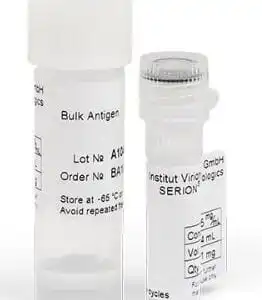
goat anti-rat IgG, H&L chain specific, biotin conjugated polyclonal antibody 2821
$162.00
Antibody summary
- Goat polyclonal to Rat IgG H&L Chain-Biotin
- Suitable for: WB,IHC,ICC,ELISA
- Isotype: Whole IgG
- 1 mg
goat anti-rat IgG, H&L chain specific, biotin conjugated polyclonal antibody 2821
| antibody |
|---|
| Tested applications WB,IHC,IHC,ICC/IF,ELISA |
| Recommended dilutions Immunoblotting: use at a dilution of 1:20,000-1:400,000. Immunohistochemistry: use at a dilution of 1:500-1:5,000 Immunocytochemistry: use at a dilution of 1:200-1:1,000 ELISA: use at a dilution of 1:20,000-1:400,000. These are recommended dilutions. End user |
| Immunogen Rat IgG |
| Size and concentration 1mg and 1 mg/mL |
| Form liquid |
| Storage Instructions This antibody is stable for at least 1 year at 2-8°C. |
| Storage buffer Phosphate Buffered Saline (PBS) containing 0.2% |
| Purity affinity purified |
| Clonality polyclonal |
| Isotype IgG |
| Compatible secondaries donkey anti-goat IgG, H&L chain specific, peroxidase conjugated polyclonal antibody 1689 donkey anti-goat IgG, H&L chain specific, biotin conjugated polyclonal antibody 1699 donkey anti-goat IgG, H&L chain specific, FITC conjugated polyclonal antibody 1704 donkey anti-goat IgG, H&L chain specific, peroxidase conjugated polyclonal antibody, crossabsorbed 1709 donkey anti-goat IgG, H&L chain specific, FITC conjugated polyclonal antibody, crossabsorbed 1705 |
| Isotype control Goat polyclonal - Isotype Control |
| target relevance |
|---|
| rat IgG |
| Protein names Rat immunoglobulin G |
| Alternative names Rat IgG, Rat immunoglobulin G, Rattus norvegicus IgG |
| Function Rat IgG antibodies bind antigens with high specificity and contribute to humoral immunity through neutralization, opsonization, complement activation, and Fc receptor-mediated effector functions. |
| Subcellular location Secreted; found primarily in blood plasma, lymph, and extracellular fluids. |
| Structure Rat IgG is composed of two identical gamma heavy chains and two identical light chains linked by disulfide bonds to form a Y-shaped immunoglobulin molecule. |
| Description Rat immunoglobulin G (IgG) is the predominant antibody isotype found in rat serum and extracellular fluids. It mediates antigen recognition and effector immune functions including pathogen neutralization, opsonization, complement activation, and Fc receptor-mediated responses. |
| Related entities relationship: has_subclass; entity: Rat IgG1 relationship: has_subclass; entity: Rat IgG2a relationship: has_subclass; entity: Rat IgG2b relationship: has_subclass; entity: Rat IgG2c relationship: part_of; entity: Immunoglobulin G |
| Keywords Antibody, Immunoglobulin, Humoral immunity, Adaptive immunity |
| Structure Rat IgG is a tetrameric antibody consisting of two gamma heavy chains and two light chains linked by disulfide bonds. |
| Function Rat IgG mediates antigen recognition, pathogen neutralization, opsonization, complement activation, and Fc receptor-dependent immune responses. |
| Subclasses Rat IgG is commonly classified into IgG1, IgG2a, IgG2b, and IgG2c subclasses, each possessing distinct biological and immunological properties. |
| Distribution Rat IgG is the major antibody isotype present in rat serum and extracellular fluids. |
| Research relevance Rat IgG is widely used in immunology, neuroscience, cancer biology, infectious disease research, and monoclonal antibody development. Anti-rat IgG secondary antibodies are commonly used for detection of rat primary antibodies in ELISA, western blotting, immunohistochemistry, and flow cytometry. |
Data
| No results found |
FAQ & Publications
Frequently Asked Questions
What applications is the goat anti-rat IgG H&L chain biotin conjugated antibody suitable for?
This antibody is suitable for Western blotting (WB), immunohistochemistry (IHC), immunocytochemistry (ICC/IF), and ELISA applications.
What are the recommended dilution ranges for using this antibody in ELISA and Western blot?
For ELISA and Western blotting, the recommended dilution ranges are between 1:20,000 and 1:400,000.
How should I store the goat anti-rat IgG H&L chain biotin conjugated antibody to maintain its stability?
The antibody should be stored at 2-8°C, where it remains stable for at least one year.
What is the concentration and form of this goat anti-rat IgG H&L chain specific biotin conjugated antibody?
The antibody is supplied as a liquid at a concentration of 1 mg/mL, with a total amount of 1 mg per vial.
Which species does this antibody specifically recognize, and what is its host species?
This antibody specifically recognizes rat IgG heavy and light chains and is produced in goat as the host species.
Publications
| pmid | title | authors | citation |
|---|---|---|---|
| We haven't added any publications to our database yet. | |||
Published literature highly relevant to the biological target of this product and referencing this antibody or clone are retrieved from the PubMed database provided by the United States National Library of Medicine at the National Institutes of Health.
Protocols
| relevant to this product |
|---|
| Western blot IHC ICC |
Documents
| Batch Number | QC File | SDS |
|---|---|---|
| To view batch-specific Safety Datasheets and Quality Certificates associated with your account, please Log In. | ||
Only logged in customers who have purchased this product may leave a review.





Reviews
There are no reviews yet.