| Weight | 1 lbs |
|---|---|
| Dimensions | 9 × 5 × 2 in |
| host | goat |
| isotype | IgG |
| clonality | polyclonal |
| concentration | 1 mg/mL |
| applications | ICC/IF, WB |
| reactivity | Mouse IgE |
| available sizes | 1 mg |

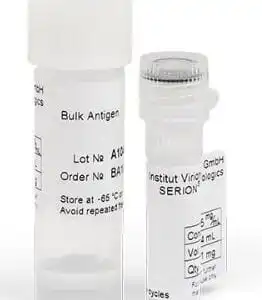
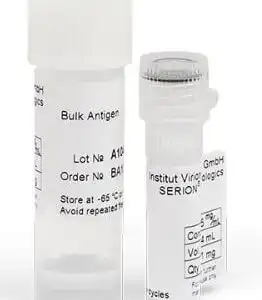
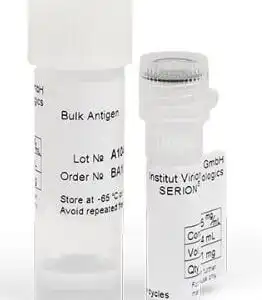
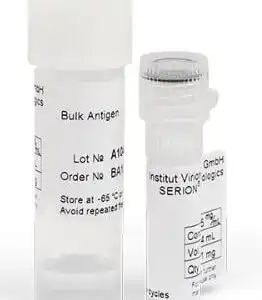
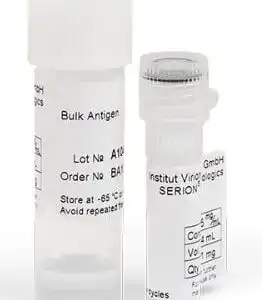
goat anti-IgE-Biotin Conjugate polyclonal antibody 8503
$446.00
Antibody summary
- Goat polyclonal to Mouse IgE-Biotin Conjugate
- Suitable for: WB,IHC,ICC,ELISA
- Isotype: Whole IgG
- 1 mg
goat anti-IgE-Biotin Conjugate polyclonal antibody 8503
| antibody |
|---|
| Tested applications WB,IHC,IHC,ICC/IF,ELISA |
| Recommended dilutions Immunoblotting: use at a dilution of 1:10,000-1:200,000. Immunohistochemistry: use at a dilution of 1:250-1:2,500 Immunocytochemistry: use at a dilution of 1:100-1:500 ELISA: use at a dilution of 1:10,000-1:200,000. These are recommended dilutions. End users |
| Immunogen Mouse IgE |
| Size and concentration 1mg and 1 mg/mL |
| Form liquid |
| Storage Instructions This antibody is stable for at least 1 year at 2-8°C. |
| Storage buffer Phosphate Buffered Saline (PBS) containing 0.2% |
| Purity affinity purified |
| Clonality polyclonal |
| Isotype IgG |
| Compatible secondaries donkey anti-goat IgG, H&L chain specific, peroxidase conjugated polyclonal antibody 1689 donkey anti-goat IgG, H&L chain specific, biotin conjugated polyclonal antibody 1699 donkey anti-goat IgG, H&L chain specific, FITC conjugated polyclonal antibody 1704 donkey anti-goat IgG, H&L chain specific, peroxidase conjugated polyclonal antibody, crossabsorbed 1709 donkey anti-goat IgG, H&L chain specific, FITC conjugated polyclonal antibody, crossabsorbed 1705 |
| Isotype control Goat polyclonal - Isotype Control |
| target relevance |
|---|
| mouse IgE |
| Protein names Immunoglobulin E |
| Alternative names IgE, E immunoglobulin, Epsilon immunoglobulin |
| Function IgE mediates immediate hypersensitivity reactions by binding allergens and cross-linking Fc epsilon receptors on mast cells and basophils, triggering release of histamine, leukotrienes, cytokines, and other inflammatory mediators. |
| Subcellular location Secreted; found in blood plasma, extracellular fluids, and bound to Fc epsilon receptors on mast cells, basophils, eosinophils, dendritic cells, and other immune cells. |
| Structure IgE is composed of two epsilon heavy chains and two light chains linked by disulfide bonds. Unlike IgG, the epsilon heavy chain contains four constant domains and lacks a classical hinge region. |
| Description Immunoglobulin E (IgE) is an antibody isotype involved in allergic responses, hypersensitivity reactions, and immunity against parasitic infections. IgE binds with high affinity to Fc epsilon receptors on mast cells and basophils and plays a central role in type I hypersensitivity reactions. |
| Related entities relationship: binds_to; entity: FCER1A relationship: binds_to; entity: CD23 relationship: related_to; entity: Immunoglobulin G relationship: related_to; entity: Immunoglobulin A relationship: related_to; entity: Immunoglobulin M |
| Keywords Antibody, Immunoglobulin, Allergy, Hypersensitivity, Anti-parasitic immunity |
| Structure IgE is a tetrameric antibody composed of two epsilon heavy chains and two light chains. The epsilon heavy chain contains four constant domains and lacks a classical hinge region. |
| Function IgE mediates allergic and antiparasitic immune responses through high-affinity binding to Fc epsilon receptors on mast cells and basophils. |
| Receptor binding IgE binds Fc epsilon receptor I (FcεRI) with exceptionally high affinity and can also interact with Fc epsilon receptor II (CD23). |
| Clinical relevance Elevated IgE levels are associated with allergic diseases including asthma, allergic rhinitis, atopic dermatitis, food allergy, and anaphylaxis. Total and allergen-specific IgE measurements are widely used in allergy diagnostics. |
| Research relevance IgE is extensively studied in allergy, immunology, mast cell biology, parasitology, asthma research, and therapeutic antibody development. |
Data
| No results found |
FAQ & Publications
Frequently Asked Questions
What species reactivity does the Goat anti-IgE-Biotin Conjugate polyclonal antibody 8503 exhibit?
This antibody specifically reacts with Mouse IgE.
Which applications has the Goat anti-IgE-Biotin Conjugate polyclonal antibody 8503 been validated for use?
It is suitable for Western blotting (WB), Immunohistochemistry (IHC), Immunocytochemistry/Immunofluorescence (ICC/IF), and ELISA.
How should the Goat anti-IgE-Biotin Conjugate polyclonal antibody 8503 be stored to maintain stability?
The antibody should be stored at 2-8°C where it remains stable for at least 1 year.
What is the recommended dilution range for using this antibody in ELISA assays?
For ELISA, the recommended dilution range is between 1:10,000 and 1:200,000.
What is the host species and clonality of this anti-IgE antibody?
This antibody is a goat-derived polyclonal antibody of the IgG isotype.
Publications
| pmid | title | authors | citation |
|---|---|---|---|
| We haven't added any publications to our database yet. | |||
Published literature highly relevant to the biological target of this product and referencing this antibody or clone are retrieved from the PubMed database provided by the United States National Library of Medicine at the National Institutes of Health.
Protocols
| relevant to this product |
|---|
| Western blot IHC ICC |
Documents
| Batch Number | QC File | SDS |
|---|---|---|
| To view batch-specific Safety Datasheets and Quality Certificates associated with your account, please Log In. | ||
Only logged in customers who have purchased this product may leave a review.





Reviews
There are no reviews yet.