| Weight | 1 lbs |
|---|---|
| Dimensions | 9 × 5 × 2 in |
| host | goat |
| isotype | IgG |
| clonality | polyclonal |
| concentration | 1 mg/mL |
| applications | ICC/IF, WB |
| reactivity | Human IgG H&L Chain-conjugated |
| available sizes | 1 mg |

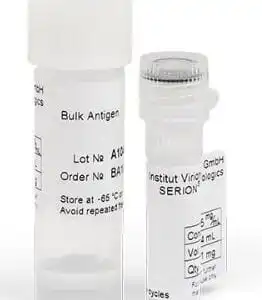
goat anti-human IgG, H&L chain specific, biotin conjugated polyclonal antibody 6261
$162.00
Antibody summary
- Goat polyclonal to Human IgG H&L Chain-Biotin
- Suitable for: WB,IHC,ICC,ELISA
- Isotype: Whole IgG
- 1 mg
goat anti-human IgG, H&L chain specific, biotin conjugated polyclonal antibody 6261
| antibody |
|---|
| Tested applications WB,IHC,IHC,ICC/IF,ELISA |
| Recommended dilutions Immunohistochemistry: use at a dilution of 1:50-1:500 Immunocytochemistry: use at a dilution of 1:50-1:500. Immunofluorescence: use at a dilution of 1:50-1:500. These are recommended dilutions. End users should determine optimal dilutions for their applications. Prep |
| Immunogen Human IgG |
| Size and concentration 1mg and 1 mg/mL |
| Form liquid |
| Storage Instructions Store at 2-8°C. Shelf life is one (1) year from date of receipt. |
| Storage buffer Phosphate Buffered Saline (PBS) containing 0.2% BSA and 0.09% Sodium Azide |
| Purity affinity purified |
| Clonality polyclonal |
| Isotype IgG |
| Compatible secondaries NA |
| Isotype control NA |
| target relevance |
|---|
| human IgG |
| Protein names Immunoglobulin G |
| Alternative names IgG, Gamma immunoglobulin, Gamma globulin |
| Function IgG antibodies bind antigens with high specificity and mediate immune protection through pathogen neutralization, opsonization, complement activation, antibody-dependent cellular cytotoxicity (ADCC), and immune complex formation. |
| Subcellular location Secreted; found predominantly in blood plasma, lymph, extracellular fluids, and tissues. |
| Structure IgG is a heterotetrameric glycoprotein composed of two identical gamma heavy chains and two identical light chains linked by disulfide bonds. The molecule contains two antigen-binding Fab regions and one Fc region. |
| Description Immunoglobulin G (IgG) is the most abundant antibody isotype in human serum and extracellular fluids. It plays a central role in adaptive immunity by recognizing antigens, neutralizing pathogens, activating effector mechanisms, and providing long-term immune protection. |
| Related entities relationship: has_subclass; entity: IgG1 relationship: has_subclass; entity: IgG2 relationship: has_subclass; entity: IgG3 relationship: has_subclass; entity: IgG4 relationship: related_to; entity: IgA relationship: related_to; entity: IgM relationship: related_to; entity: IgE relationship: related_to; entity: IgD |
| Keywords Antibody, Immunoglobulin, Adaptive immunity, Humoral immunity, Complement activation |
| Structure IgG is composed of two gamma heavy chains and two light chains arranged into a Y-shaped antibody molecule containing Fab and Fc regions. |
| Function IgG mediates antigen recognition, pathogen neutralization, opsonization, complement activation, and Fc receptor-dependent immune responses. |
| Subclasses Human IgG is divided into four subclasses: IgG1, IgG2, IgG3, and IgG4, each possessing distinct effector functions and antigen preferences. |
| Distribution IgG is the most abundant immunoglobulin in serum and extracellular fluids and is the dominant antibody during secondary immune responses. |
| Research relevance IgG is widely studied in immunology, infectious disease, autoimmunity, oncology, vaccine development, and therapeutic antibody research. |
Data
| No results found |
FAQ & Publications
Frequently Asked Questions
What is the host species and clonality of this anti-human IgG antibody?
This antibody is a goat polyclonal antibody targeting human IgG heavy and light chains.
For which applications has the goat anti-human IgG H&L chain specific biotin conjugated antibody been tested?
The antibody has been validated for use in Western blotting (WB), immunohistochemistry (IHC), immunocytochemistry (ICC/IF), and ELISA assays.
What are the recommended dilution ranges for immunohistochemistry and immunofluorescence using this antibody?
For immunohistochemistry, immunocytochemistry, and immunofluorescence, the recommended dilution range is 1:50 to 1:500, although users should optimize based on their specific experimental conditions.
How should the goat anti-human IgG biotin conjugated antibody be stored to maintain stability?
Store the antibody at 2–8°C. It is provided in phosphate buffered saline containing 0.2% BSA and 0.09% sodium azide, with a shelf life of one year from the date of receipt.
What is the immunogen used to raise this goat anti-human IgG antibody?
The immunogen used for this antibody is human IgG.
Publications
| pmid | title | authors | citation |
|---|---|---|---|
| We haven't added any publications to our database yet. | |||
Published literature highly relevant to the biological target of this product and referencing this antibody or clone are retrieved from the PubMed database provided by the United States National Library of Medicine at the National Institutes of Health.
Protocols
| relevant to this product |
|---|
| Western blot IHC ICC |
Documents
| Batch Number | QC File | SDS |
|---|---|---|
| To view batch-specific Safety Datasheets and Quality Certificates associated with your account, please Log In. | ||
Only logged in customers who have purchased this product may leave a review.





Reviews
There are no reviews yet.